Double-sided digital LED pylon design starts with one drawing, not three. You need a single controlled interface drawing that locks the overall envelope, the LED cabinet dimensions, the service access, the ventilation and drainage path, the branding attachment and the electrical routing before anyone cuts steel. Design these pieces separately and you end up finding out on site that the branding cap blocks the service door, or the two LED faces run hotter than either supplier tested for.
A 22-foot double-sided pylon is a good example to work through, because it is tall enough to need real structural engineering and wide enough to fit two full LED faces back to back, which is exactly where most interface problems show up.
Build the Spatial Model Before You Design Anything Else
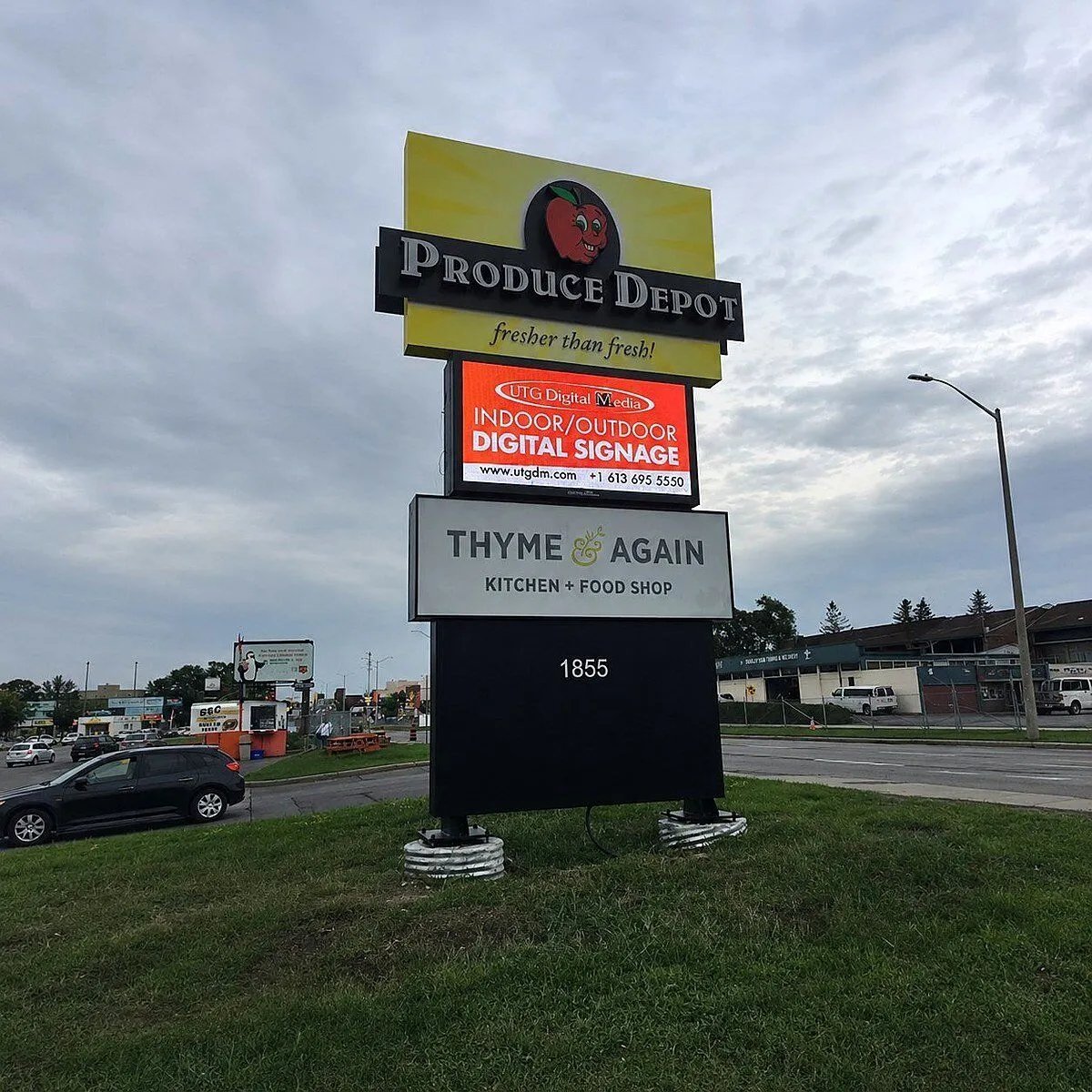
Start by dividing the pylon’s total height into zones, not by picking a display size first and fitting everything else around it. A 22-foot sign typically breaks into three zones: an illuminated branding cap at the top, the LED display face or faces in the middle, and a base section that handles ground clearance, foundation connection and often a lower service door.
| Zone | Typical Height Range | Primary Requirement |
|---|---|---|
| Branding cap | 3 – 5 ft | Illuminated logo or channel letters, visible day and night without competing with the LED face |
| LED display zone | 10 – 14 ft | Two display faces back to back, sized to the site’s viewing distance |
| Base and clearance | 3 – 5 ft | Foundation connection, ground clearance, lower service access |
Scope note: these ranges are a starting allocation for a 22-foot double-sided pylon, not a fixed catalog spec. The exact split depends on your site’s viewing distance, sign code height limits and how much branding real estate your project needs. We confirm the final breakdown against your drawings before structural design starts.
You should also decide early whether both faces show identical content or different content aimed at different traffic directions. That decision affects control system wiring, content scheduling and, if the two faces run different brightness curves for different sun exposure, the power distribution inside the cabinet. Lock this decision before the electrical layout gets drawn, not after.
Integrate the LED Cabinets Into the Primary Structure
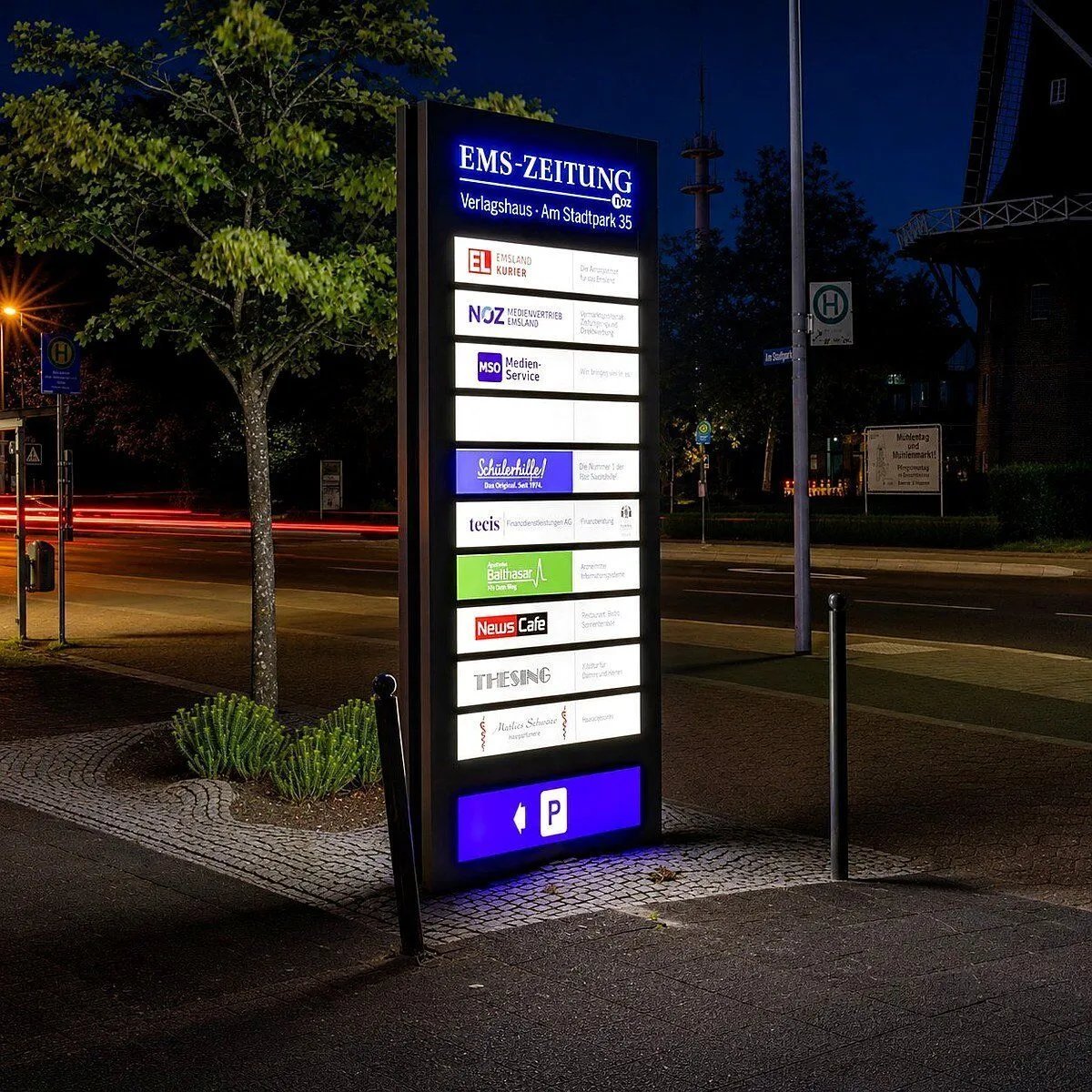
An LED cabinet isn’t cladding you hang on a finished frame. It is a load, a heat source and a maintenance point all at once, and the primary structure needs to treat it that way from the first structural sketch.
Bring the LED cabinet’s actual mounting points, weight and depth into the frame design instead of estimating them. Two full-height display faces on a 22-foot pylon add real weight high on the structure, and that weight has to route through defined support points down to the frame, not rest on a face panel that was not built to carry it. If the LED supplier’s mounting points don’t match where your frame naturally wants to place support, that mismatch gets resolved on paper now or gets fixed on site later at higher cost.
Frame deflection matters more here than on a static sign. If the pylon frame flexes under wind load more than the LED cabinet tolerances allow, module seams can shift out of alignment, and a visible seam line across a digital face is a defect a client will notice immediately. Confirm the LED supplier’s seam tolerance and design the frame stiffness around that number, not around a generic wind-load pass.
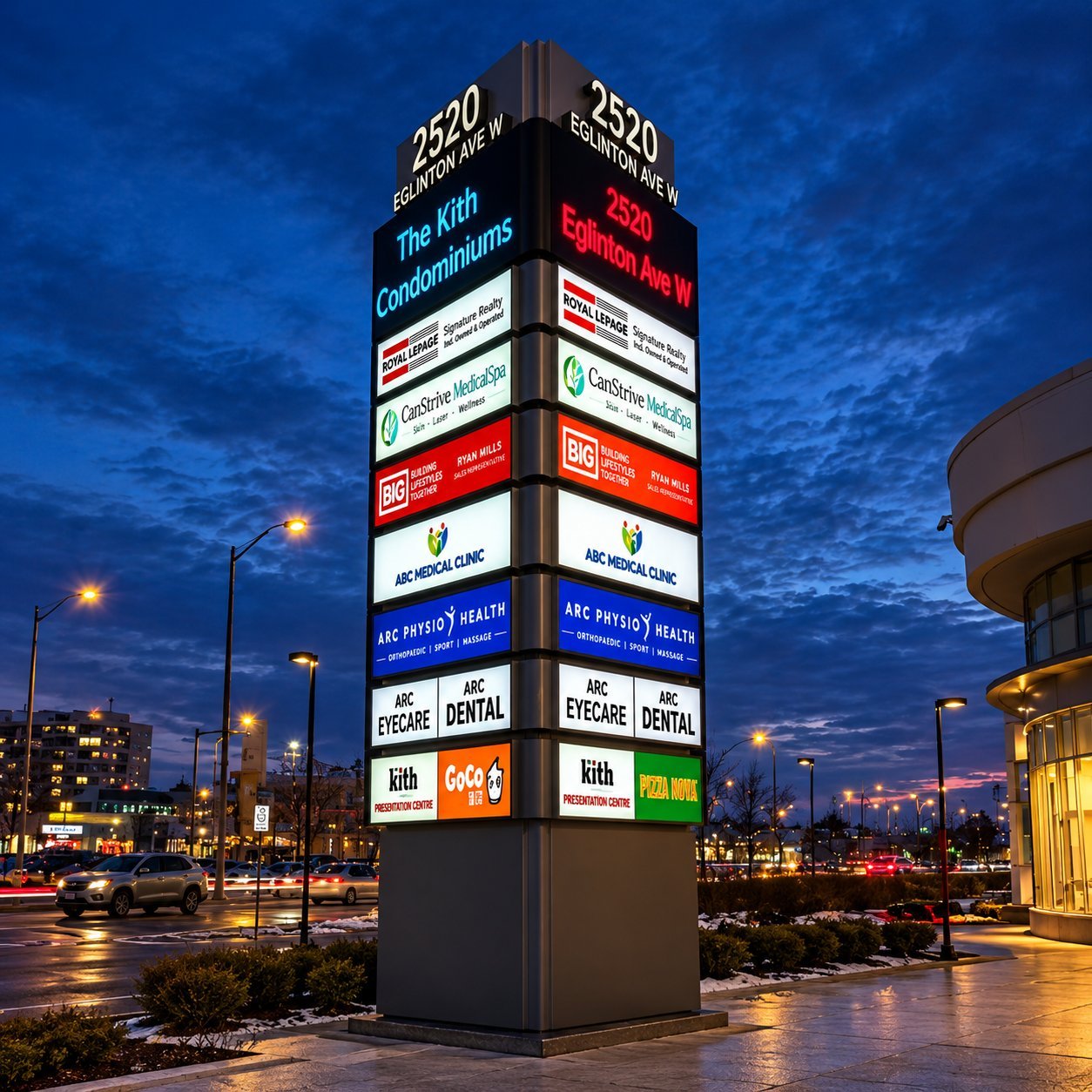
Plan Service Access and Thermal Management for a Sealed Double-Sided Cabinet
This is where most double-sided pylon designs run into trouble, because a back-to-back cabinet shares depth between two lit faces, and that shared depth is exactly where the service door, the ventilation and the wiring all compete for space.
Decide whether technicians service each face from the front, the rear, or through a shared internal walkway between the two faces. A shared walkway gives you the most flexible long-term maintenance, but it needs enough depth to fit a person safely, which changes the total cabinet depth and, in turn, the pylon’s wind-load face area. A front-service design keeps the cabinet thinner but means every module swap happens from a ladder or lift at height, which changes your maintenance cost assumptions over the sign’s life.
Ventilation and drainage need the same attention. A sealed dual-face volume traps heat from two sets of LED drivers and power supplies, and if that heat has nowhere to go, components run hotter than their rated life assumes. Confirm the cabinet has a real airflow path, not just vents cut into the skin, and that any condensation forming inside has a drainage route out rather than pooling against a driver board. Add pest screening on every vent opening, since a sealed cabinet with an unscreened vent is an open invitation for insects and small animals that will eventually short something.
Send us your pylon dimensions and preferred service approach and we will flag where the structure and the LED cabinet need to be resolved together before fabrication starts.
Validate Day and Night Appearance Before Fabrication
A double-sided digital pylon has to work in two completely different lighting conditions, and a design that looks right on a daytime rendering can look wrong the moment the sun goes down.
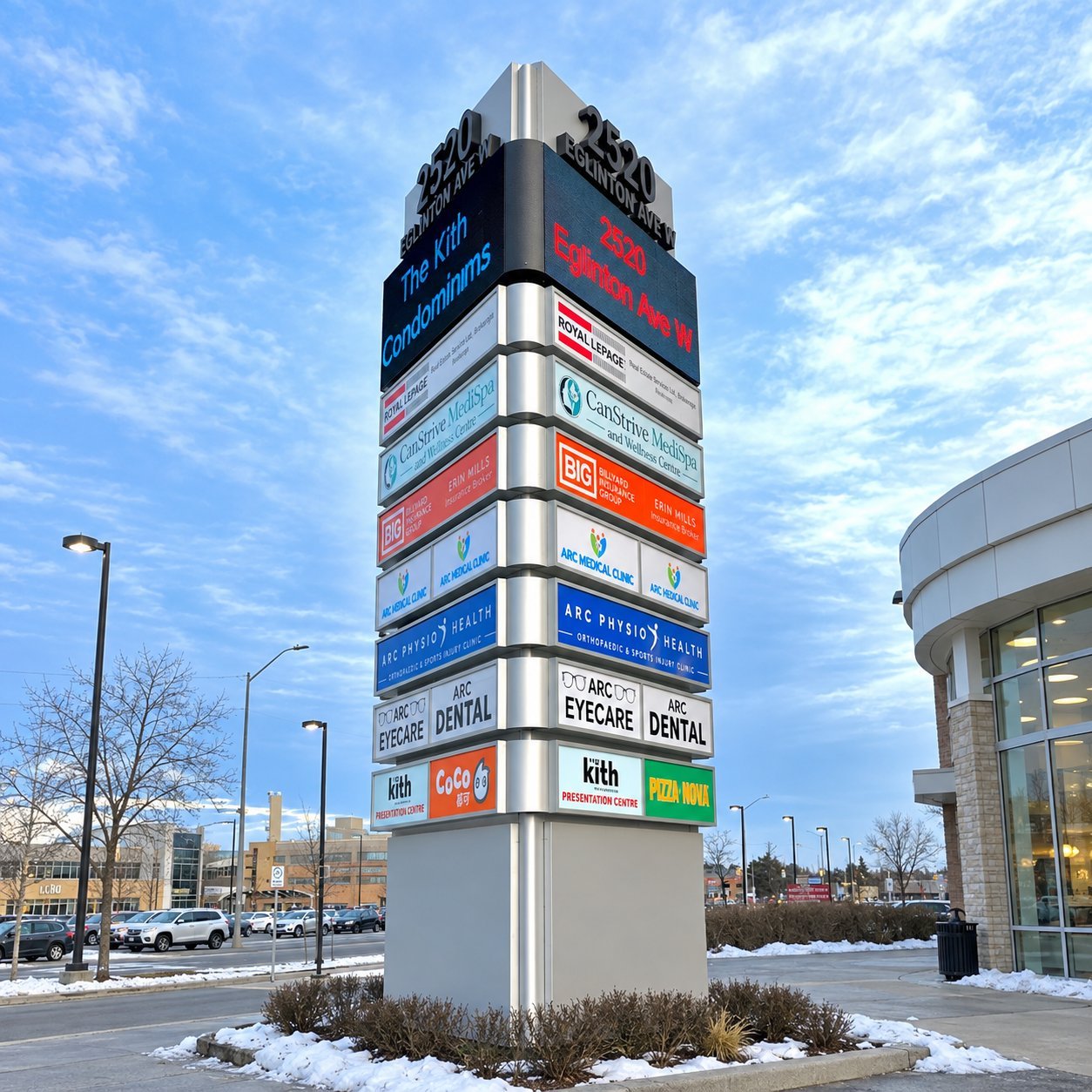
The illuminated branding cap and the LED display face are competing for the same viewer’s attention, and if one overpowers the other, the sign reads as unbalanced. A bright LED face under a dim logo looks like the branding was an afterthought. An overly bright halo-lit or backlit logo above a lower-brightness LED face can wash out the display’s contrast at night. Set target brightness ratios between the two elements before fabrication, not after installation, because adjusting a fixed illuminated sign’s brightness after the fact is far more limited than adjusting an LED display’s calibration.
Ask for renderings in three conditions before you approve a design: daytime with full sun on the face, nighttime with both elements lit, and a road-view angle from your actual minimum viewing distance. A pylon that looks balanced head-on can look completely different from the angle most of your actual traffic will see it from.
How Hicen Approaches a Double-Sided LED Pylon Project
Hicen designs and fabricates the pylon structure and the illuminated branding, typically channel letters or a halo-lit logo cap, in house, and coordinates the LED display faces through vetted display partners as part of one turnkey project. That matters most exactly at the points this article covers: the LED cabinet mounting points get built into our frame design instead of retrofitted, and the branding brightness gets set against the display’s actual calibration instead of guessed at separately.
If you are planning a pylon sign as part of a larger outdoor business sign package, we handle the illuminated branding and structural fabrication with the same manufacturing process and quality control checks we apply across every project, verified against your specific sign specification rather than a generic template. For projects that include a fully custom illuminated identity above the display, our custom illuminated signs work runs through the same project flow.
Frequently Asked Questions
Can both LED faces share one control system?
Usually yes, and it is the simpler setup if both faces show synchronized or identical content. If the two faces need independent content schedules or face different traffic patterns with different timing needs, you may want separate control at each face with a shared network connection back to one management point. Tell us how you plan to run content on each face and we can recommend the simpler control architecture for your case.
How much internal service space does a pylon need?
It depends on whether you choose front service, rear service or a shared internal walkway between two faces. A walkway needs enough depth for a technician to move and work safely, typically adding more overall cabinet depth than a front-service design. There is no single number that fits every project, since it depends on your LED cabinet depth and how your structure is framed. Send us your preferred maintenance approach and we will size the access space around it.
Can illuminated branding interfere with LED content?
It can, mainly through brightness contrast rather than physical interference. A logo cap that is much brighter or much dimmer than the LED face below it throws off the sign’s balance, especially at night. It can also affect wind load and weight distribution if it is not planned into the same structural model as the display zone. Reviewing both elements together, rather than designing the branding and the display separately, avoids both problems.
Get a Structure-to-Display Interface Review
Send us your pylon dimensions and brand files and we will return an LED-to-structure interface review as part of your double-sided pylon quote, covering the spatial model, service access and day/night brightness balance before anything goes to fabrication.
Request a Structure-to-Display Review