Outdoor LED display specifications come down to five things you can actually compare: pixel pitch, brightness, protection rating, refresh rate and service access. Get any one of these wrong and you end up with a screen that’s unreadable from the road, fades out by noon, or fails within two years in a coastal climate. You don’t need to become an LED engineer to buy correctly. You need a framework that lets you compare quotes on the same terms instead of picking whichever number looks biggest on a spec sheet.
This guide walks through that framework the way we walk a client through it before a pylon or building-sign quote goes out.
Match Pixel Pitch to Your Viewing Distance First
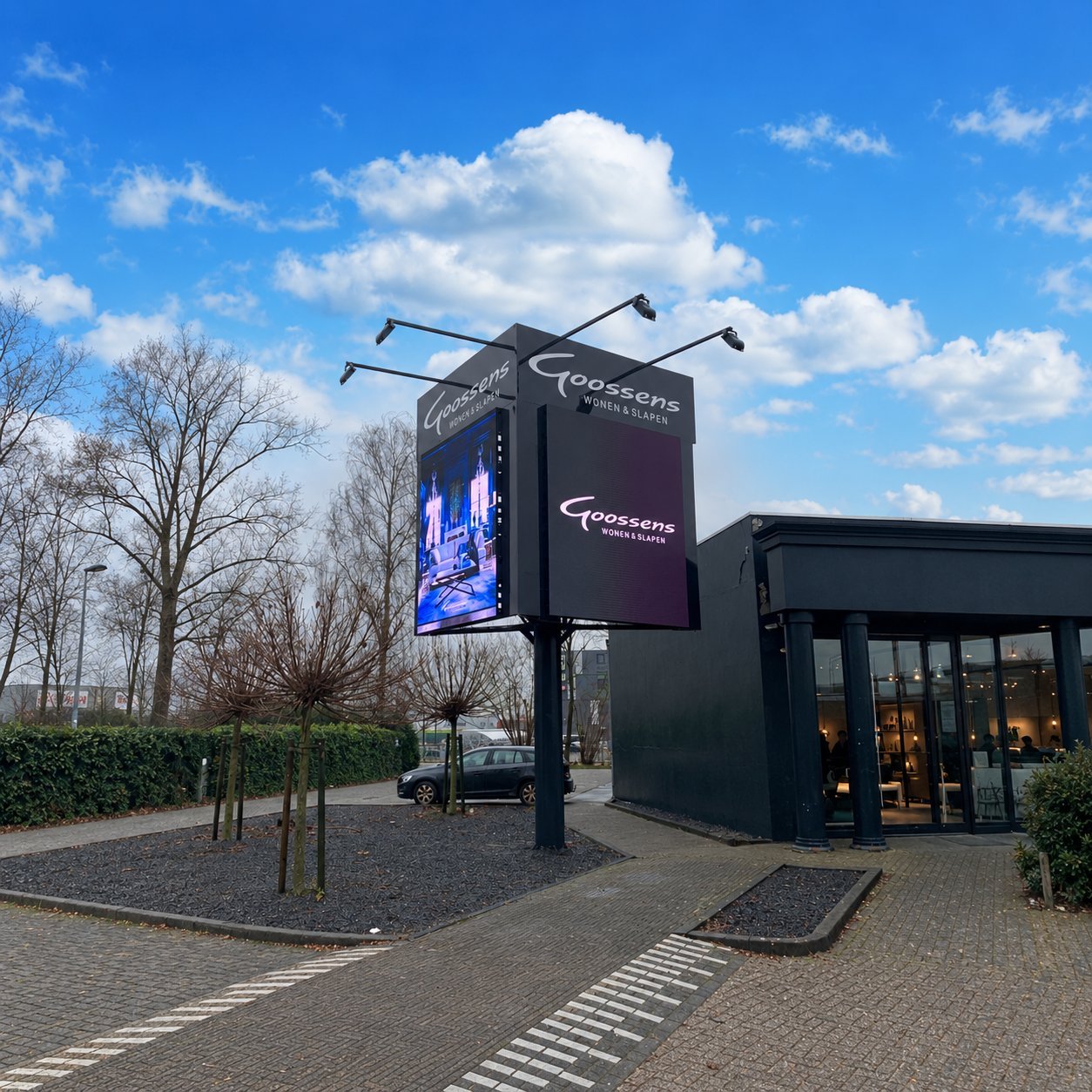
Pixel pitch is the distance between the centers of two LED pixels, measured in millimeters. A smaller number packs more pixels into the same panel, which gives you a sharper image up close. A larger number spaces pixels further apart, which is fine, and often better, when nobody stands close enough to notice.
You should size pixel pitch off three things: how fast traffic moves past the sign, how close the nearest viewer actually gets, and how much detail your content needs. A pylon sign on a 45 mph arterial road doesn’t need the same pitch as a lobby video wall someone reads from six feet away. A common rule of thumb is a minimum viewing distance in meters roughly equal to the pixel pitch in millimeters, so a 10mm pitch reads clearly from about 10 meters back. Treat that as a starting point, not a guarantee, because contrast, ambient light and the complexity of your content all shift the real number.
| Pixel Pitch | Typical Minimum Viewing Distance | Common Use Case |
|---|---|---|
| P4 – P6 | 4 – 6 meters (13 – 20 ft) | Building-mounted displays, close-set retail facades |
| P8 – P10 | 8 – 10 meters (26 – 33 ft) | Pylon signs on secondary roads, parking-facing displays |
| P12 – P16 | 12 – 16 meters (39 – 52 ft) | Highway pylons, high-speed arterial roads |
| P16+ | 16+ meters (52+ ft) | Billboards and long-setback monument signs |
Scope note: these are industry-standard planning ranges used across outdoor LED manufacturers, not a spec sheet for one specific product. Hicen sources and coordinates LED displays through vetted partner factories as part of complete pylon and building-sign packages, so we verify the exact pitch, viewing-distance math and data sheet against your site conditions before anything gets quoted.
Here’s where a lot of buyers overspend: paying for a finer pitch than the viewing distance justifies. If your closest regular viewer is 15 meters away in a moving car, a P6 panel doesn’t buy you anything a P10 panel doesn’t already deliver, and it adds cost, weight and heat load you don’t need. Send us your actual viewing distances and screen dimensions before you spec a pitch, not after.
Compare Daylight Display Performance, Not Just Peak Brightness
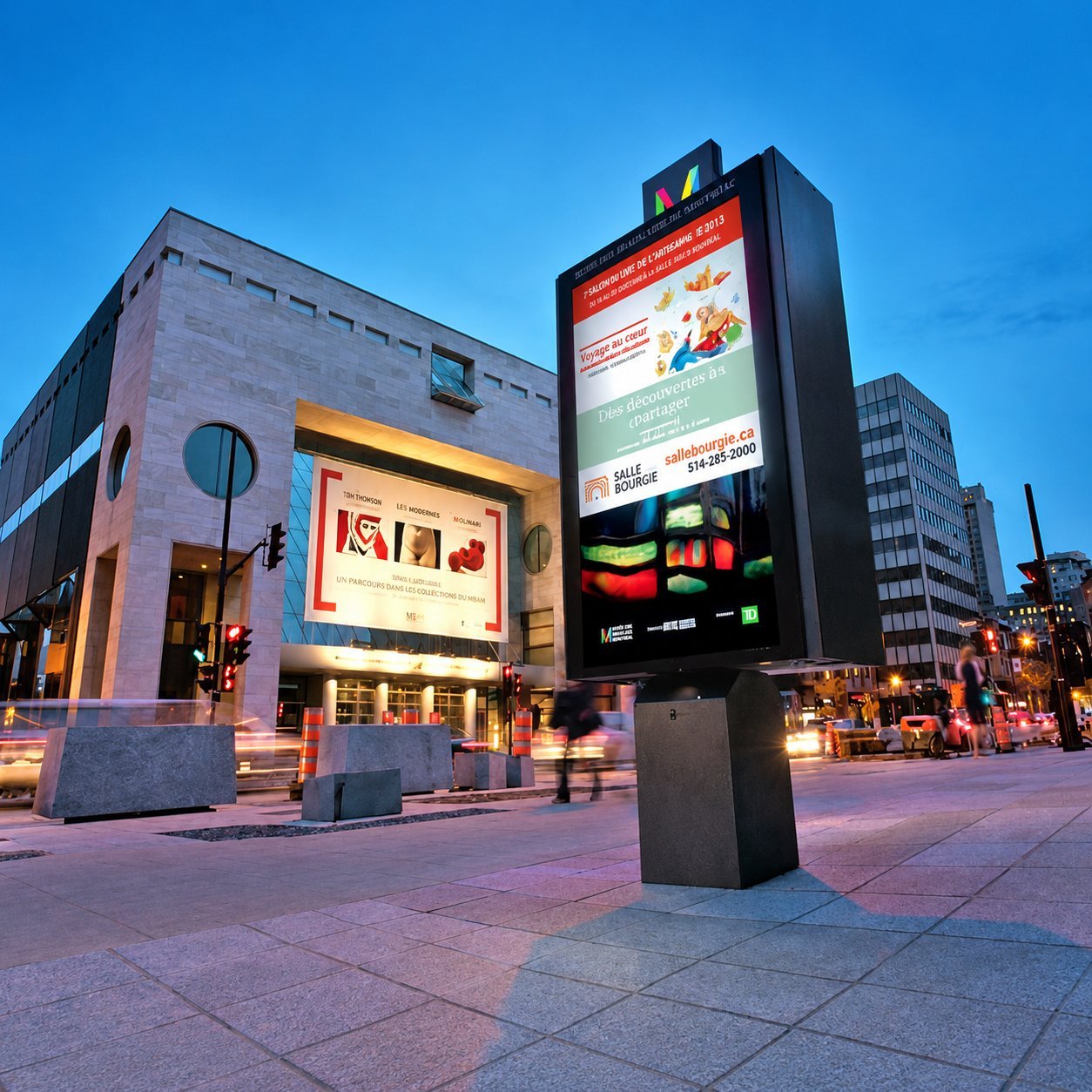
Every spec sheet lists a peak brightness number in nits. That number alone tells you almost nothing about how the sign looks at 2pm in direct sun. Two things matter more: whether the display auto-dims for ambient light, and whether the brightness holds up with even color across the panel, not just at center.
Ask for calibrated brightness, not just rated brightness. A display rated at 8,000 nits that hasn’t been color- and brightness-calibrated across every module can show visible banding or a warm patch where one batch of LEDs runs slightly different from another. That’s the kind of defect a factory acceptance test catches before the sign ships, not something you want to discover after installation.
If your sign will run video or fast-moving content, check refresh rate and grayscale level too. A low refresh rate shows up as flicker on camera and in some viewers’ peripheral vision, which matters if the sign will be filmed for marketing or sits somewhere people look at for more than a few seconds. Grayscale bit depth controls how smooth a color gradient or a logo’s shadow looks, and a shallow grayscale spec shows up as visible color banding on gradients even when the base brightness is fine.
Review Outdoor Reliability Before You Sign Off
This is the section most buyers skip, and the one that determines whether the display survives its warranty period.
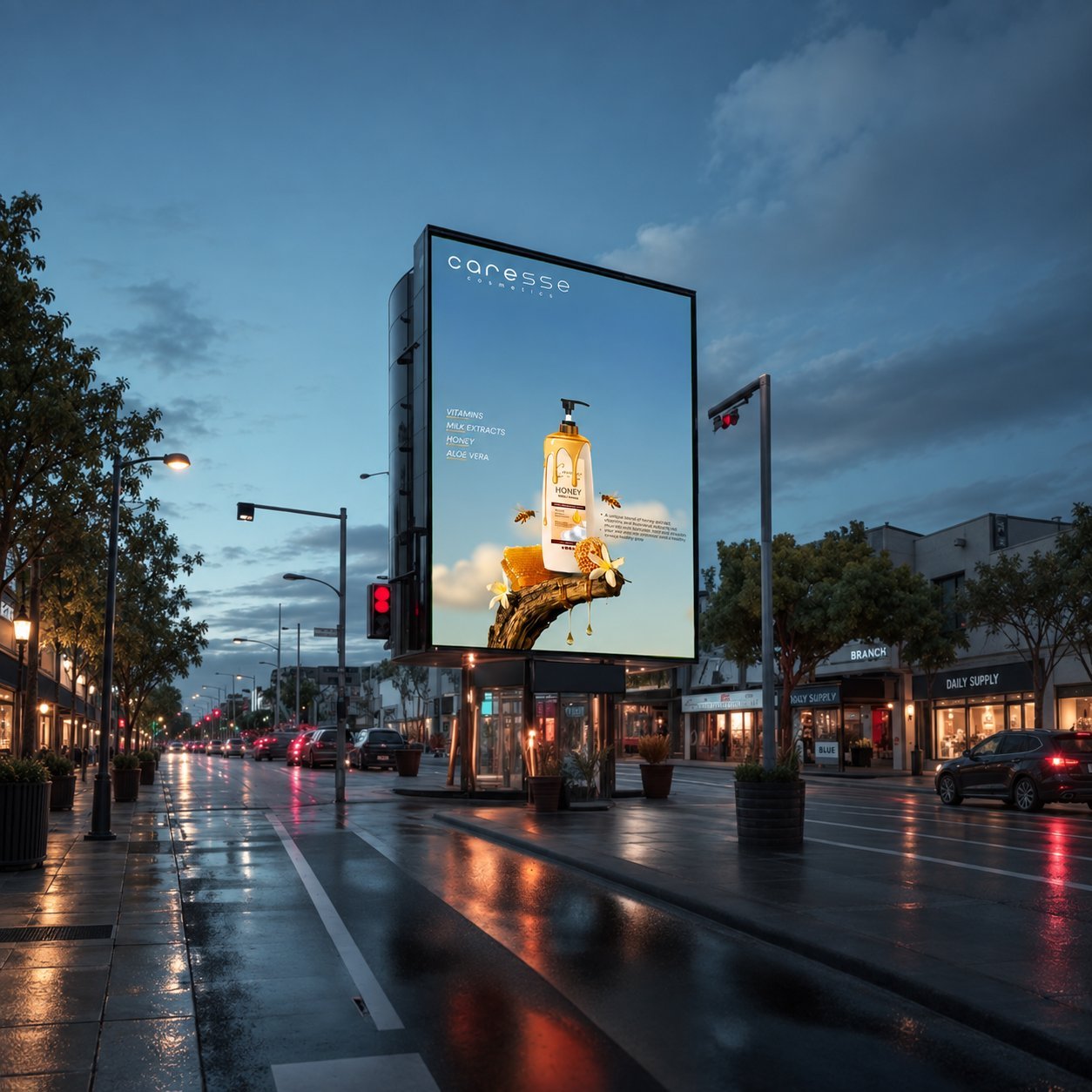
Check the IP rating for the module, the cabinet and the power supply separately. IP65 on a module doesn’t automatically mean the whole system is IP65. A display can carry an IP65 front face while its rear-mounted power supplies sit in a lower-rated enclosure that was never meant to face wind-driven rain. Ask for the IP rating of each major component, not one number for “the display.” The deeper waterproofing questions behind those numbers are covered in our practical outdoor signage IP ratings guide.
For a coastal or high-humidity site, push further than the IP number. Ask about conformal coating on the PCBs, corrosion-resistant hardware, and whether the cabinet design actually drains water instead of trapping it. A cabinet with the right IP rating on paper can still fail early if condensation collects inside it overnight and never gets a path out. Confirm the operating temperature range too, since a display specified for a temperate climate can throttle brightness or shut down modules in sustained heat it wasn’t rated for.
If your project involves a coastal installation like ours in Sint Maarten, this review matters as much as the pixel pitch decision. We cover the broader material and coating strategy for coastal signage separately, but the same salt-spray and drainage logic applies to LED cabinets as it does to the structural steel around them.
Evaluate Service Access and Spares Before You Order, Not After
An LED display is a maintenance item, not a one-time install. Modules fail. Power supplies fail. The question is how expensive that failure is to fix.
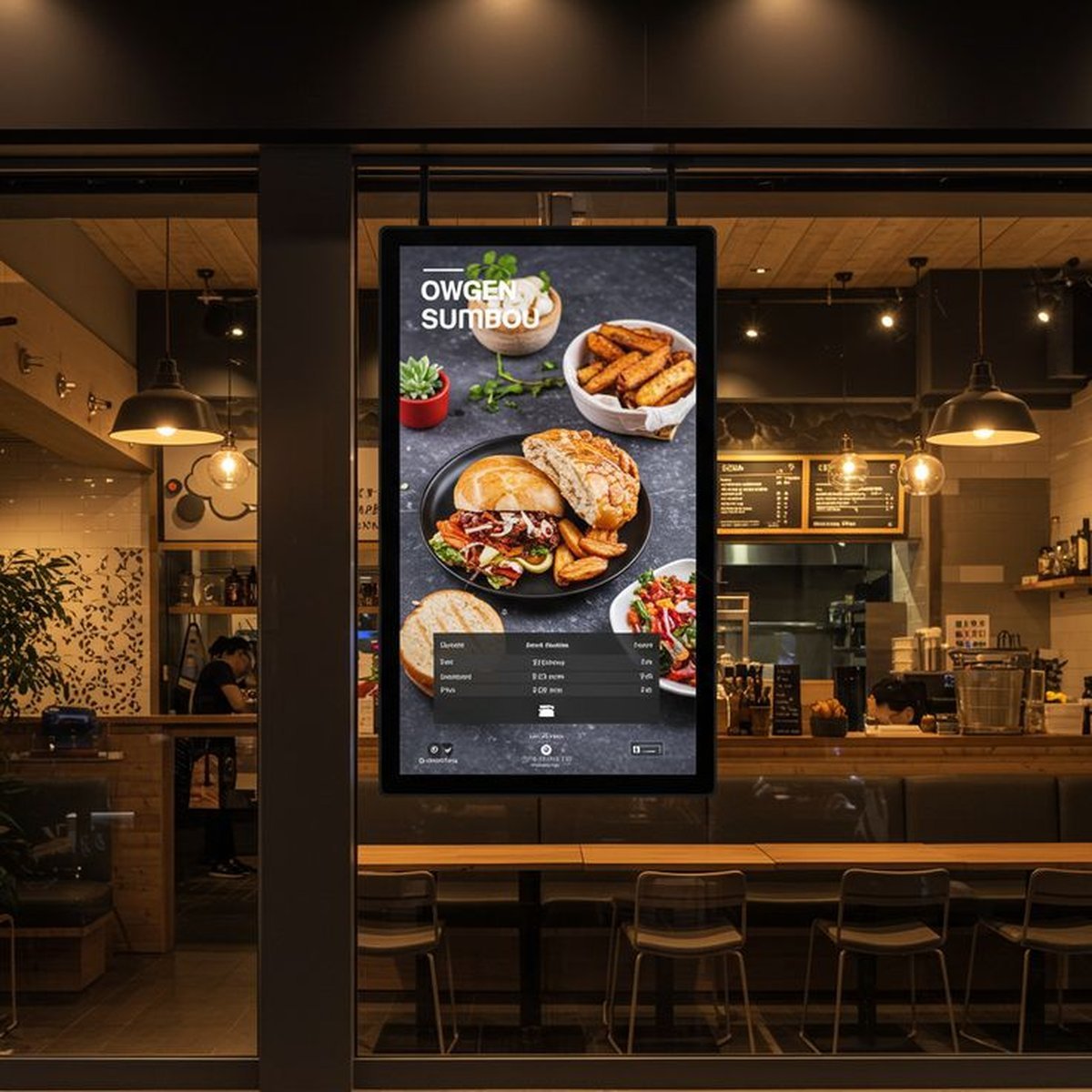
Confirm whether the cabinet is designed for front service or rear service, and whether your pylon or wall-mounted structure actually gives a technician safe room to use it. A rear-serviceable cabinet needs walk-in or hinged access behind the display, which changes the structural design of a pylon. A front-serviceable cabinet lets a technician swap a module from the face, which matters when there’s no access behind the sign at all. Get this settled before the structure is finalized, because retrofitting service access after fabrication is expensive.
Ask for the spare parts ratio included with the order, typically a small percentage of modules, power supplies and receiving cards held in reserve, and confirm what control system brand runs the display. Novastar, Colorlight and Linsn are the names you’ll hear most often, and each has different long-term parts availability and local service support depending on your region. A display with no committed spare ratio and an obscure control system can leave you waiting weeks for a part that should take days.
How Hicen Fits Into an Outdoor LED Display Order
Hicen builds and coordinates complete exterior sign packages, which means we don’t ask you to manage the LED display, the pylon structure and the electrical interface as three separate vendor relationships. We work with vetted LED display partners inside a single turnkey project, so the pixel pitch, brightness and IP decisions above get made alongside the structural design instead of after it, which is usually when conflicts between the LED cabinet weight, the mounting frame and the service access requirement actually surface.
If you’re speccing a display for a pylon or other outdoor business sign, that coordination is worth more than a lower per-unit price on the panel alone. We’ve also written about how LED signage costs break down and how long you should expect LED signage to last once installed, both of which feed directly into the spare-parts and service-access decisions above.
Every display we source goes through the same quality control verification we apply to the rest of a sign package, checked against your project’s actual sign specification rather than a generic spec sheet.
Frequently Asked Questions
Is a smaller LED pixel pitch always better?
No. A finer pitch only helps if someone stands close enough to see the extra detail. Below your actual minimum viewing distance, a smaller pitch adds cost, weight and power draw without a visible benefit. Match the pitch to your closest regular viewer, not to whichever number sounds more impressive on paper. Tell us your viewing distance and we can tell you exactly where that cutoff sits for your project.
How bright should an outdoor LED display be?
It depends on orientation and sun exposure, not a single target number. A display facing direct afternoon sun typically needs a higher rated brightness with automatic ambient-light dimming than one that sits in shade or faces away from the sun’s path most of the day. What matters more than the peak number is whether the display has been calibrated for even brightness across every module. Send us your site’s orientation and we’ll factor it into the brightness recommendation.
Does IP65 apply to the entire LED display system?
Not automatically. A module can be rated IP65 while its power supply or control enclosure carries a different rating, and that gap is where outdoor failures usually start. Always ask for the IP rating of the module, the cabinet and the power components separately, and confirm how the cabinet handles drainage and condensation. If you’re comparing quotes for a coastal project, ask this question of every bidder, because the answer varies more than the headline IP number suggests.
Get an Outdoor LED Specification Comparison for Your Project
Send us your viewing distances, screen dimensions and site conditions, coastal exposure included, and we’ll put together an outdoor LED specification comparison as part of your turnkey pylon or building-sign quote.
Request an Outdoor LED Comparison