Protect a coastal sign by treating corrosion as a system, not a material choice. You need the right substrate, surface preparation matched to your coating system, stainless fasteners, isolation between dissimilar metals, drainage and sealing at every enclosure and joint, and a maintenance cycle that catches problems before they spread. The specific corrosion class and coating film thickness your project needs has to come from the governing RFP and project specification, not a generic “marine-grade” label, since that phrase alone doesn’t tell a fabricator what to actually build.
Salt spray, standing water, UV and dissimilar metals don’t attack a sign at the same rate or in the same place, so treating them as one generic “coastal” risk is how corrosion protection gets under-specified. Here’s how to break that down into decisions you can actually put in a spec.
Identify Coastal Corrosion Risks
Four exposure conditions drive most coastal sign failures, and they don’t affect every component the same way.
- Salt spray attacks exposed metal continuously, not just during storms, since airborne chloride settles on surfaces even on a clear day near open water.
- Standing water in a poorly drained enclosure or base does more damage than the same water running off a well-drained one, because it keeps the surface wet long after rain or spray has passed.
- UV exposure degrades coatings and gaskets over time, which matters here because a coating that’s chalked or cracked from UV stops protecting the substrate underneath it well before the substrate itself would otherwise fail.
- High humidity accelerates corrosion at any point where two dissimilar metals are in contact, since it provides the electrolyte that galvanic corrosion needs to proceed.
These risks land differently across a sign structure. Structural steel is mainly a coating and moisture problem. Aluminum holds up well against general corrosion but is vulnerable at any point it contacts a less compatible metal. Electrical enclosures face water ingress at every seam, gland and joint. Fasteners see concentrated wear because they’re small, often a different material than what they’re holding together, and easy to under-spec if they’re treated as an afterthought to the main structure.
Select Substrates and Surface Preparation
For general outdoor material selection, structural role, acrylic versus metal, PVC’s limits, that decision belongs in a broader signage material selection guide. This section is narrower: which substrate options hold up specifically against coastal exposure, and what surface preparation each one actually needs before a coating goes on.
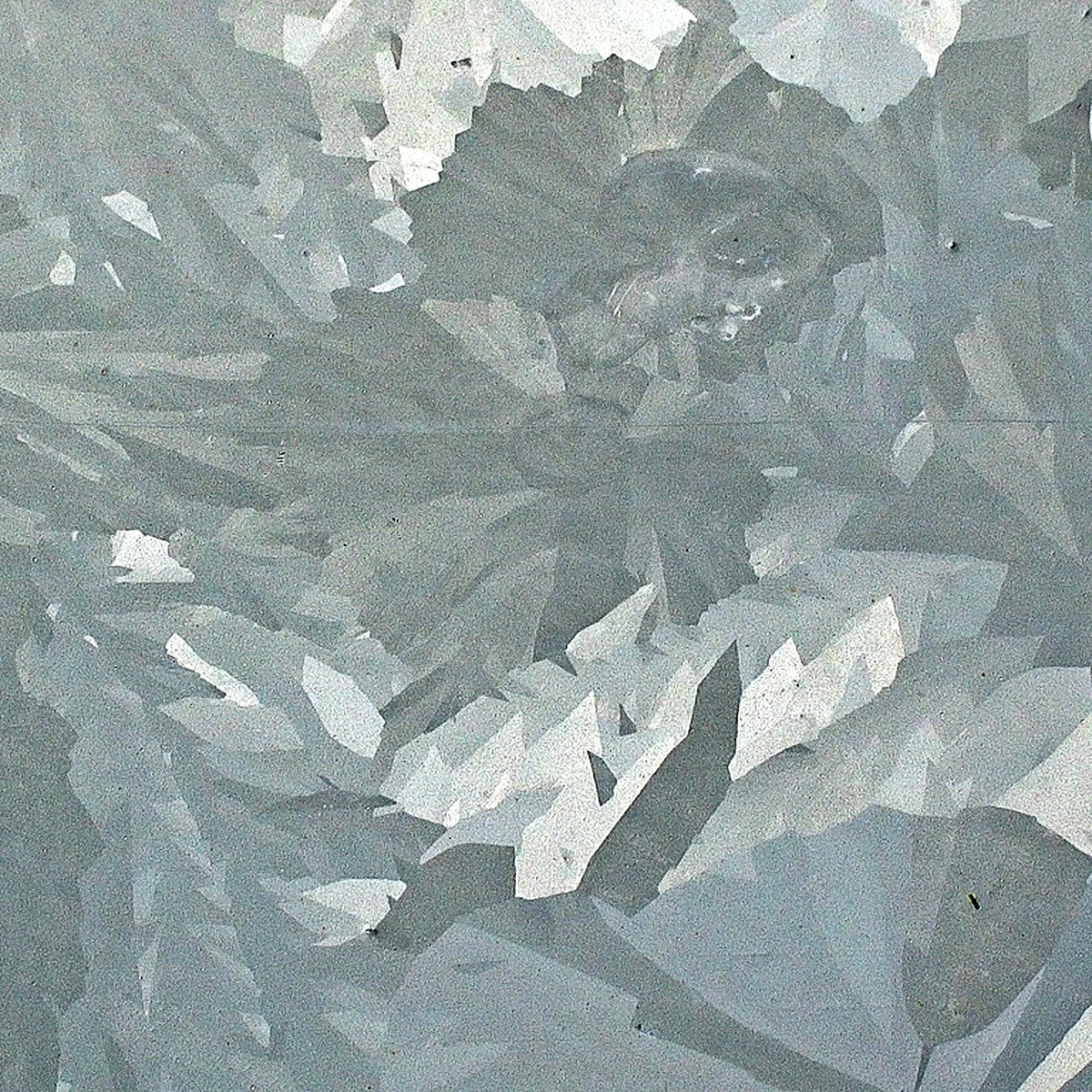
Hot-dip galvanized steel gets a zinc coating that protects the steel sacrificially, meaning the zinc corrodes preferentially and protects exposed steel at scratches and cut edges, which plain painted steel can’t do on its own. In a coastal environment, galvanizing is often paired with a paint system over it, called a duplex system, because the paint slows the rate the zinc layer itself wears down.
Painted or powder-coated steel without galvanizing depends entirely on the coating staying intact. Any breach — a scratch, a weld point, an edge — exposes bare steel directly to salt air with no sacrificial protection behind it, so this option carries more long-term maintenance risk in a marine environment than a duplex system does.
Aluminum resists general corrosion well on its own, since it forms a stable oxide layer, but that resistance doesn’t extend to galvanic contact with other metals, which is covered in the next section.
Stainless steel, grade matters more than the fact that it’s stainless. A lower grade in continuous salt exposure can still pit over time, so confirm the actual grade specified for your project rather than assuming “stainless” alone settles the question.
Surface preparation has to match the coating system you’re applying, not a generic standard. Cleaning removes salts, oils and mill scale, roughening gives the coating a surface profile to mechanically key into, and priming is selected for compatibility with both the substrate and the topcoat. A coating applied to a surface that wasn’t prepared to its own data sheet’s requirements will underperform regardless of how good the coating itself is, so ask your supplier to confirm surface preparation against the actual coating manufacturer’s specification, not a general in-house standard.
Control Detail Corrosion
This is where coastal signs most often fail even when the main structure and coating are specified correctly, because the failure happens at the connections and joints, not the flat surfaces.
Isolate dissimilar metals. When aluminum, stainless steel and carbon steel are in direct contact, the less noble metal corrodes faster than it would on its own, and that reaction accelerates in a humid, salty environment. Isolate contact points with a dielectric barrier, a non-conductive washer or sleeve at fastener locations, or a compatible coating between the two materials, rather than letting dissimilar metals touch directly. This applies at fastener-to-panel connections, at base plates sitting on structural steel, and anywhere an aluminum cabinet is mounted to a steel frame.
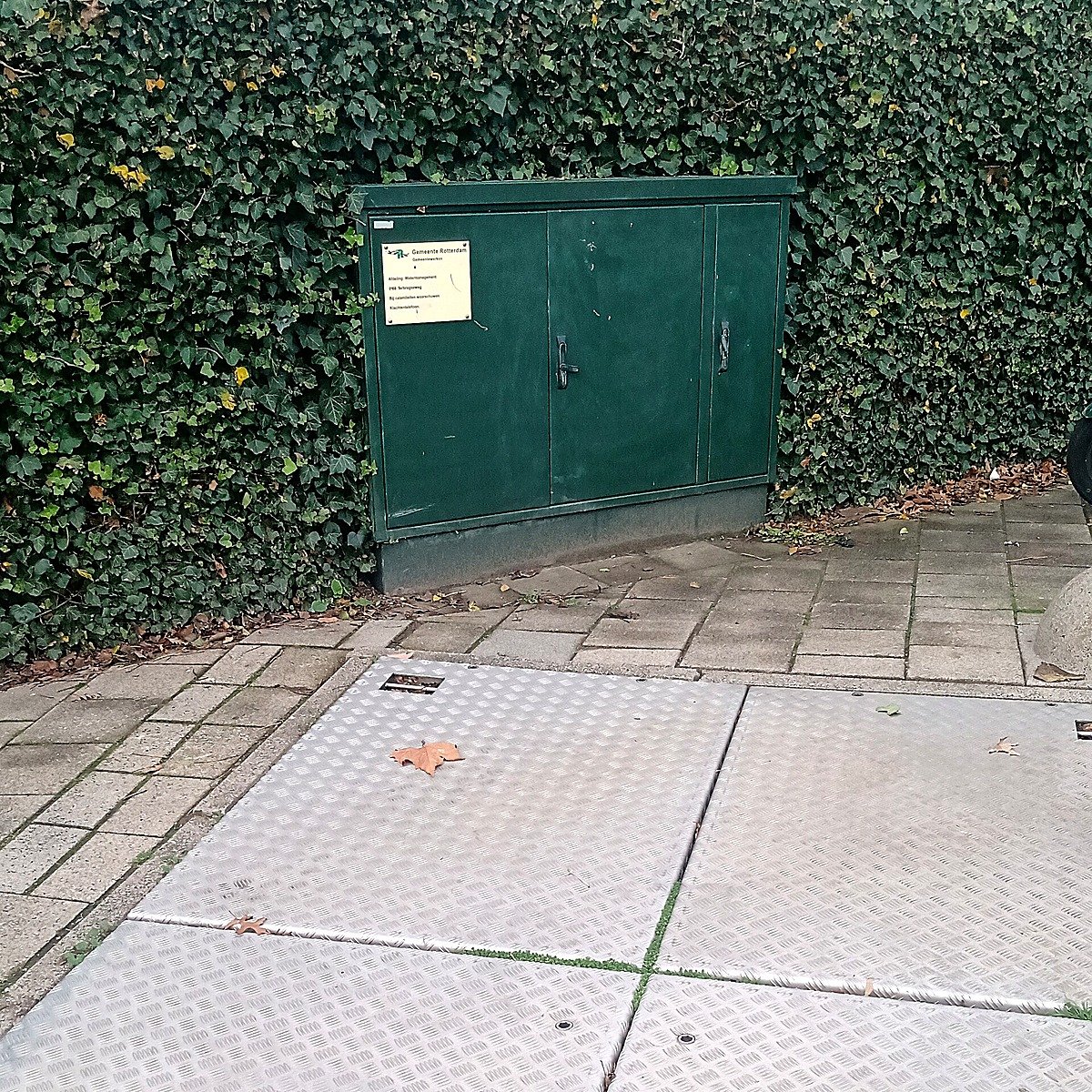
Design drainage and sealing deliberately, don’t leave it to whatever gap happens to exist. Enclosures need a defined drainage path so water doesn’t pool inside, base plates need either positive drainage away from the plate or a sealed interface that keeps water from sitting under it, and joints and seams need a sealant compatible with both materials it’s bonding, not just whatever sealant was on hand. Confirm this at the design stage, since retrofitting drainage into a finished enclosure is a much weaker fix than designing it in from the start. If your electrical enclosures also need water-ingress protection at cable entries and seams specifically, that’s covered in more depth in this outdoor signage IP ratings guide, this section focuses on the structural drainage and base-plate sealing that sits outside an enclosure’s own IP rating.
Define Inspection and Maintenance
Corrosion protection that isn’t documented is corrosion protection you can’t verify later. Before production, get records for:
- Surface preparation method and standard achieved on each substrate
- Coating batch numbers, so a failure can be traced back to a specific application run
- Dry-film thickness readings, measured and recorded, not just specified on paper
These records matter most when something fails early. Without them, you have no way to tell whether the coating was applied to specification or simply claimed to be.
For the owner, provide a maintenance plan that names three things: a cleaning interval to remove accumulated salt before it concentrates, a touch-up process for coating damage before it spreads to bare substrate, and a periodic inspection schedule that checks fastener condition, drainage function and coating condition together rather than assuming each is fine if the others are. Marine-grade materials extend the interval between failures. They don’t eliminate the need for a maintenance schedule.
Base-Plate Connection Detail
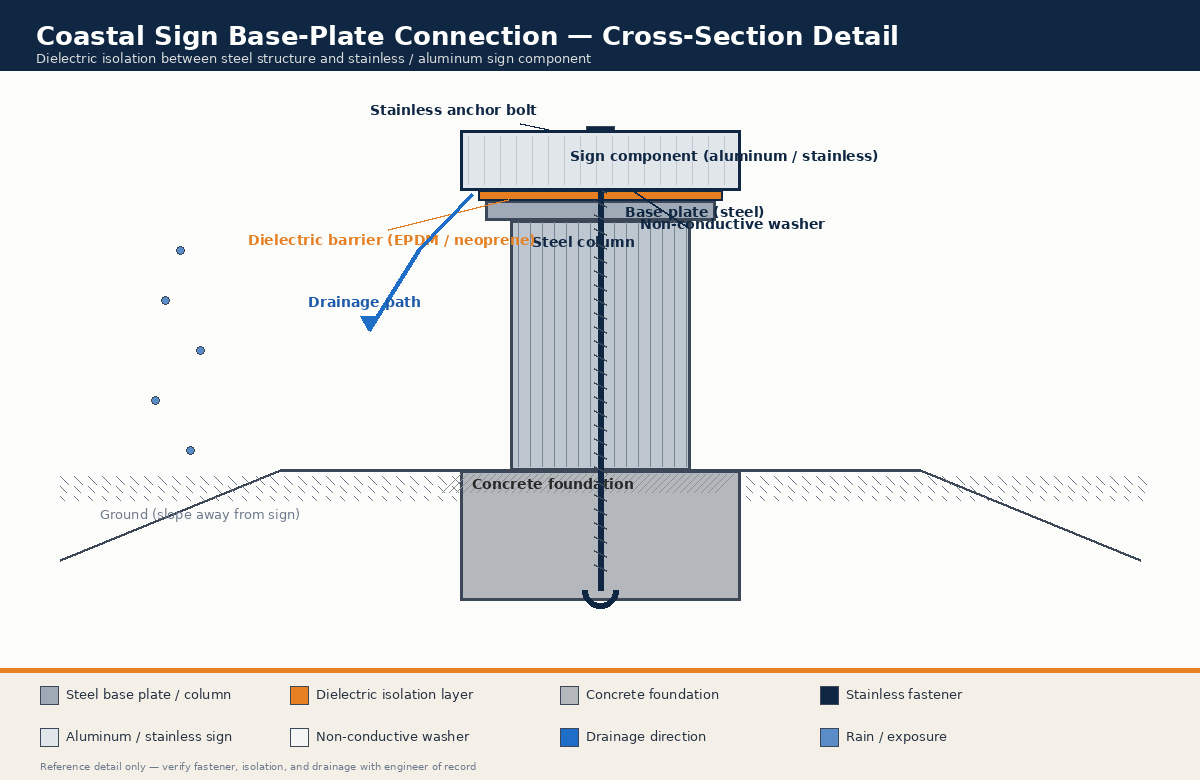
Reference detail only. Fastener specification, isolation material, sealant type, and drainage geometry must come from your project’s governing specification and the structural engineer of record.
Scope of This Guidance
This article describes a general approach to coastal corrosion protection. It does not state or assume a specific corrosion class, coating system or film thickness, since those must come from your project’s governing RFP and specification, not a general guide. It also doesn’t substitute for a coating manufacturer’s own application and surface-preparation data sheets, which govern the actual products used.
Get a Material and Coating Checklist
Send us your project’s coastal corrosion requirements, and we’ll return a material and coating-system checklist you can use to compare proposals against your actual specification.
Frequently Asked Questions
Must all coastal signs use stainless-steel structures?
No. Hot-dip galvanized steel with a compatible duplex coating system, or properly isolated aluminum, can both perform well in coastal exposure. Stainless steel is one valid option among several, and the right choice depends on your structure’s size, budget and how it interfaces with other materials, not a blanket rule that only stainless works near salt water.
Is painting still needed after hot-dip galvanizing?
Not always, but it’s common in coastal environments as a duplex system, since the paint layer slows how fast the sacrificial zinc coating wears down. Galvanizing alone can be sufficient depending on your project’s corrosion class and expected service life, so confirm the requirement against your project specification rather than assuming either option by default.
Why must dissimilar metals be isolated?
Direct contact between metals like aluminum, stainless steel and carbon steel sets up a galvanic reaction where the less noble metal corrodes faster than it would in isolation, and humidity and salt exposure accelerate that reaction. Isolating the contact point with a dielectric barrier or compatible washer stops the two metals from completing that electrical connection in the first place.
Does a higher corrosion class always mean a thicker coating?
Not directly. Corrosion class, film thickness, and the specific coating system are related but separate specifications, and a higher class typically calls for a more durable system rather than simply more coats of the same product. Confirm the actual film thickness and system requirement from your project specification instead of assuming a linear relationship between class and thickness.