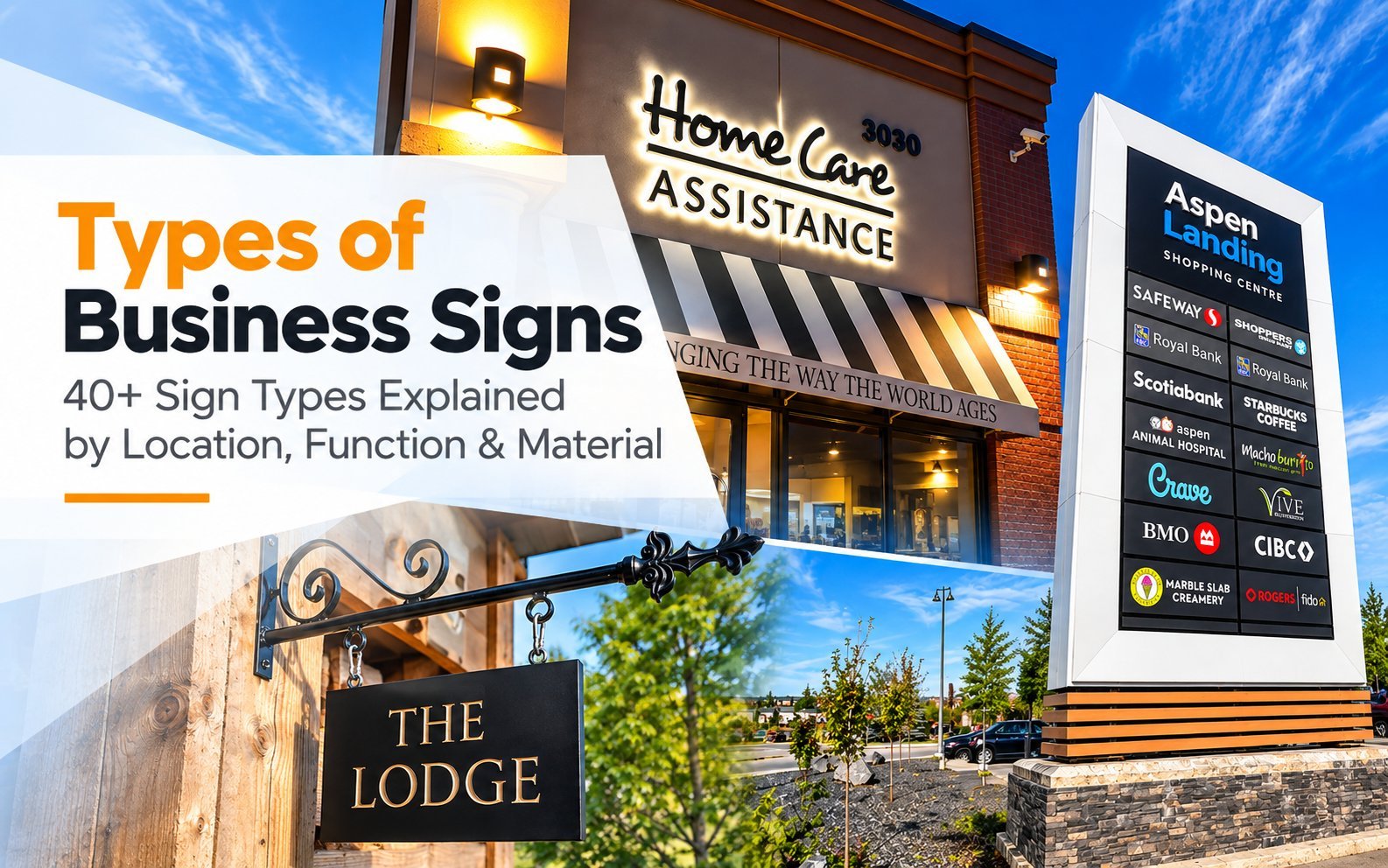
A business sign can be sorted four different ways in 2026: where it’s mounted, what job it does, how it’s built, and what it’s made of.
The same storefront sign is a location type (storefront), a function type (identification), a construction type (channel letters), and a material type (aluminum) all at once, and knowing which question you’re actually asking makes the whole category a lot less confusing.
This page is a reference, not a buying guide. If you already know what a sign type is and need help deciding which one fits your project, our signage selection guide walks through that decision step by step. This page stays focused on definitions.
How to Read This Guide
Four questions sort every sign type on this page, and each one answers something different. Location asks where the sign physically sits, on a facade, inside a lobby, or on a vehicle. Function asks what job the sign does for the business, identifying it, directing people, meeting a legal requirement, or selling something.
Construction asks how the sign is physically built, as a flat panel, a set of dimensional letters, a light box, or a digital screen. Material asks what it’s made of, acrylic, aluminum, stainless steel, or several other options.
A single real sign usually answers all four at once. A restaurant’s illuminated storefront logo, for example, is a storefront sign by location, an identification sign by function, a front-lit channel letter by construction, and aluminum-and-acrylic by material.
Each entry below names the type, its common industry alias where one exists, and the dimension it belongs to, so the same physical sign can show up more than once across different sections without that being a contradiction.
A quick worked example makes the overlap concrete. The table below classifies three common real-world signs across all four dimensions at once, so you can see how the same framework applies whether the sign is small and interior or large and freestanding.
| Real Sign | Location | Function | Construction | Material |
|---|---|---|---|---|
| Restaurant storefront logo | Storefront | Identification | Front-lit channel letters | Aluminum + acrylic |
| Hospital hallway room number | Interior wall | Directional / regulatory | Flat panel with tactile characters | Acrylic or ADA-compliant composite |
| Shopping center entrance sign | Pylon | Identification | Light box | Aluminum cabinet + acrylic face |
Every entry from here on names the type first, then the dimension-specific detail that actually matters for a buyer deciding whether it fits their project.
By Location
Location describes where a sign is physically mounted or placed, independent of what it says or how it’s built.
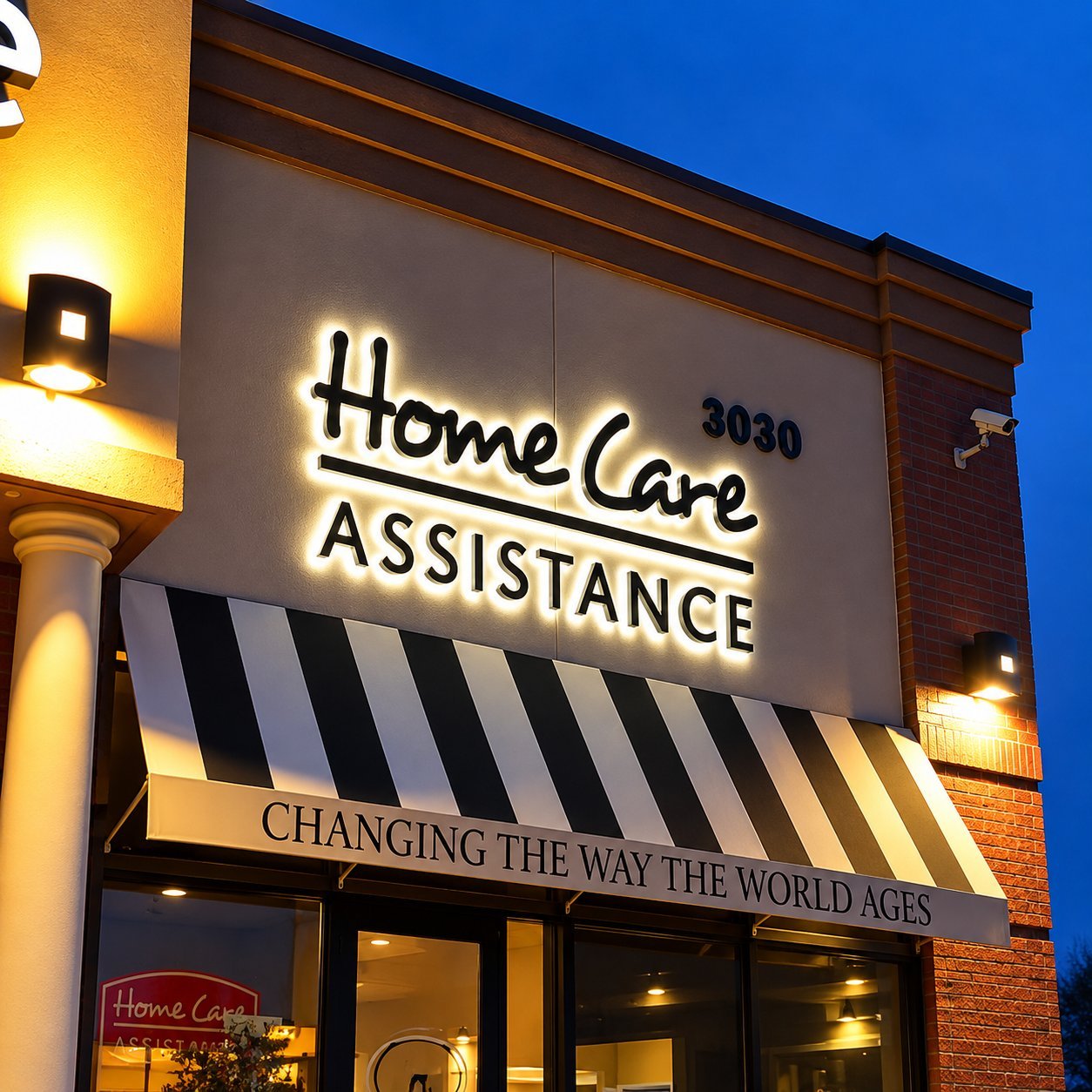
Storefront Sign
Mounted directly on the building face above or beside the entrance, this is the primary identification point for almost any retail or restaurant business. It’s most often built as channel letters or a light box. See outdoor business sign options for the common storefront builds.
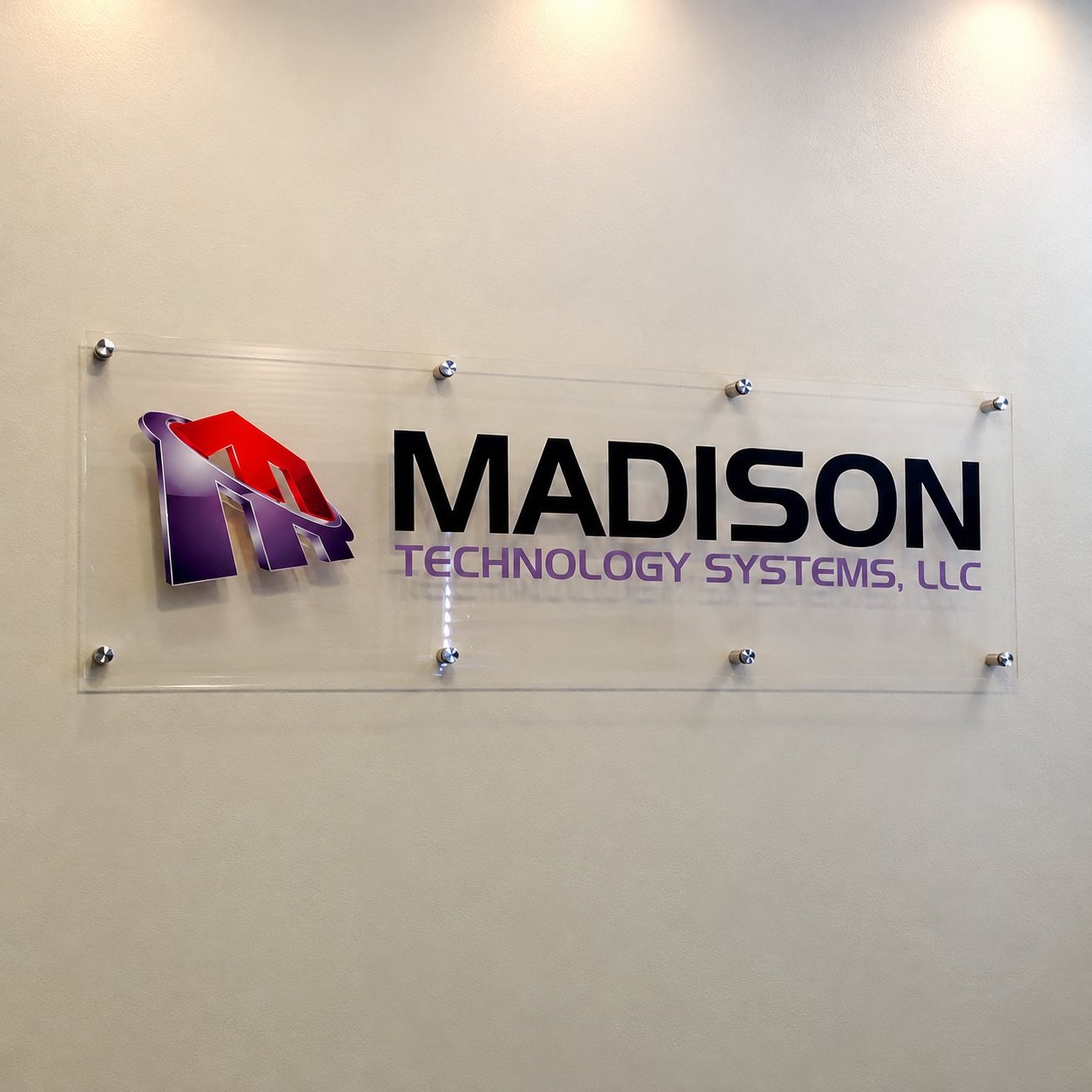
Interior Wall Sign
Mounted on a lobby, reception, or hallway wall, an interior wall sign favors finish quality over weather resistance because it never faces rain or UV exposure. Dimensional letters, flat-cut acrylic logos, and metal letters all work well here.
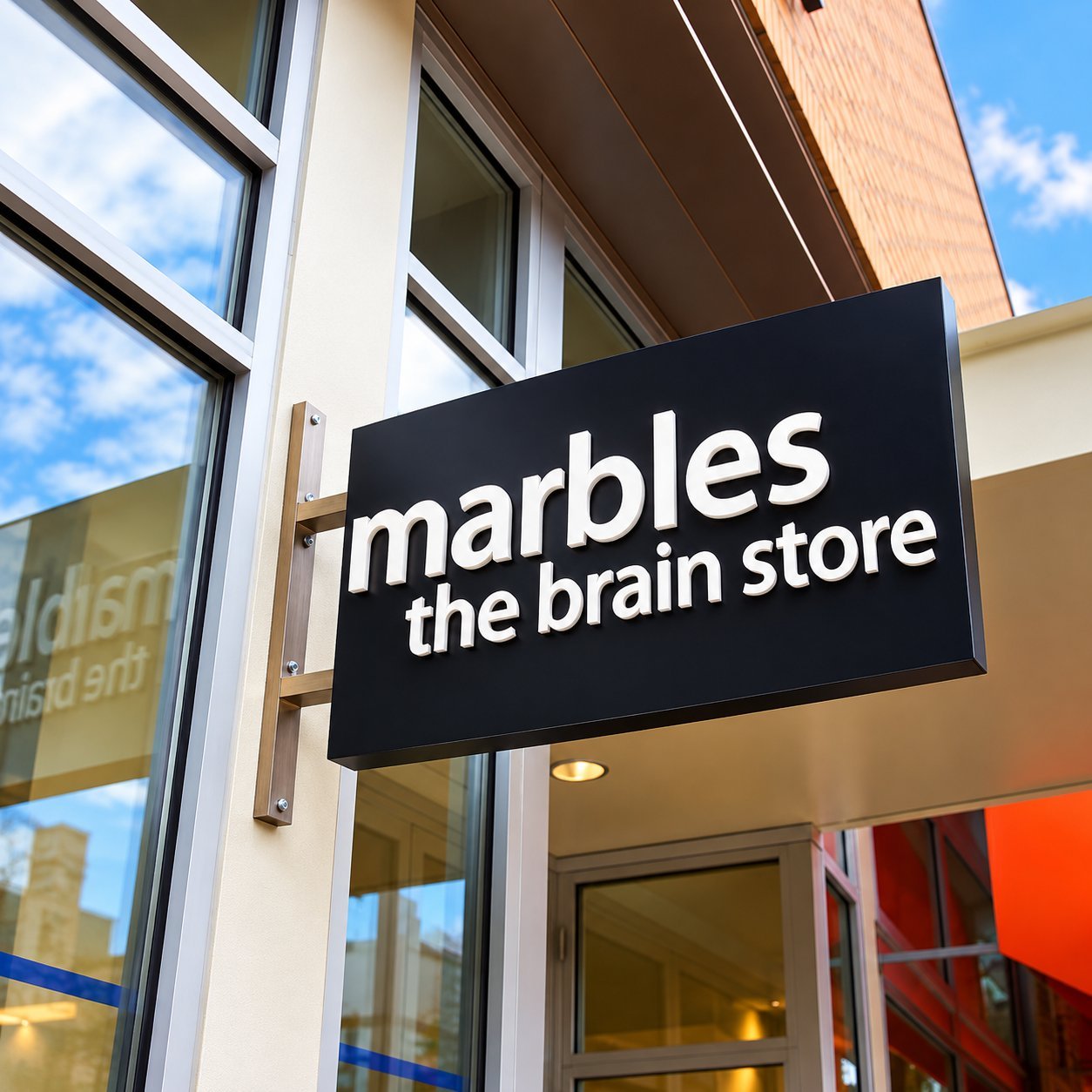
Blade Sign
Mounted perpendicular to the building face rather than flat against it, a blade sign reads from down the sidewalk in both directions instead of only head-on. That makes it useful for walkable streets, older commercial strips, and storefronts with steady foot traffic.
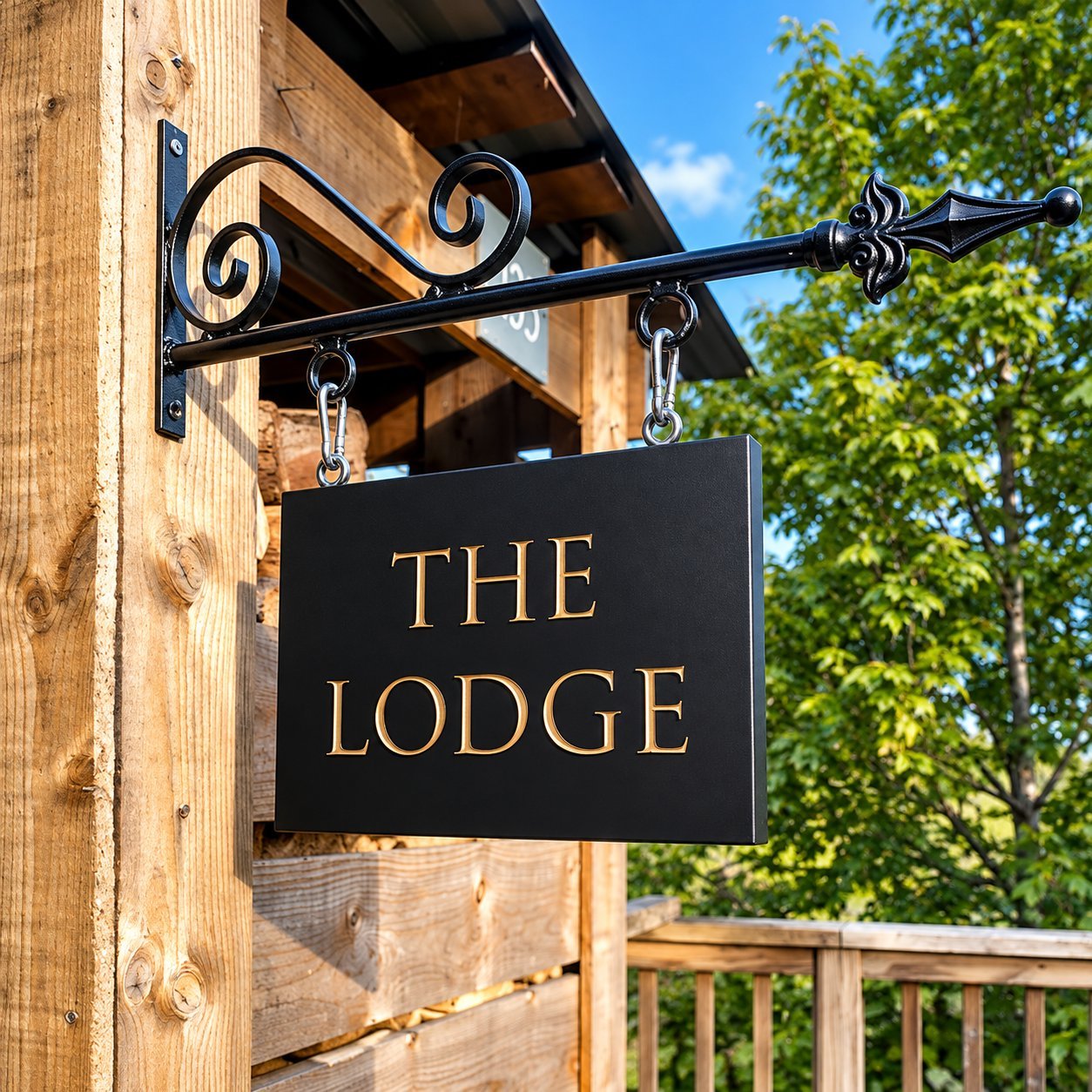
Hanging Sign
Suspended from a ceiling, soffit, or overhead structure, a hanging sign works where a wall-mounted sign would not be seen. Mall corridors, covered walkways, and arcade-style storefronts often use this format for visibility from the walking path.
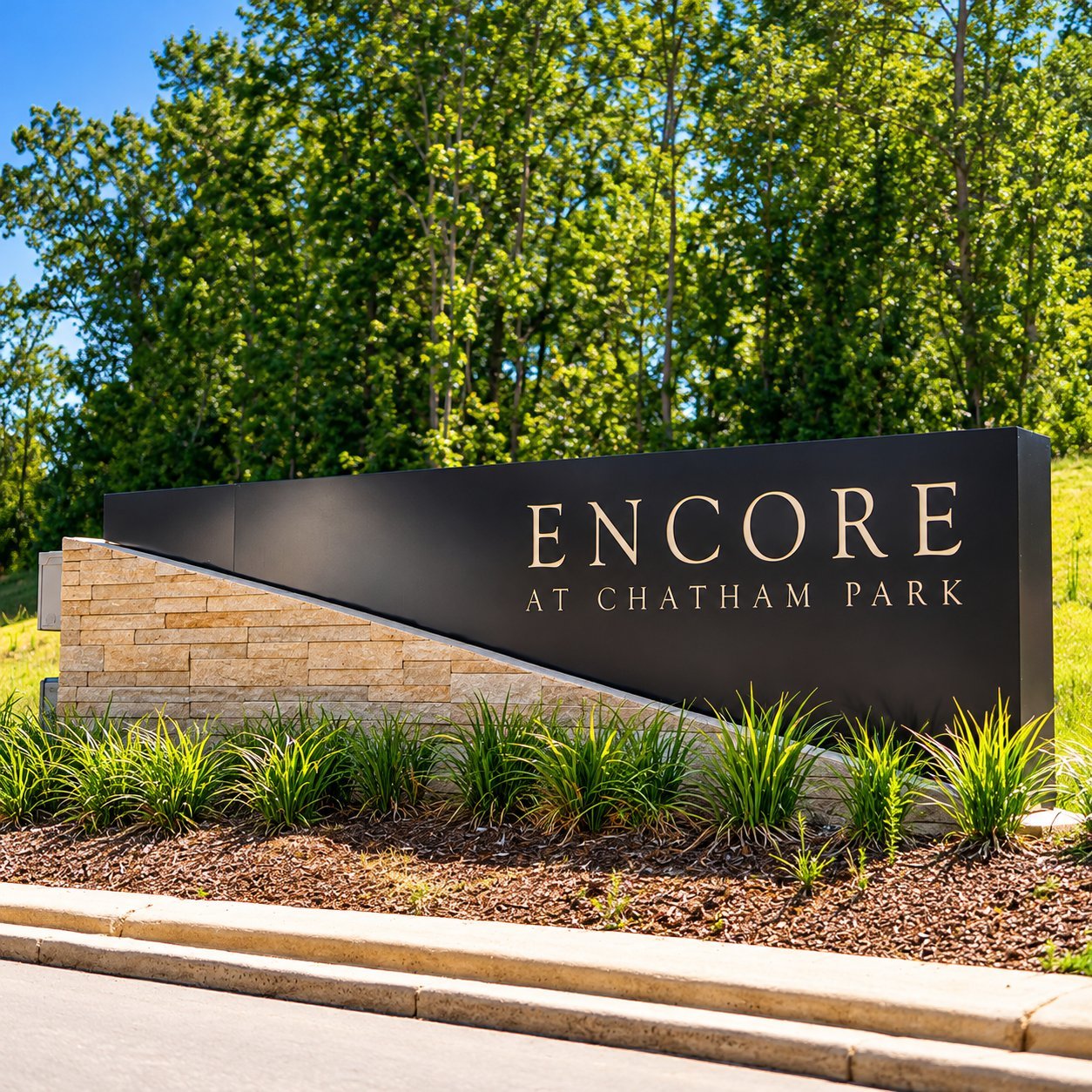
Monument Sign
A monument sign is a freestanding, ground-mounted structure, usually low and wide, built near a property’s street frontage rather than on the building itself. It identifies the property before a visitor turns in, especially for set-back offices and multi-tenant retail sites.
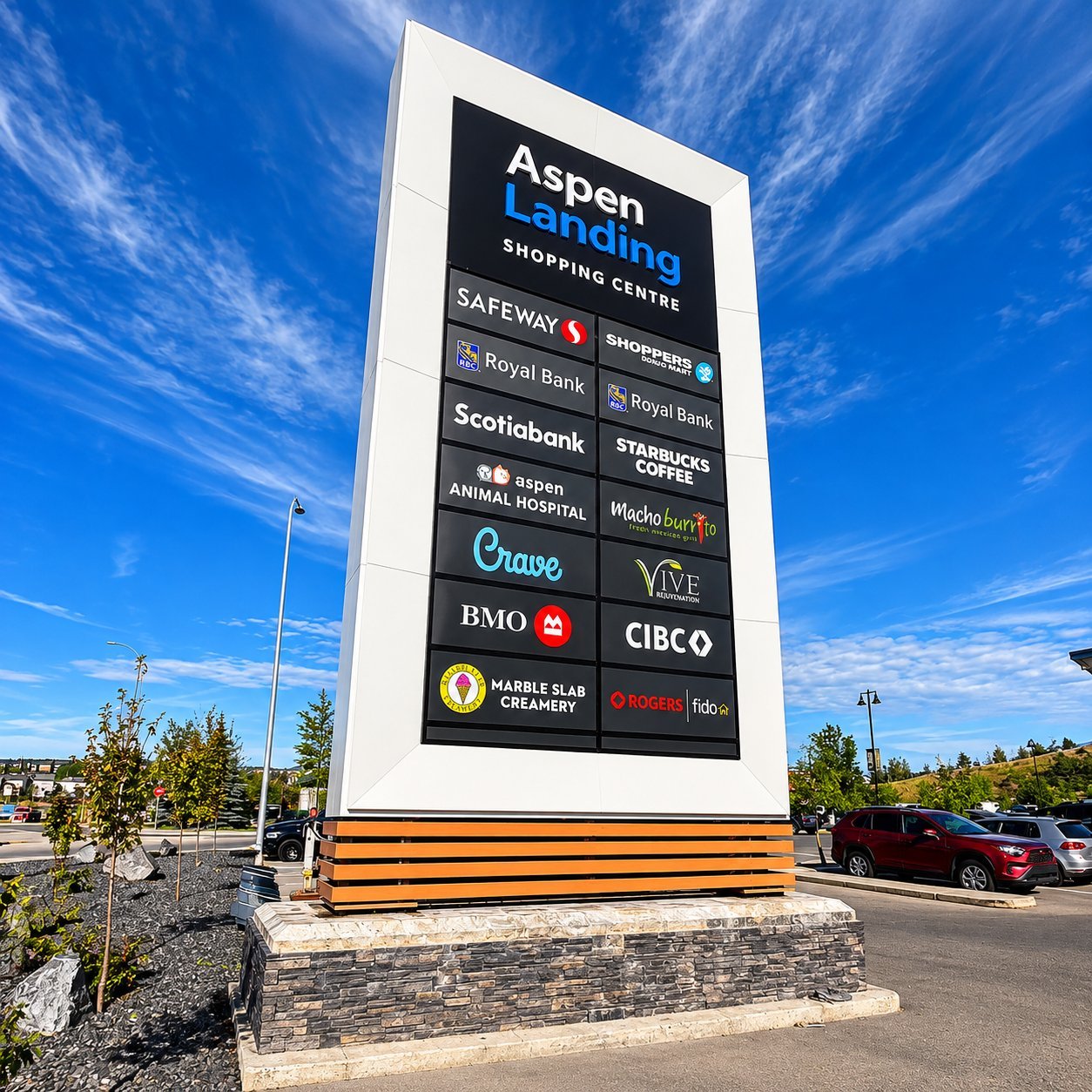
Pylon Sign
A pylon sign is a tall freestanding structure set further back from the building than a monument sign and built for visibility from a road rather than a parking lot. It is common at gas stations, shopping centers, and highway-facing commercial properties.
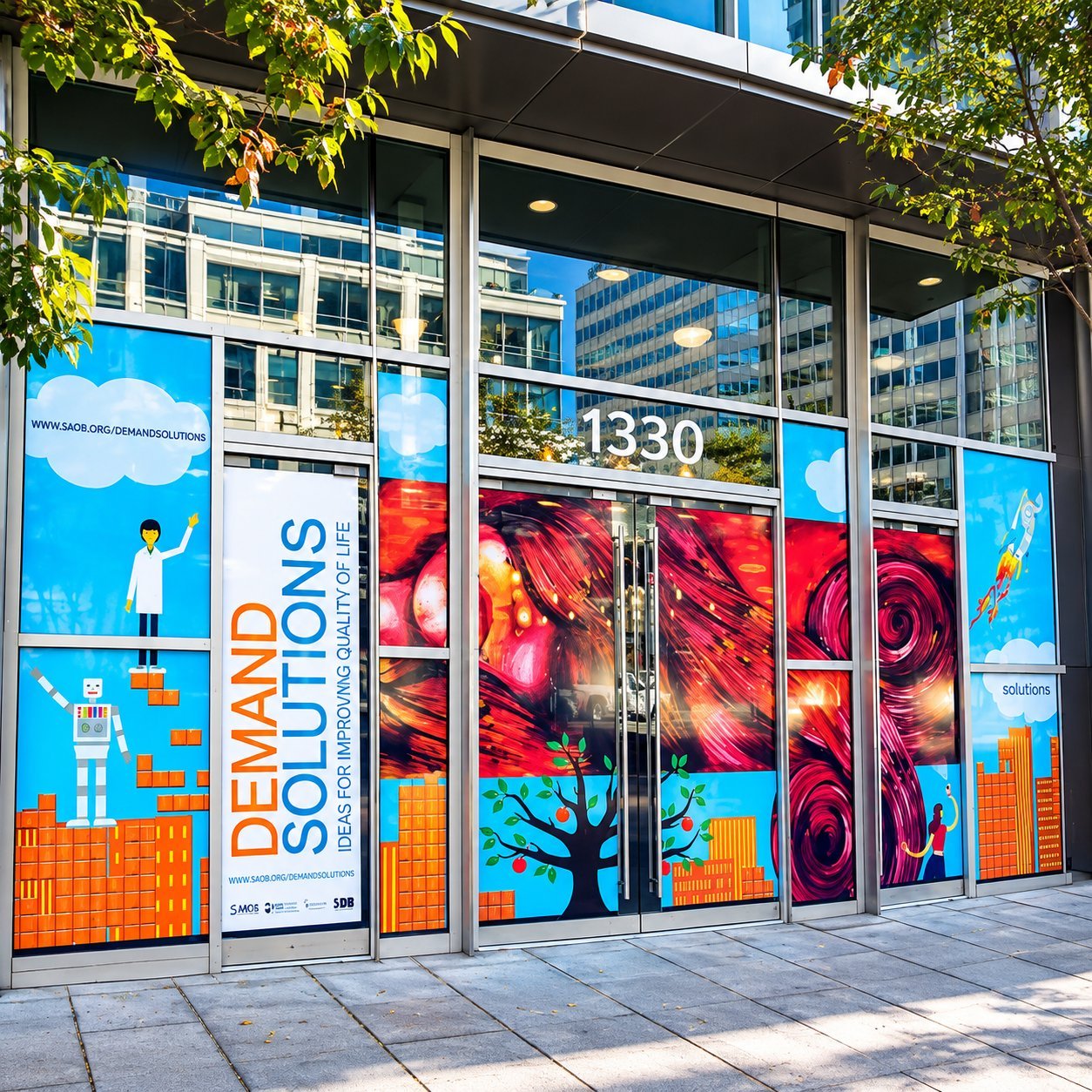
Window Graphic
Applied directly to glass rather than mounted on a separate structure, a window graphic covers hours-of-operation decals, promotional cling, and full storefront vinyl treatments. It is typically the lowest-cost location type because it adds no structure of its own.
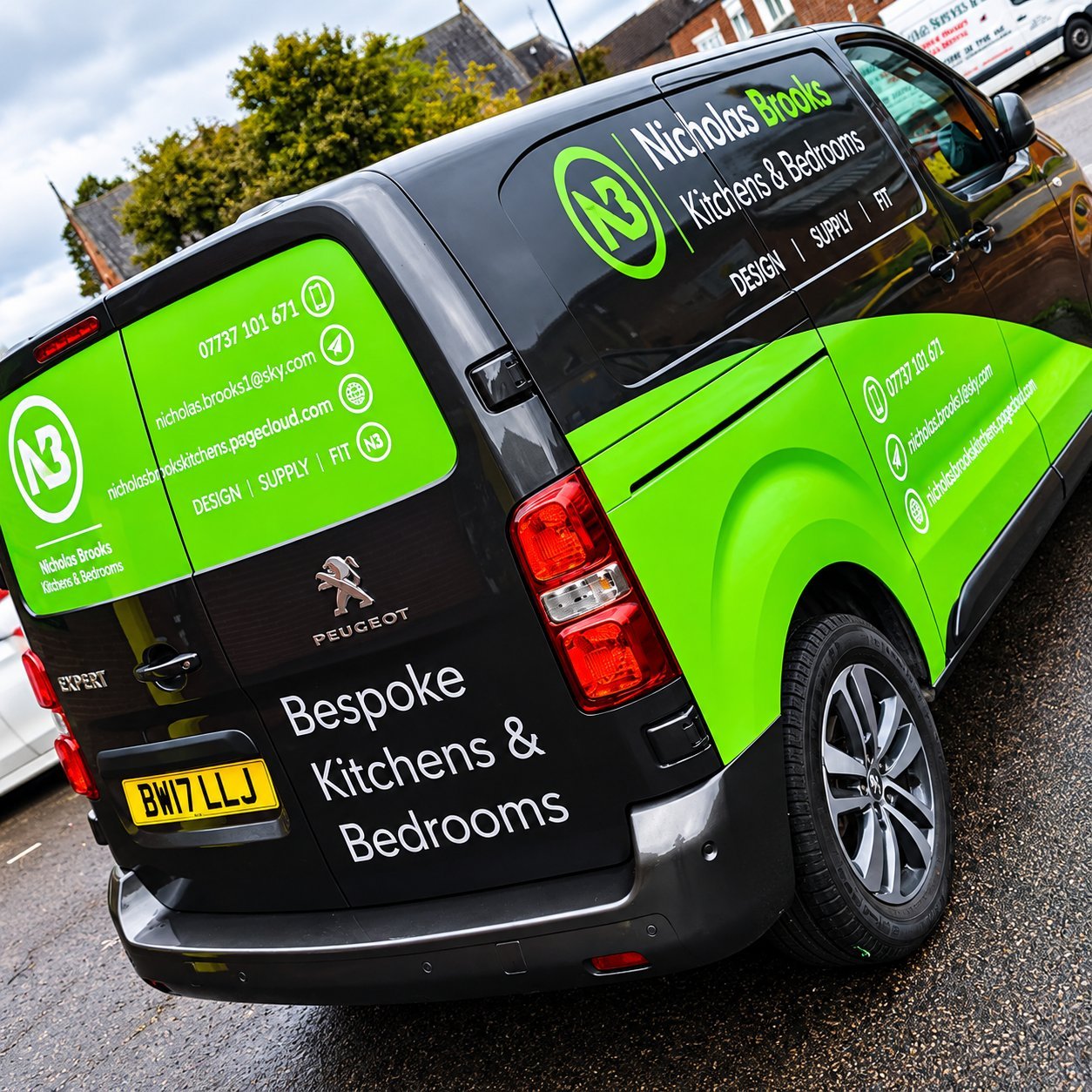
Vehicle Graphic
Applied to a car, van, or truck body, a vehicle graphic turns a fleet vehicle into a moving advertisement. It uses the same cut-vinyl or printed-vinyl techniques as a window graphic, adapted for a curved, mobile surface.
Wayfinding Sign
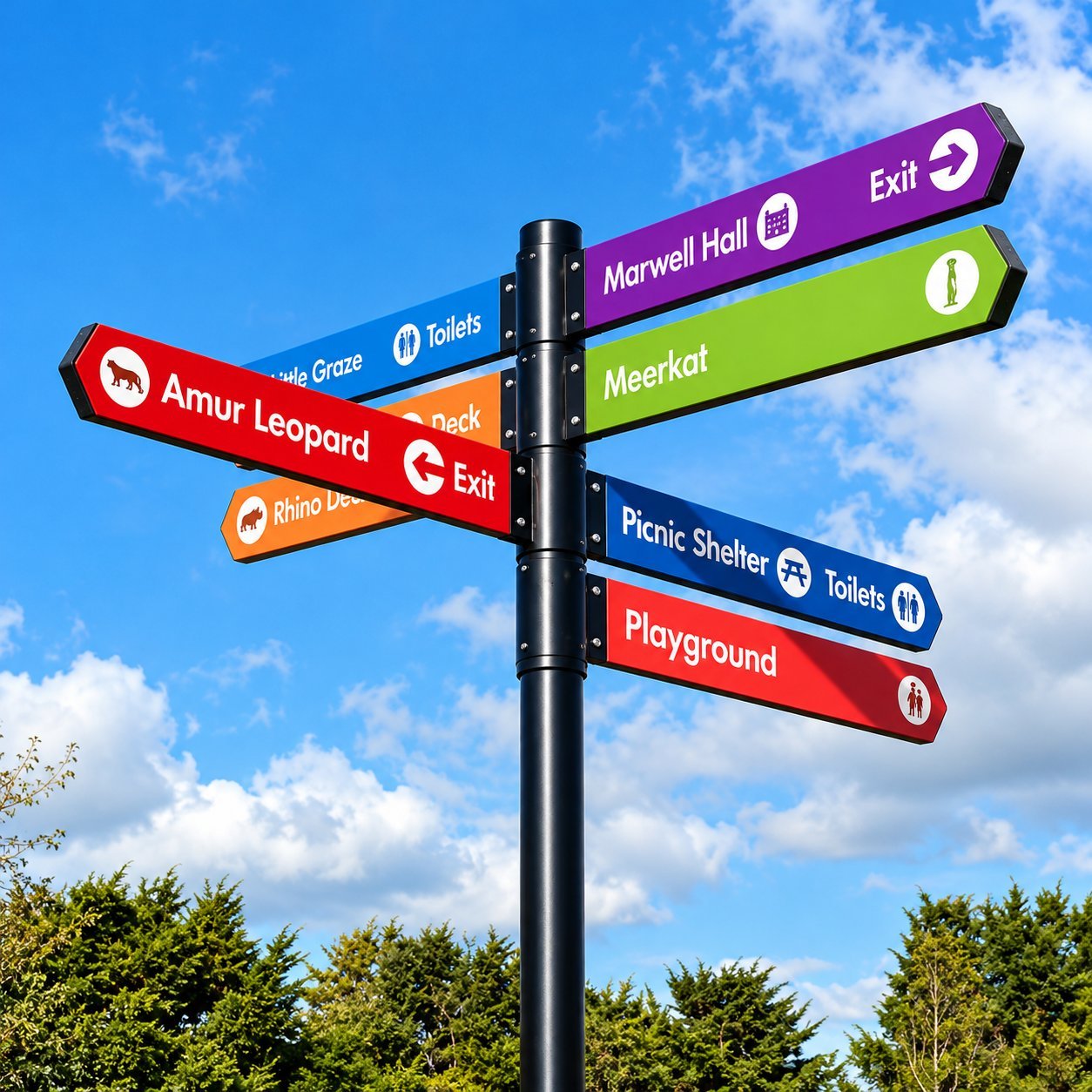
A wayfinding sign helps visitors choose a direction once they are already on site. Multi-directional posts, campus directories, parking arrows, and interior directional signs all belong here, and each needs to be sized for walking speed or driving speed.
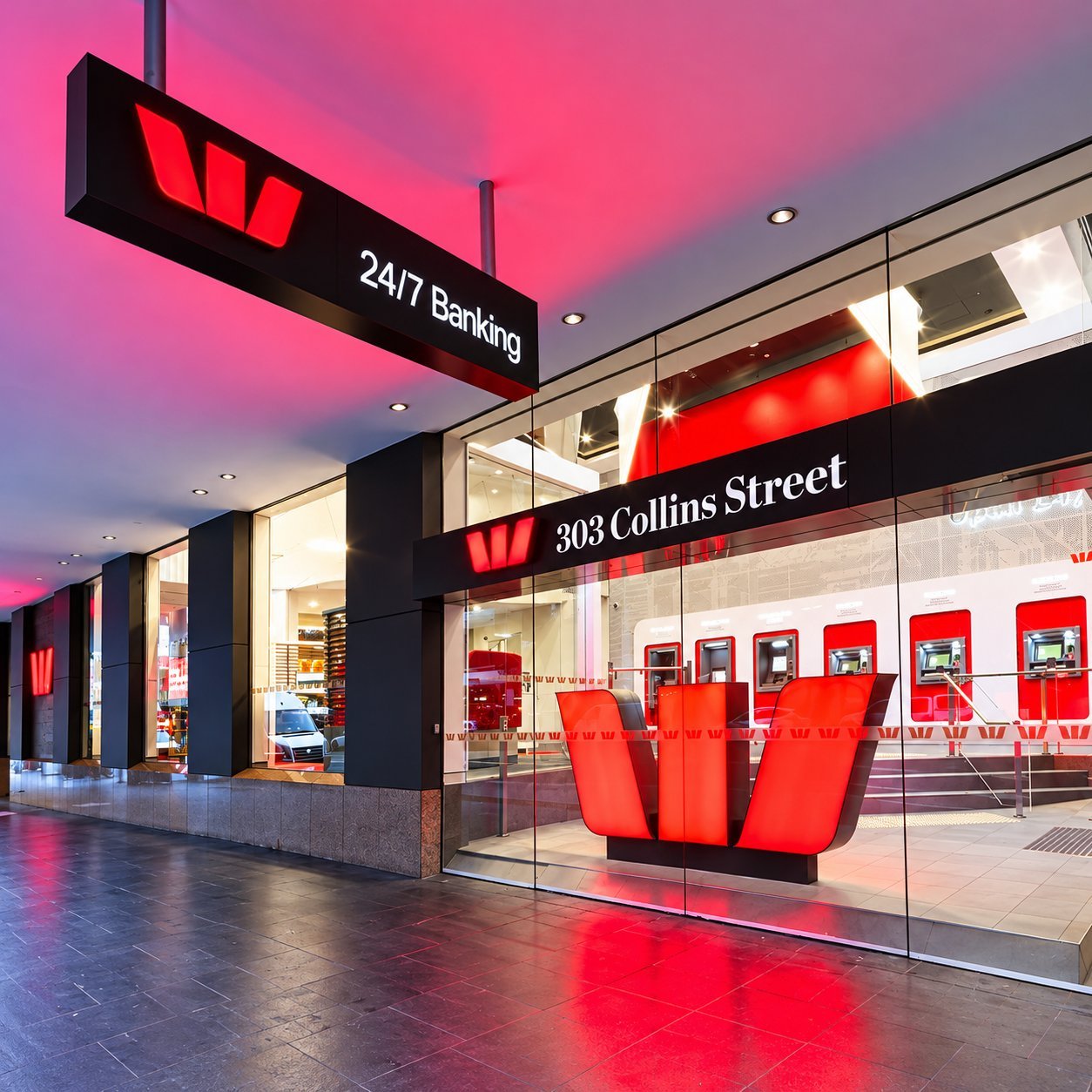
Awning sign. Lettering or a logo applied to or built into a fabric or rigid awning over an entrance. It combines weather protection for the doorway below with identification, which is why it’s common on older storefronts and sidewalk-facing cafés where a full channel letter sign isn’t practical or permitted.
By Function
Function sorts signs by the job they do for a business, regardless of where they’re mounted or how they’re constructed.
Identification Sign
Identification signs tell a visitor what a business is called and, implicitly, that they have arrived at the right place. A storefront sign, a lobby logo wall, a projecting sign, and a vehicle graphic can all serve this function even though they are built differently.
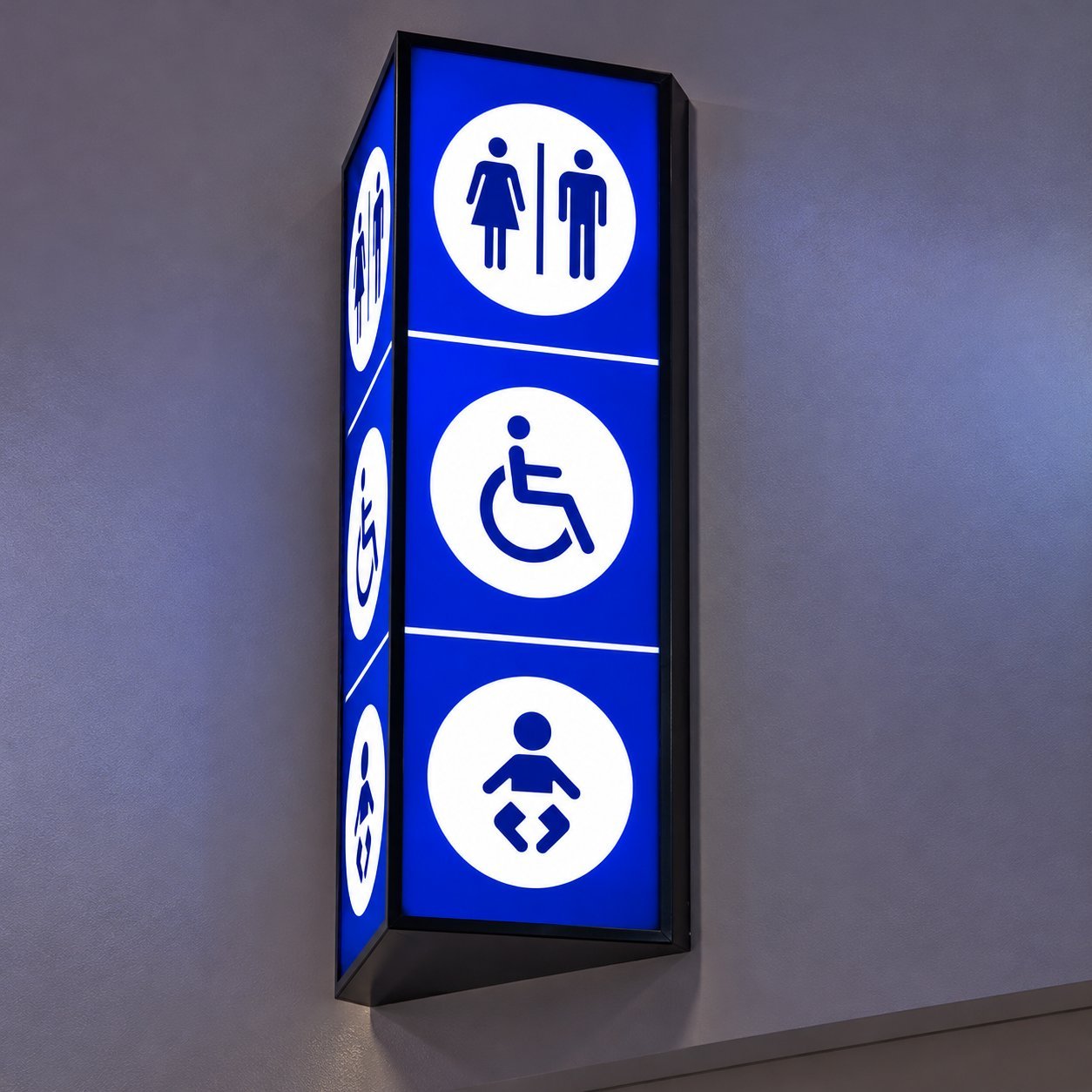
Regulatory / ADA Sign
Regulatory and compliance signs exist because a code or regulation requires them, not because a brand chose to install them. ADA-required accessibility signage covers restroom identification, room numbering, and directional signage with tactile characters, Braille, and code-controlled mounting heights.
Safety signs cover a related but distinct requirement: OSHA-mandated hazard warnings, fire-code exit signage, and emergency egress signage, all driven by workplace and life-safety regulation rather than accessibility law specifically. The two categories often get specified together on the same project, but they answer to different codes and different inspectors.
Promotional Sign
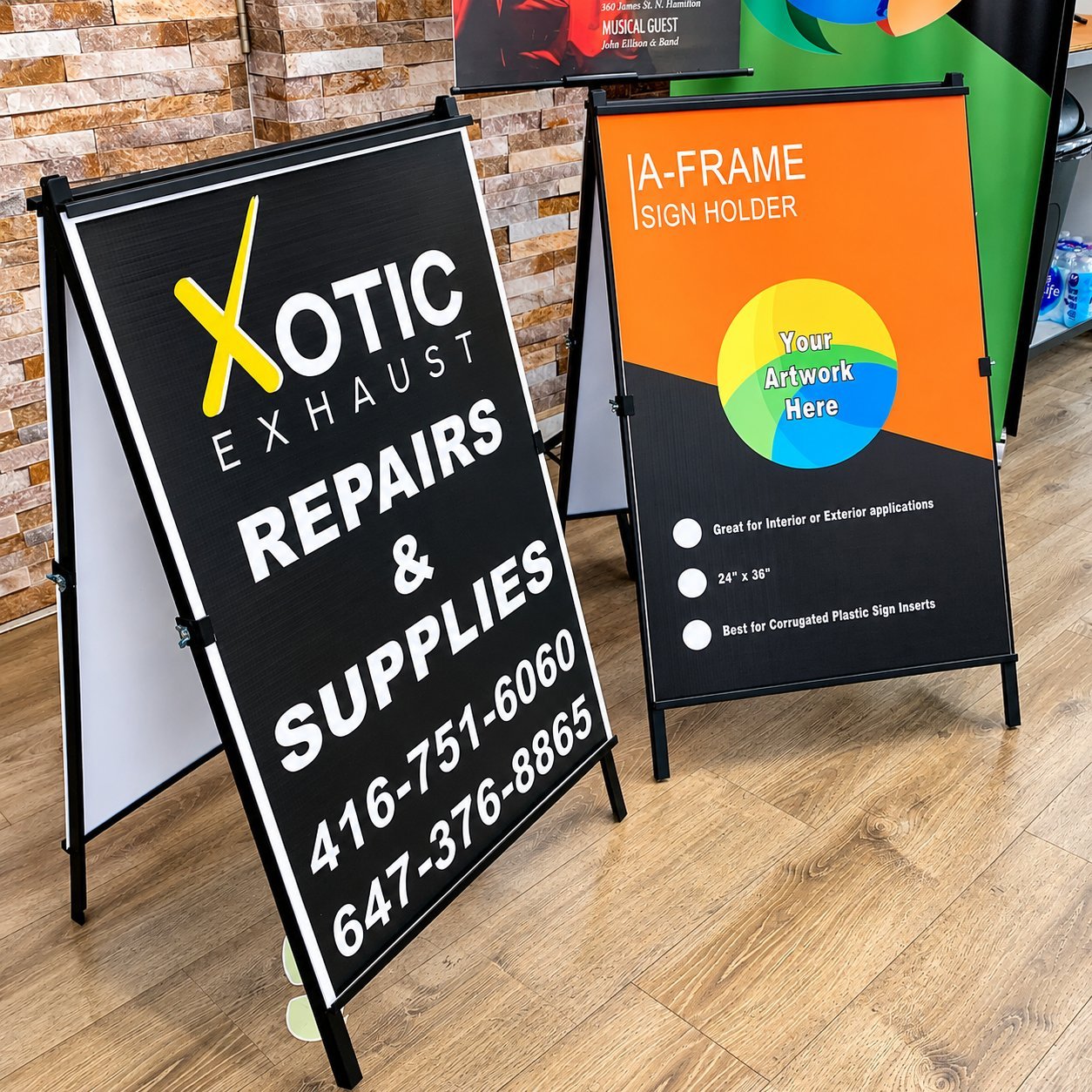
Promotional and marketing signs exist to sell something right now, a limited-time offer, a seasonal sale, or a new product launch. An A-frame sandwich board, a banner sign, and a window cling are the most common builds here, and they’re usually designed to be swapped out often rather than to last for years.
By Construction
Construction describes how a sign is physically built, and it’s the dimension that affects cost and maintenance the most directly.
Flat panel sign. A single flat piece of material, metal, acrylic, or composite panel, printed or painted with the design directly on its face. It’s the simplest and generally least expensive construction type, with no internal structure or lighting to maintain.
Dimensional letters (3D letters). Individual letters cut and formed with real depth and return, rather than printed flat. Dimensional letters read as more premium from a distance because they cast real shadow and catch light differently throughout the day, and metal, acrylic, or a combination of both are the common builds. Within metal dimensional letters, finish variants like brushed, mirror-polished, and titanium-coated surfaces change the look without changing the underlying construction, and resin-filled or vacuum-formed letters offer a lower-cost route to a similar dimensional effect in acrylic or plastic.
Channel letters. The specific dimensional-letter construction used for most illuminated storefront branding, built as a metal or acrylic shell with LED lighting sealed inside. Channel letter signs cover the general construction, with lighting variants splitting into a few distinct types below.
Front-lit channel letters. Light shines directly through the acrylic face of the letter, producing the bright, even illumination most people picture when they hear “channel letter sign.” Frontlit channel letters are the most common and generally the most economical lit letter type, and a trimless frontlit variant removes the visible trim cap around the face for a cleaner, more minimal edge.
Halo-lit channel letters (backlit letters). Light shines backward from behind the letter, washing the wall around it in a soft glow rather than lighting the letter face itself. Backlit signage reads as more upscale than front-lit and is common in hotel lobbies and premium storefronts.
Combination-lit channel letters. Front-lit and halo-lit in the same letter, combining both effects at once. It costs more than either lighting method alone, since it requires two separate lighting layers inside the same letter shell.
Light box sign. A shallow illuminated cabinet with a printed or translucent face, used heavily for menu boards, wayfinding panels, and full-graphic storefront displays. Custom LED light box signs split further into face-lit, edge-lit, fabric-faced, and slim-frame variants depending on how thin and how evenly lit the finished panel needs to be.
Neon sign (including LED neon). A continuous glowing line rather than a solid letter shape, traditionally built from glass tubing and increasingly built from flexible LED neon strip instead, since LED neon is more durable and safer to install. Custom neon signs cover the modern LED-based construction most buyers choose today.
Digital LED display. A pixel-based electronic screen capable of showing changing content rather than a fixed message, built from individual LED modules rather than a single lit face. A large-format digital display face typically ships from a specialized display manufacturer rather than a channel-letter or light box factory, so its construction, testing, and certification requirements differ meaningfully from the illuminated sign types above it, and its content system, pixel pitch, and brightness rating all need separate evaluation from a standard lit sign’s specification.
| Construction | Typical Price Tier | Ongoing Maintenance |
|---|---|---|
| Flat panel | Lower | Minimal, no lighting or moving parts |
| Dimensional letters, unlit | Mid | Low, periodic cleaning only |
| Front-lit channel letters | Mid | LED and driver checks over the sign’s service life |
| Halo-lit / combination channel letters | Higher | Two lighting layers to inspect instead of one |
| Light box | Mid | Face replacement possible without replacing the cabinet |
| Neon (LED) | Mid to Higher | Flexible strip and driver checks, no glass to break |
| Digital LED display | Highest | Electronics, content system, and display-specific service needs |
By Material
Material affects a sign’s lifespan, weather resistance, and cost more than almost any other single choice, and it’s worth understanding at a glance before diving into a full comparison.
Acrylic offers strong light transmission and vivid color at a moderate cost, making it the standard choice for illuminated letter faces and light box panels. It also cuts and polishes cleanly with CNC and laser equipment, which keeps fine detail and tight tolerances achievable at a reasonable price. Custom acrylic signs covers the construction options in more depth.
Aluminum is the outdoor workhorse for channel letter returns and metal sign bodies, striking a practical balance between weight, cost, and corrosion resistance for most climates. It bends and welds predictably, which is a large part of why it’s the default metal for custom letter fabrication rather than a specialty choice.
Stainless steel costs more and weighs more than aluminum, but it holds up best in coastal or heavily corrosive environments and reads as the most premium metal finish. Brass, bronze, and titanium-coated finishes sit in this same premium tier for projects where architectural appearance matters as much as durability. Custom metal signs covers the full metal range.
PVC is lightweight and the least expensive rigid material on this list, which makes it a reasonable choice for an indoor sign or a short-term promotional build. Don’t specify PVC for a sign meant to stay outdoors for years. It’s more UV- and temperature-sensitive than acrylic or metal, and it isn’t the right material for a long-term exterior installation. It does cut and machine easily, which is part of why it stays popular for low-cost indoor work despite that outdoor limitation.
Wood shows up mostly in hospitality, rustic retail branding, and interior signage where a natural material fits the design intent better than metal or acrylic. It needs more active maintenance outdoors than any material above it, and it’s the slowest of this group to fabricate at scale since consistent sealing and finishing take real time per piece.
Fabric and vinyl film cover stretch-fabric light box faces, banner material, and cut or printed vinyl graphics for windows and vehicles. These aren’t structural materials in their own right, they’re always paired with a rigid frame, panel, or glass surface underneath.
Aluminum composite panel (ACM). A sandwich of two thin aluminum sheets bonded to a solid core, ACM is flat, rigid, and lighter than solid metal, which makes it a common choice for large flat panel signs and wayfinding panels where solid aluminum or stainless steel would add unnecessary weight.
A full side-by-side comparison of lifespan, weather resistance, and cost across all of these materials is already covered in detail on Hicen’s signage materials guide, so this section stays at the summary level rather than repeating that comparison here.
Which Type Fits Which Business
This table gives a starting point by industry, not a final recommendation. Real projects vary by viewing distance, local sign code, and brand guidelines even within the same industry, which is exactly what the signage selection guide linked at the top of this page walks through in full.
| Industry | Primary Type | Alternate | Typical Budget Tier |
|---|---|---|---|
| Retail storefront | Front-lit channel letters | Light box | Mid |
| Restaurant & bar | LED neon or halo-lit letters | Light box menu board | Mid to Higher |
| Office / corporate lobby | Dimensional metal letters, unlit | Flat acrylic logo panel | Mid |
| Hotel & hospitality | Halo-lit letters | Backlit fabric light box | Higher |
| Medical & healthcare | Wayfinding light box system | ADA-compliant directional signage | Mid |
| Mall / shopping center | Pylon sign | Interior wayfinding light box | Higher |
| Airport & public project | Durable directional light box | Illuminated pylon or monument sign | Higher |
| Multi-site chain rollout | Front-lit channel letters (standardized) | Light box (standardized) | Mid, repeatable per site |
A chain or multi-site rollout benefits most from standardizing one or two types across every location rather than letting each site pick independently, since that consistency is what keeps brand appearance, maintenance parts, and repeat-order pricing predictable across a dozen or a hundred locations.
Frequently Asked Questions
What are the main types of business signs?
Business signs sort into four dimensions: location (storefront, wall, blade, hanging, monument, pylon, window, vehicle), function (identification, directional, regulatory, promotional), construction (flat panel, dimensional letters, channel letters, light box, neon, digital display), and material (acrylic, aluminum, stainless steel, PVC, wood, fabric). Most real signs sit in more than one category at once.
What type of sign is best for a storefront?
Front-lit channel letters are the most common storefront choice for bright, even branding, while halo-lit letters suit a more upscale look. The right answer depends on your viewing distance, brand tone, and budget, which our signage selection guide walks through in detail.
Which sign type is the cheapest?
A flat panel sign in PVC or acrylic, with no illumination, is the least expensive construction and material combination on this page. That lower upfront cost comes with a shorter practical lifespan outdoors and less visual presence at night than an illuminated option.
Which signs last the longest outdoors?
Stainless steel or aluminum construction paired with front-lit or halo-lit channel letters generally holds up longest in outdoor conditions, combining corrosion-resistant metal with a sealed, weather-rated lighting system rather than exposed components.
Channel letters or a light box, which should I choose?
It depends mainly on brand tone and what you need to display. Channel letters suit a logo or wordmark that should read as dimensional and premium, while a light box suits full-panel graphics, menu content, or wayfinding information that benefits from even full-face illumination. Our signage selection guide and our light box and channel letter product pages go deeper on this specific comparison.
Can signs be made very small?
Yes, down to the point where legibility at the intended viewing distance becomes the real limit rather than the fabrication process itself. Our guide to letter height and viewing distance covers how small a letter can go before it stops being readable from where people will actually stand.
Ready to Source Your Custom Sign?
Tell us your sign type, quantity, and destination.
Send us your drawing, logo file or project idea and we’ll turn it into a factory-direct quote. Get in touch with the Hicen team and tell us what you’re making, how many you need and where it has to land, and we’ll come back with a price you can plan against.