Sourcing custom signs from China in 2026 comes down to four stages, and most of the risk sits at the handoff between them. You vet a supplier, you send a request for quote, you approve a sample, then you commit to bulk production and shipping. Skip a step, or skip the verification inside a step, and the mistake usually doesn’t surface until the container is already at sea.
This guide covers the two parts of that process buyers ask about most and get the least straight answers on: telling a real factory apart from a trading company, and writing an RFQ that actually gets you an accurate quote on the first try.
Quality inspection and export logistics each get a dedicated page of their own, linked below, so this one stays focused on the decisions you make before production even starts.
What Chinese Sign Factories Actually Do Well
Acrylic and metal fabrication, illuminated letters, light boxes and neon are the core competency of a dedicated sign factory, and that specialization shows up in cost and capability at once.
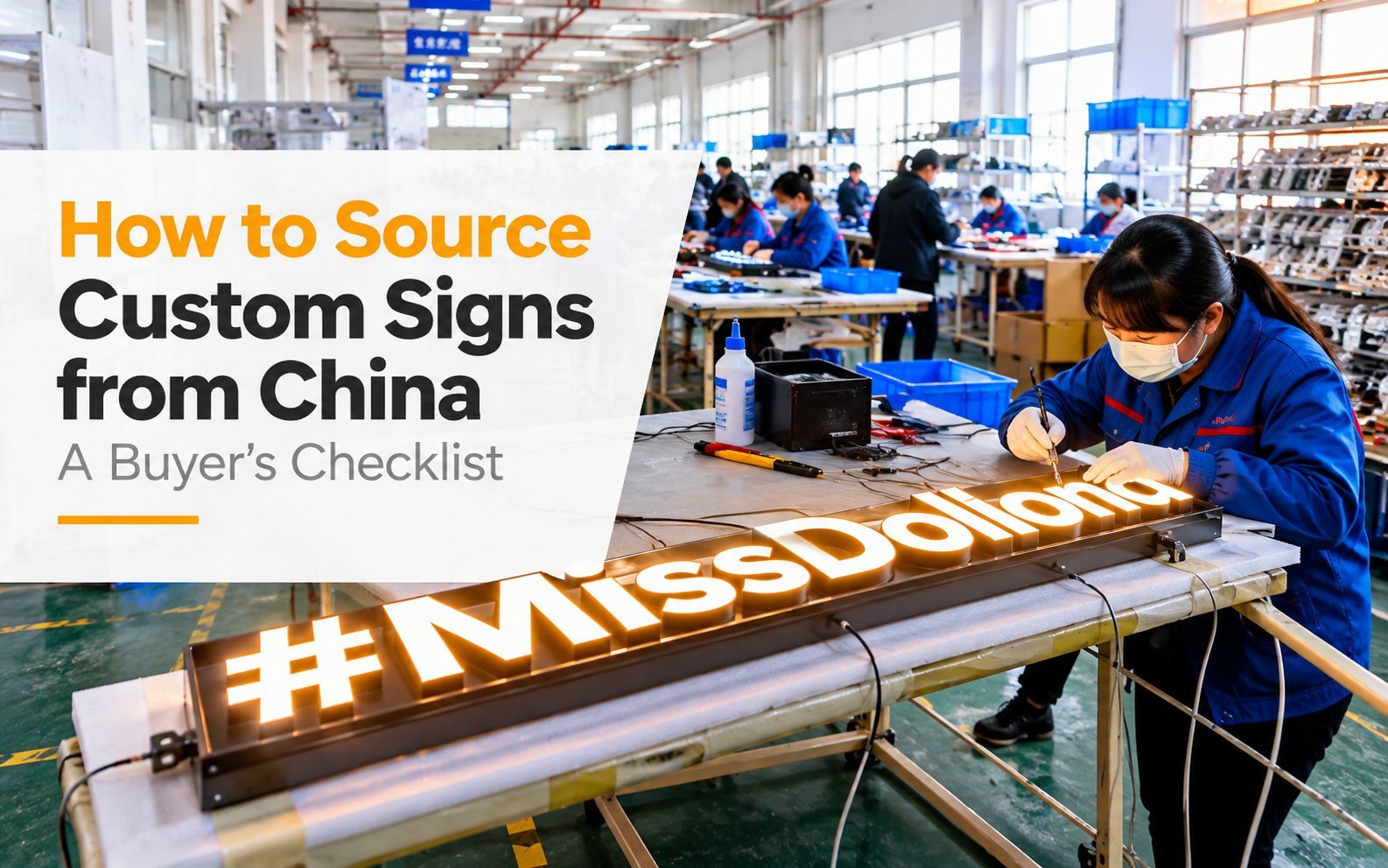
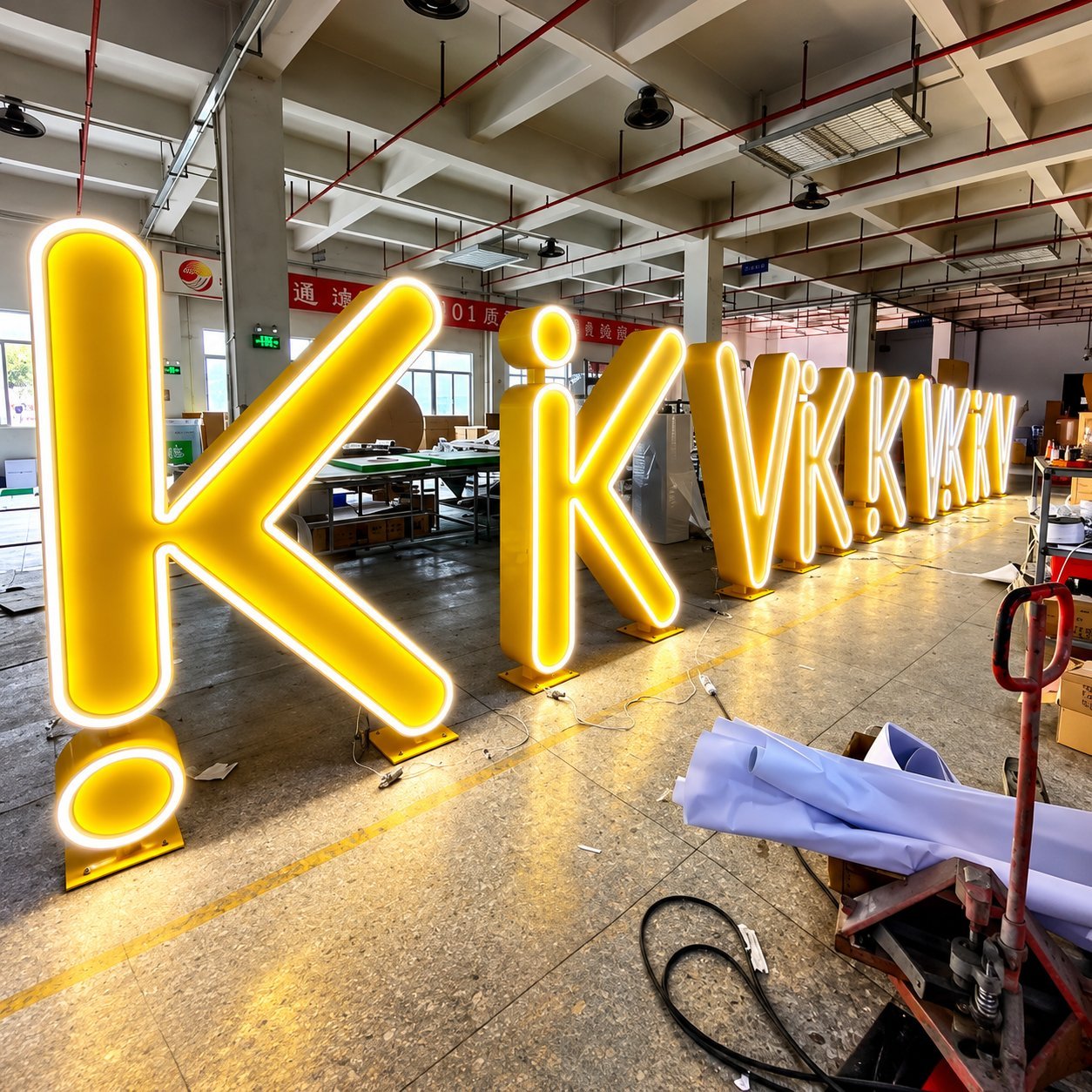
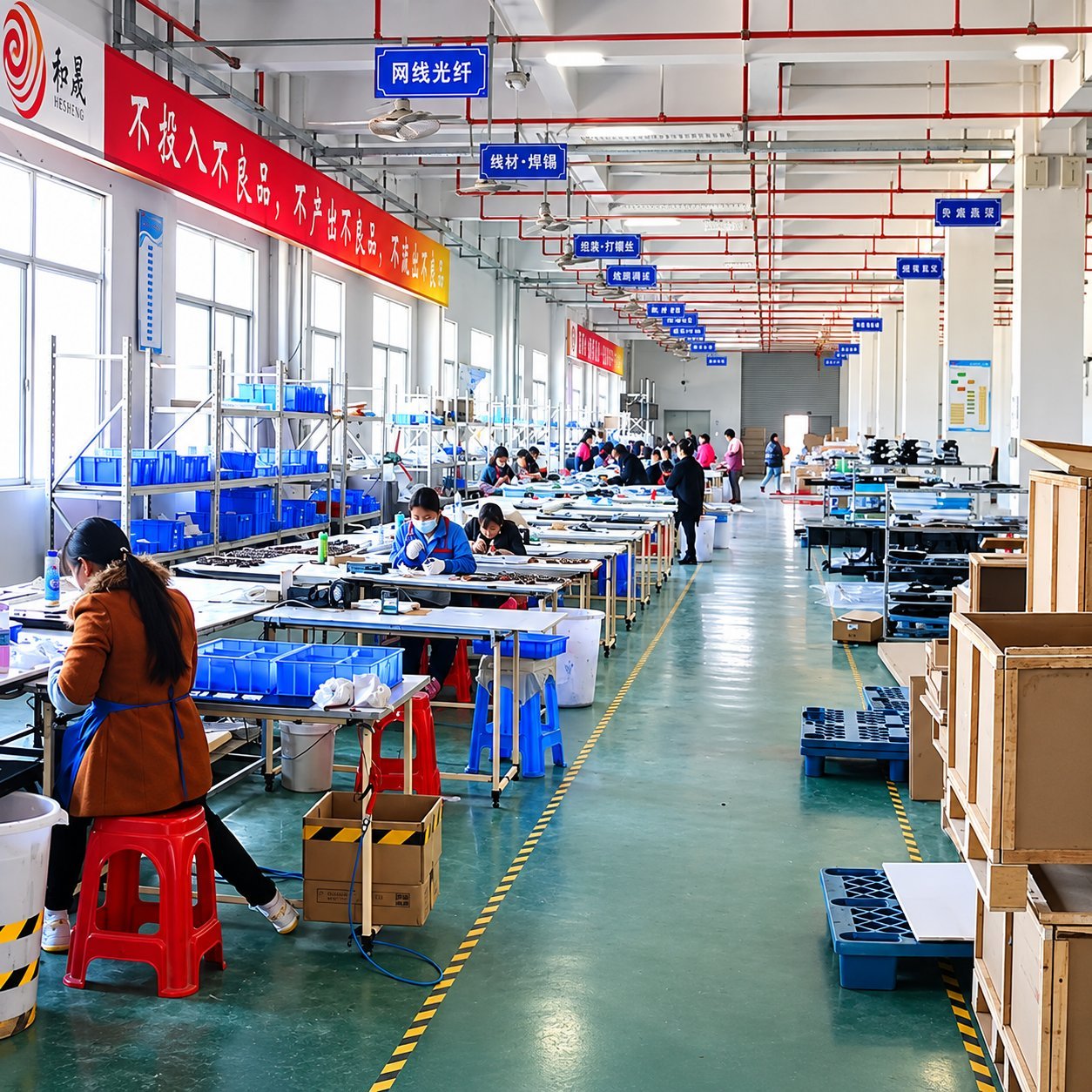
A factory running its own CNC cutting, laser cutting, bending and LED assembly in-house can hold tighter tolerances and quote more consistently than a shop that farms pieces out to subcontractors, because every process stage answers to the same quality system.
The cost structure follows from that same setup. Hicen’s manufacturing process runs design, cutting, bending, painting, LED installation, assembly and aging testing under one roof.
That’s standard for a direct factory in this category, and it’s the reason factory-direct pricing on custom signage tends to beat a shop that re-sells someone else’s production.
The boundaries are just as real as the strengths, and a buyer should hear them plainly rather than find them out mid-project. A single very small piece still has to clear a factory’s minimum efficient production run, so even where no strict minimum order applies, unit economics improve with scale.
On-site installation, electrical hookup and local permitting stay the buyer’s responsibility or their local contractor’s, not the factory’s, once the sign lands at its destination. Time-zone overlap is limited, so the fastest communication cadence usually runs through structured written RFQs and scheduled calls rather than real-time back and forth.
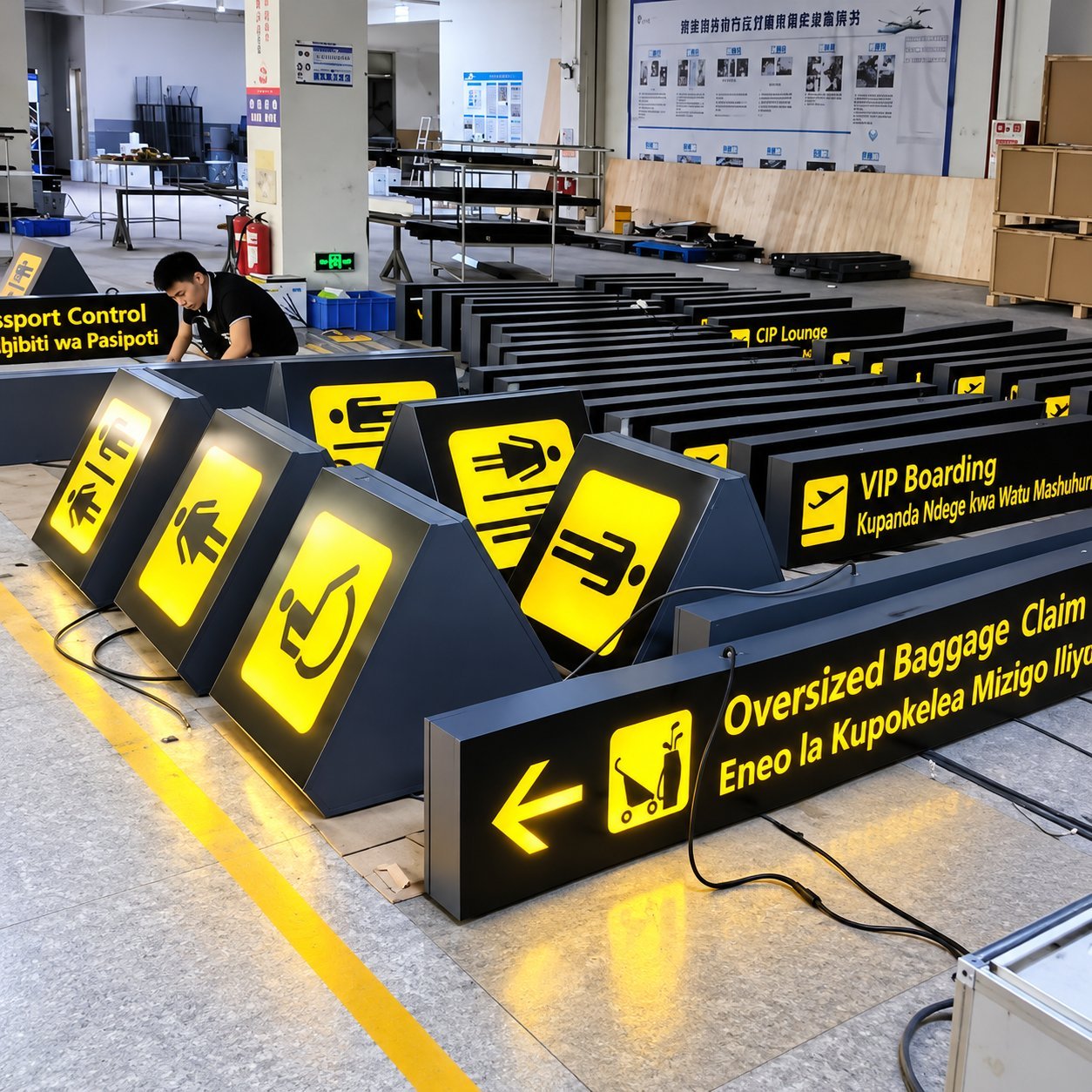
How to Vet a Supplier: Real Factory vs Trading Company
This is the single highest-stakes decision in the entire sourcing process, because a trading company adds a markup and a layer of distance between you and the people actually building your sign, often without disclosing that it’s happening. None of the six checks below rely on taking anyone’s word for it. Each one is something you can verify yourself before you commit.
Ask for a live video walkthrough, not a photo. Factory photos can be borrowed from someone else’s production floor. A live video call where you can ask the camera operator to walk to a specific machine or point at a specific work-in-progress order is far harder to fake convincingly.
Check that the business license entity matches the factory address. A legitimate manufacturer’s business license names the actual production entity and its registered address. If a sales contact represents one company name but the factory tour, invoice, or contract comes from a different entity, ask why before you ask anything else.
Ask who owns the equipment, not just who uses it. A factory that owns its CNC cutting, laser cutting, bending and LED assembly equipment answers differently than one renting floor space and machine time by the job. Equipment ownership is usually visible on the video tour and often listed on the supplier’s own site.
Ask whether they can modify tooling or a mold on your behalf. A real factory can usually adjust a jig, a bending template or a cutting pattern for your specific order. A trading company typically cannot, since that decision belongs to whichever factory they’re reselling from.
Ask whether a third-party audit can be arranged. A factory confident in its own process has no reason to resist a scheduled third-party inspection. Reluctance here, especially paired with reluctance on the video call, is a pattern worth taking seriously.
Check who actually issues your paperwork. The invoice, packing list and any certificates should come from the entity that matches the factory you verified, not a separate trading name that appears only at the invoicing stage.
Supporting documentation matters here too, and it should be checkable rather than just claimed.
Hicen’s own business license and quality certifications name Guangdong Haichen Technology Co., Ltd. as the manufacturing entity, carry a CE certificate number, and include ISO 9001:2015 quality management certification along with registered utility and design patents on the company’s own light box components.
That’s the kind of paperwork a real factory accumulates over years of production rather than assembles for one sales conversation. The quality control process itself, incoming material inspection through to a documented packing checklist, is the operational evidence that sits behind those certificates.
RFQ Checklist: What to Put in Your Drawing Request
A vague inquiry gets a vague quote, and a vague quote is how a landed price ends up nowhere near the number you were given up front. The more complete your first message, the fewer rounds of clarification stand between you and a number you can actually plan around.
A complete RFQ for custom signage should include all of the following in one message, not spread across a back-and-forth thread:
| Field | What to Specify |
|---|---|
| Dimensions | Overall width, height and depth, plus individual letter or module sizes where relevant |
| Material | Metal type, acrylic, PVC, or a named preference if you already have one |
| Surface finish | Matte, gloss, brushed, plated, painted, or a specific texture |
| Illumination method | Front-lit, halo-lit, combination, non-illuminated, or neon |
| Color | Pantone number or a specific color code, not a general color name |
| Quantity | Total pieces and, for a multi-site order, the site count |
| Installation location | Wall material, indoor or outdoor, and mounting access if known |
| Target market | Destination country, since certification and voltage requirements vary by market |
| Delivery deadline | Your real need-by date, not a padded one, so the factory can tell you honestly if it’s workable |
Here’s a template you can copy directly into an email:
RFQ email template
Hi,
We’re requesting a quote for the following:
– Sign type: [channel letters / light box / neon / metal letters / acrylic letters]
– Dimensions: [overall size + individual module sizes if applicable]
– Material: [specify or “open to recommendation”]
– Surface finish: [specify]
– Illumination: [front-lit / halo-lit / combination / non-illuminated]
– Color: [Pantone/code]
– Quantity: [total pieces, number of sites if multi-site]
– Installation: [wall material, indoor/outdoor, mounting access]
– Destination: [country/port]
– Target delivery date: [date]
Attached: logo file (vector), reference photos, installation wall photo if available.
Please confirm MOQ, sample availability and lead time along with the quote.
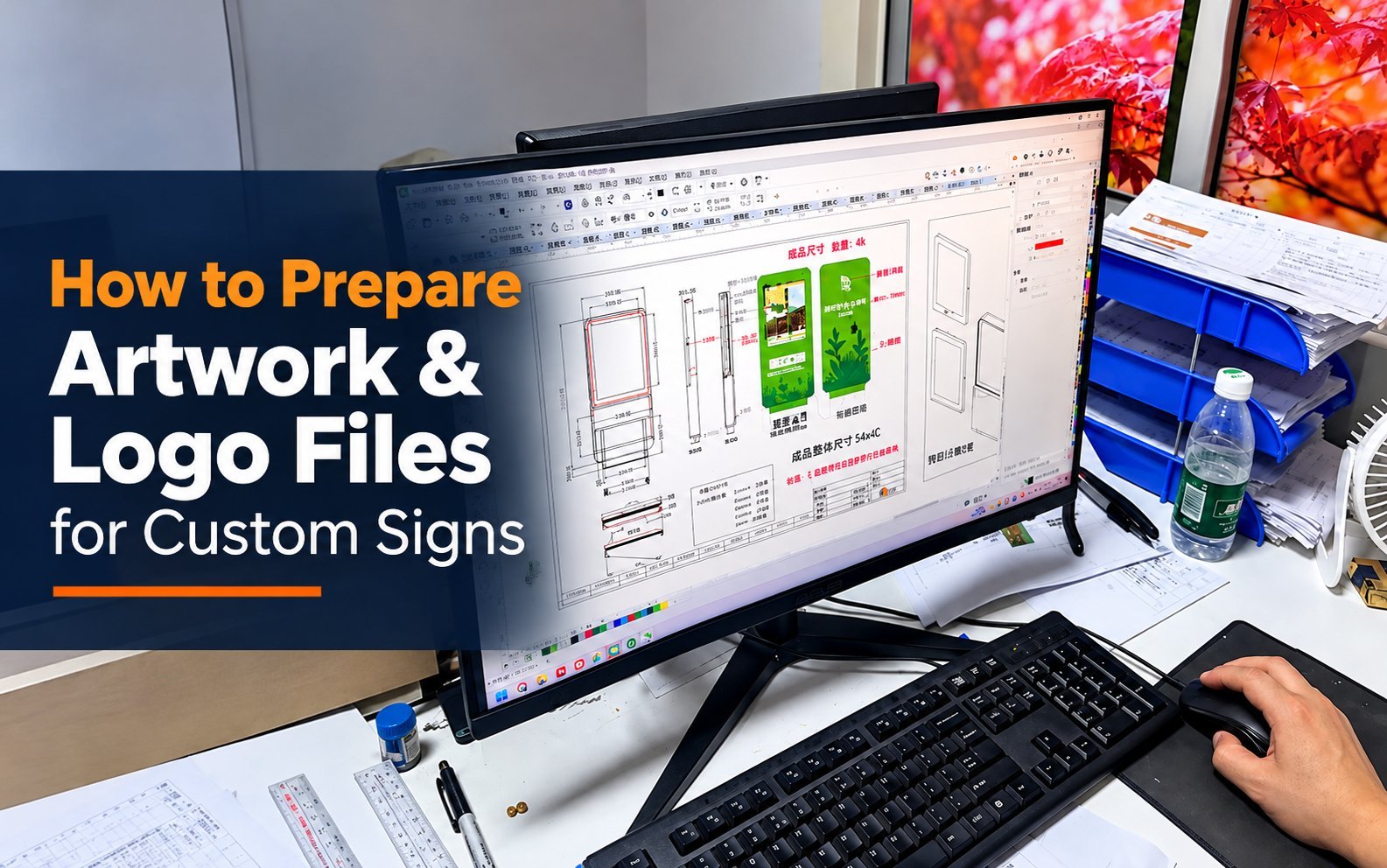
Hicen’s signage selection guide lists the exact file format a factory needs from you, a vector AI, EPS, PDF or SVG logo with fonts outlined, along with the full submission checklist this template is built from.
Sampling Before Bulk Production
Approving a sample is the checkpoint that catches a mismatch while it’s still cheap to fix. Skipping straight from quote to bulk order means the first time anyone sees a physical piece is when the full shipment arrives.
Sampling generally takes one of four forms, and which one you need depends on how much risk the order carries. A digital rendering confirms layout, proportion and color intent before anything gets cut, and it’s the fastest, lowest-cost step.
A small swatch or cut sample confirms material, finish and color in hand rather than on a screen, useful when the finish or a specific Pantone match matters. A full-size first piece confirms real dimensions, letter spacing and illumination on an actual production unit, which matters most for a storefront sign where sightlines and proportion are hard to judge from a render.
A small trial production run, a handful of finished units ahead of the full order, confirms that the production line itself, not just a one-off sample bench, produces a consistent result.
Whether a sample fee gets credited back against a bulk order is a policy question specific to each factory and each project, not a fixed industry number, so confirm that directly with your supplier before you pay for a sample.
For the actual minimum order quantities and sampling lead times by product type, Hicen’s outdoor signage guide covers that ground in detail so this page doesn’t repeat a lead-time table that’s already maintained elsewhere.
Quality & Inspection
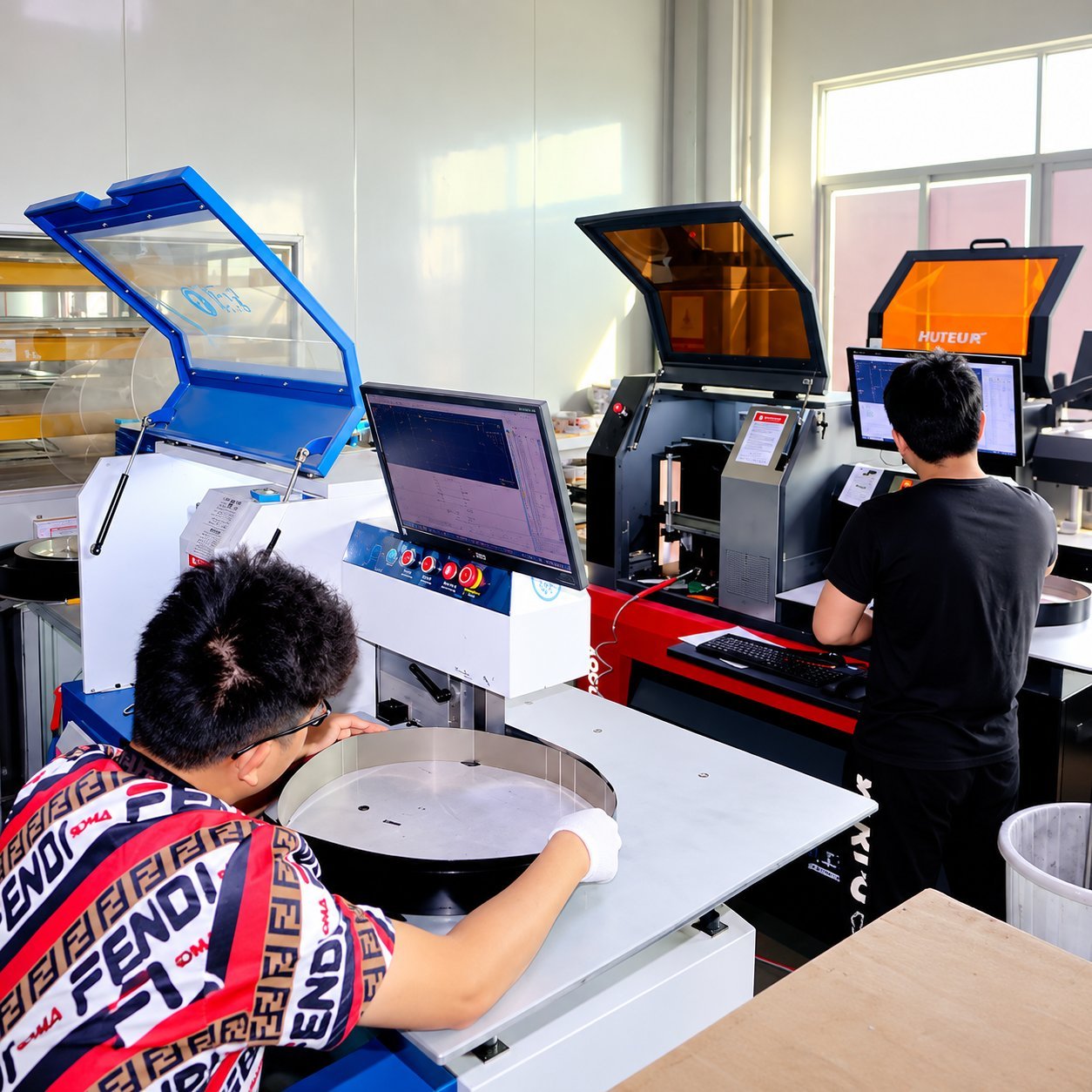
A real quality system runs in stages, not as a single check before the box gets taped shut.
The short version buyers need at the RFQ stage: incoming material inspection to keep defective stock out of production, in-process patrol inspection to catch a problem while it’s still on the line.
Add to that comprehensive finished-goods inspection rather than a spot check, a dedicated illumination uniformity test for any lit sign, and protective packaging matched to the component, not a generic wrap.
This page keeps that summary deliberately short. Hicen’s factory acceptance testing guide covers the full inspection sequence, the actual tolerances checked at each stage and what documentation you should expect to receive with your shipment, in the depth a QC-focused buyer actually needs.
Logistics & Packing
Export packing decisions start at the design stage, not at the loading dock, and that’s especially true for anything too large to ship as one piece.
A large sign gets split into modules sized to fit a container and a site’s lifting equipment, protected with packaging suited to ocean freight rather than a short domestic haul, and labeled so an installation crew can work from the crate contents without guessing.
Volumetric weight and your choice of trade term, EXW, FOB, CIF or DDP, decide who’s responsible for freight, insurance and customs at each leg of the trip, and that choice changes your landed cost more than people expect going in.
Hicen’s export packing guide walks through module planning, protective packing and the wood-treatment documentation a shipment needs to clear customs, in full, so this section stays a pointer rather than a repeat.
Payment, Documents & Common Traps
A deposit followed by a balance payment before shipment is the standard structure for a custom order, with the exact split and the required documents (invoice, packing list, and certificates matched to your destination market) confirmed in writing before production starts, not assumed afterward.
Six traps account for most of the sourcing disputes buyers run into, and each one is avoidable with the verification steps already covered above.
A low initial quote that climbs once you’re committed is the most common complaint, and it’s why a complete RFQ with every field filled in matters. A vague quote leaves room to add line items later that a complete one doesn’t.
A verbal promise with no drawing or written spec behind it is unenforceable the moment a dispute starts, so put every commitment, material, finish, dimension, illumination type, in the written order confirmation.
A supplier that refuses a video factory tour or stalls indefinitely on scheduling one is behaving exactly like the trading-company pattern described earlier, whatever they claim their status is.
Paying a deposit with no contract or no receipt tying that payment to a specific order and specification leaves you with nothing to point to if the delivered sign doesn’t match what you agreed to.
A business license or invoice entity that shifts between the sales conversation and the paperwork stage is the same red flag from the vetting section showing up after you’ve already paid.
An unclear Incoterm is how a buyer ends up blindsided by customs fees or inland freight charges nobody mentioned during quoting, so confirm the trade term in writing alongside the price itself.
This section is general buying guidance based on common industry practice, not legal or financial advice. Confirm contract terms, payment structure and required documentation with your own legal or trade counsel for a specific transaction.
Frequently Asked Questions
How do I find a reliable custom sign factory in China?
Verify the supplier with the six checks in this guide: a live video walkthrough, a business license that matches the factory address, visible ownership of production equipment, willingness to modify tooling for your order, openness to a third-party audit, and paperwork issued by the same entity you verified. At minimum, do the video call and the business license check before sending any payment.
What is the MOQ for custom signs?
It varies by product type and material rather than one fixed number across the board. Many factories, Hicen included, accept single-piece orders with bulk pricing applied even to one unit, though per-unit cost still improves with quantity. Confirm the specific minimum for your product and material directly with your supplier.
How long does sampling take?
It depends on the sample type and whether new tooling is required. A digital render takes the least time, a cut swatch or small sample piece takes longer, and a full first piece or trial batch takes longest, especially if it requires a new mold or jig. Ask your supplier for a sampling timeline against your specific product before you finalize your schedule.
How should I structure payment to a Chinese supplier?
A deposit followed by a balance payment due before shipment is the common structure for a custom order. Get the exact split, the trigger for the balance payment, and every required document confirmed in writing before production starts. This is general guidance, not financial advice, so confirm specific terms with your own counsel for larger transactions.
Can you ship door to door?
Door-to-door delivery is available under a DDP trade term, where the supplier handles freight, customs and final delivery. EXW, FOB and CIF each shift more of that responsibility, and more of the cost visibility, to the buyer at different points in the journey. Confirm which Incoterm applies to your quote, since it changes who pays for what along the way.
What if the delivered signs do not match the sample?
Resolution starts with the approved sample and the written specification you confirmed at the RFQ stage, since those are the reference points any inspection gets measured against. Raise the discrepancy with your supplier immediately, backed by photos and the original approved sample or spec sheet, and ask how they handle corrective action for a confirmed mismatch before you accept the shipment.
Ready to Source Your Custom Sign?
Tell us your sign type, quantity, and destination.
Send us your drawing, logo file or project idea and we’ll turn it into a factory-direct quote. Get in touch with the Hicen team and tell us what you’re making, how many you need and where it has to land, and we’ll come back with a price you can plan against.