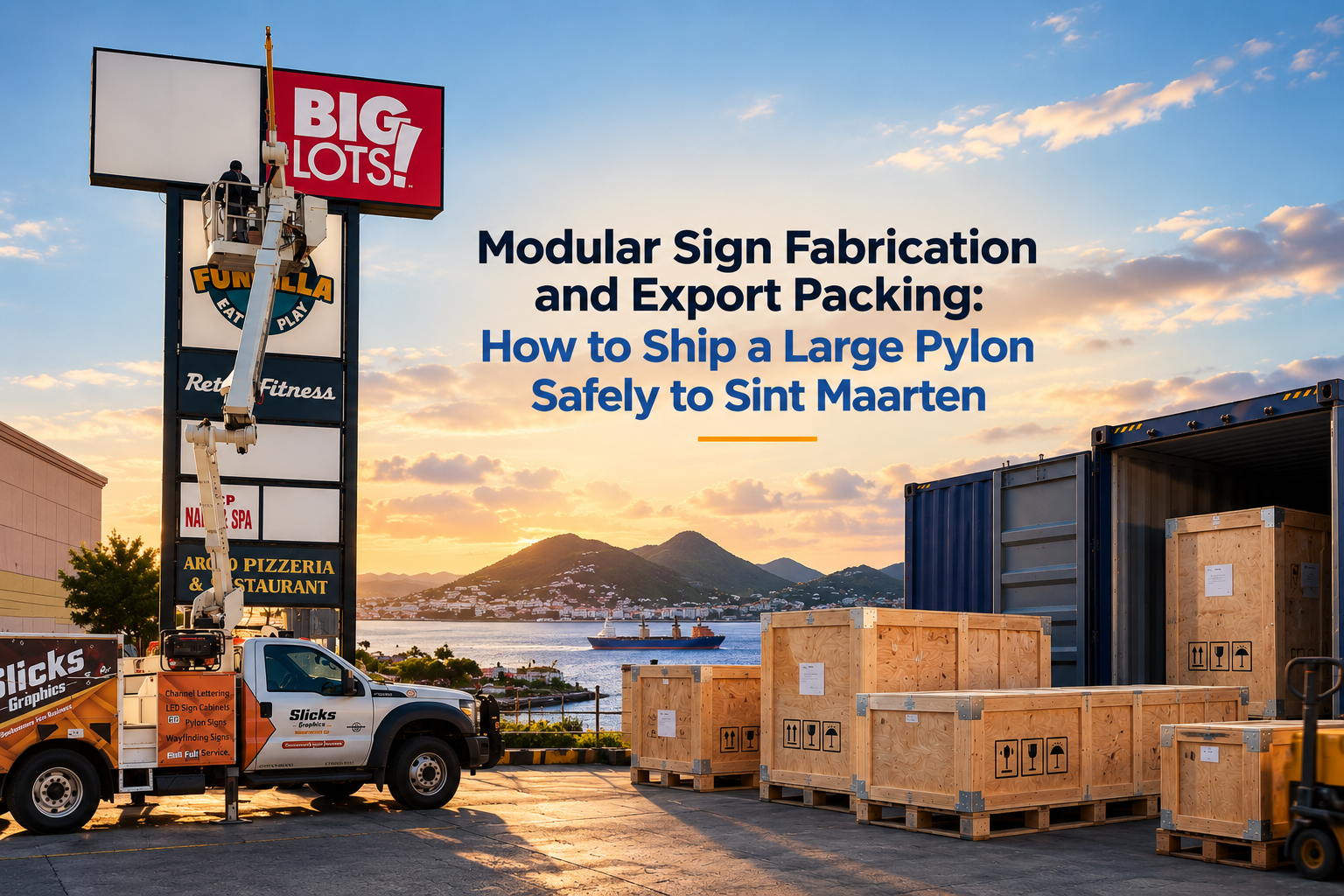
Modular sign fabrication and export packing decisions should start at the design table, not the loading dock. Module splits need to satisfy container dimensions, lifting weights, structural splices, electrical quick-connects, finish protection and your installation sequence, all at once. Get the split wrong and you're paying for a second shipment, a crane you didn't budget for, or a field weld nobody planned on.
A large double-sided pylon headed somewhere like Sint Maarten makes this especially real. Ocean freight, salt air and limited crane access on site all shape the same decision: how do you cut one big sign into pieces that survive the trip and go back together cleanly.
Design Modules from Logistics Constraints First
Work backward from the container and the crane, not forward from the finished sign. Confirm your container's internal dimensions, door opening size and weight limits before you finalize a single module boundary.
| Container Type | Approx. Internal Dimensions (L x W x H) | Typical Weight Limit | Best Fit For |
|---|---|---|---|
| 20 ft standard | 5.9 x 2.35 x 2.39 m | ~28,000 kg | Smaller modules, base sections, hardware crates |
| 40 ft standard | 12.0 x 2.35 x 2.39 m | ~28,000 kg | Mid-size structural modules, packed cabinets |
| 40 ft high cube | 12.0 x 2.35 x 2.69 m | ~28,000 kg | Taller modules needing extra height clearance |
| Flat rack | Open deck, no side walls | Varies by carrier | Oversized or irregular modules that won't fit inside a box container |
Scope note: these are commonly used general industry reference figures, not a Hicen-specific spec. Confirm exact dimensions and weight limits with your freight forwarder and the specific carrier booking your shipment, since figures vary slightly by container age and line.
Avoid designing a module that looks efficient on paper but can't actually be lifted or assembled on site. A module too heavy for the site's available crane, or too tall to clear a low doorway during installation, turns a shipping decision into a site problem. Confirm site lifting equipment and access before you lock the module sizes.
Create Repeatable Assembly Interfaces
Every module boundary becomes a field joint, so design that joint to go together the same way every time. Use alignment features, bolted splices and labeled cable connections rather than relying on a technician to figure it out on site.
Label every cable and connector before it leaves the factory. A quick-connect wiring harness with clear module numbers saves hours of guesswork during field assembly, especially when a crew that didn't build the sign is the one putting it together.
Complete a full-size trial fit-up at the factory before packing, not after. Assembling the modules once under controlled conditions catches a misaligned splice or a wiring mismatch while it's still cheap to fix. Document that fit-up with photos so your installation crew has a reference.
- Alignment features planned
- Bolted splices defined
- Cable connections labeled
- Module numbers identified
- Full-size trial fit-up completed
- Fit-up documented with photos
Protect Finished Goods in Coastal Ocean Transit
A module that survives the ocean but arrives with a scratched finish or a corroded fastener still costs you rework. Protection needs to match both the transit method and the destination climate.
Coated surfaces need padding against abrasion and impact, not just a wrap for appearance. Hicen packs finished products with multi-layer pearl cotton, reinforced cartons or wooden crates depending on the component, specifically to hold up under long-distance sea freight rather than a short domestic haul.
Electrical and LED components need their own protection layer inside that outer packing. Sealed, moisture-resistant bags with a desiccant inside help prevent condensation from forming during temperature swings between a hot loading dock and a cooler ship hold. Antistatic packaging matters too for any sensitive control boards or drivers riding inside the same crate.
If your project ships through a humid or salt-heavy port, ask your supplier directly how they pack for that specific route. Generic packing built for a dry inland delivery isn't the same as packing built for weeks at sea.
| Risk / Component | Protection Approach | Buyer Check |
|---|---|---|
| Finished coated surfaces | Padding against abrasion and impact | Protect the finished surfaces |
| Electrical / LED components | Sealed moisture-resistant bags with desiccant | Control condensation during temperature swings |
| Control boards / drivers | Antistatic packaging | Protect sensitive electronics |
| Long-distance sea freight | Multi-layer pearl cotton, reinforced cartons or wooden crates, as appropriate | Match packing to the component and route |
Pack to Support Installation, Not Just Survive Shipping
Good export packing does more than protect the product. It sets your installation crew up to work efficiently once everything arrives.
- Pack modules in installation order
- Identify the contents of each crate
- Mark the center of gravity
- Mark lifting points
- Include a labeled hardware kit
- Include appropriate spares
- Include an unpacking checklist
Pack modules in the order they'll be installed, not just in whatever order fits the container best. Include a packing list on every crate showing its contents, center of gravity and marked lift points, so the crew on site knows how to handle it safely before they even open it.
Ship a labeled hardware kit and a small spares crate alongside the structural modules. Missing bolts or a forgotten connector at final assembly can stall an installation crew for days while replacement parts get sourced locally. Include a simple unpacking checklist too, so nothing gets set aside and lost during the rush of opening crates on site.
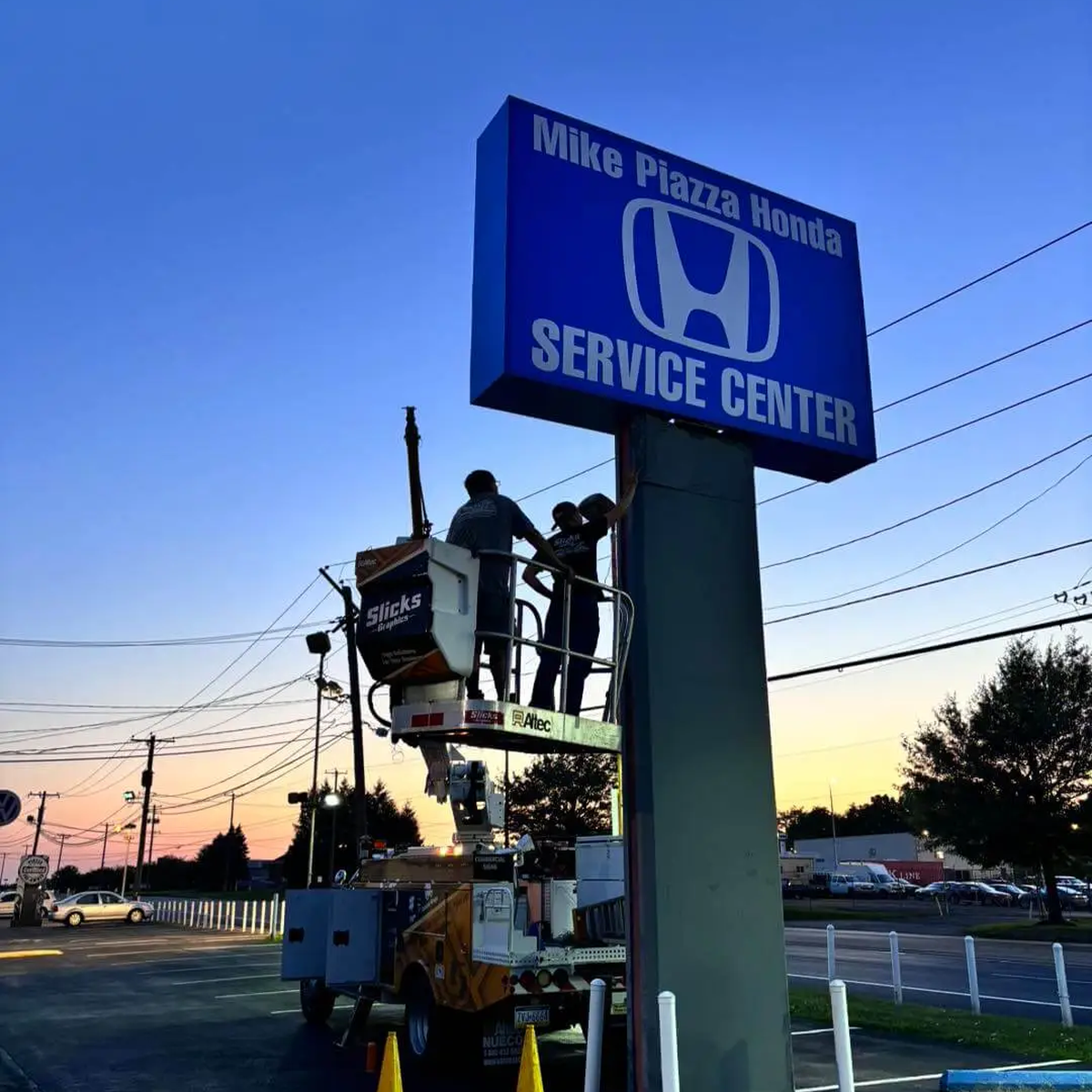
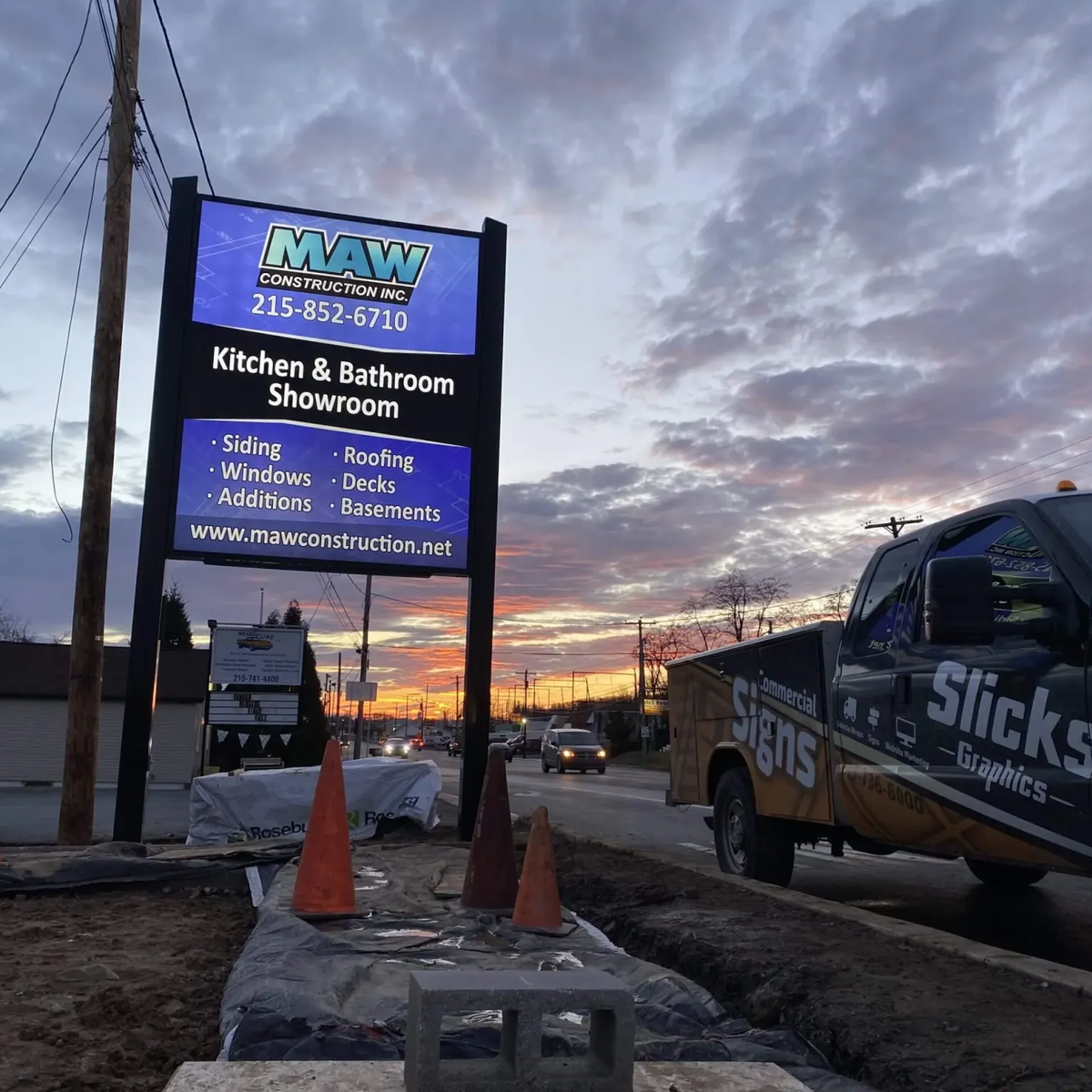
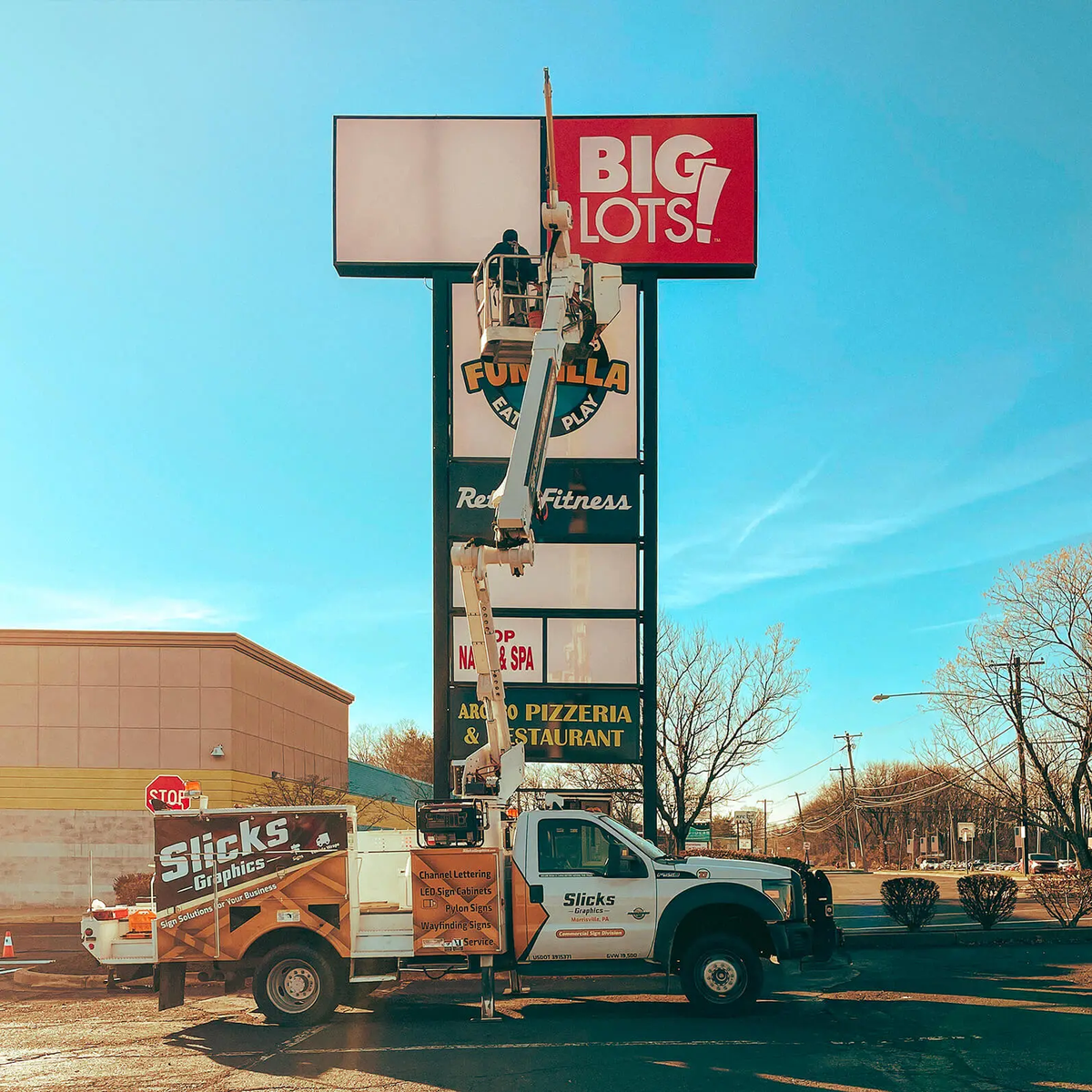
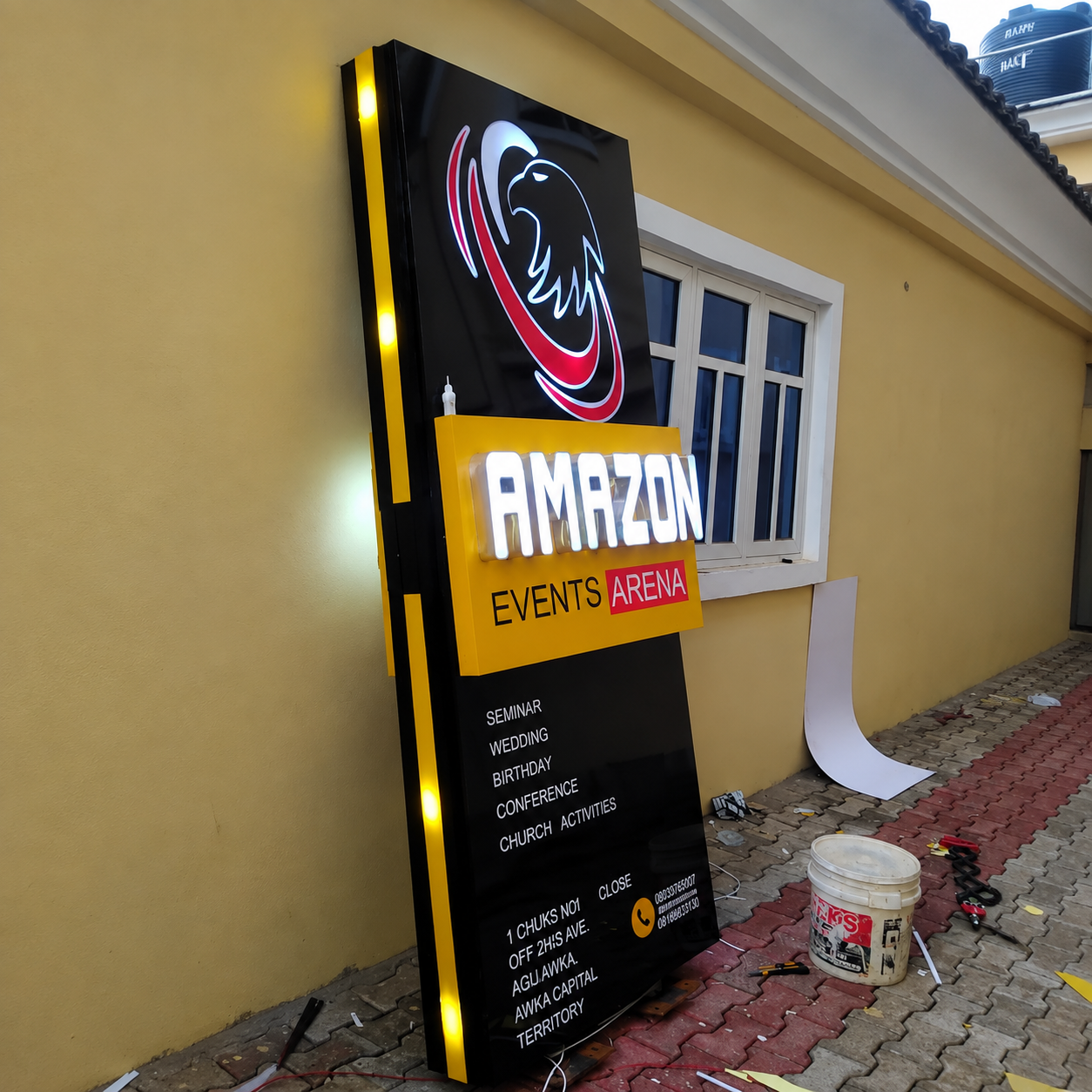
The supplied sign photographs illustrate sign forms and site work; they do not document a Hicen shipment or a Sint Maarten installation.
How Hicen Handles Modular Fabrication and Export
Hicen builds signs with export in mind from the design stage, not as an afterthought once fabrication is finished. Our finished products are packed in multi-layer pearl cotton, reinforced cartons or wooden crates suited to long-distance sea freight, and components like light box LED modules are pre-assembled at the factory specifically to shorten the work your crew does on site.
Every module we ship goes through the same quality control and manufacturing process discipline we apply across every project. That's coordinated as part of a turnkey project when your sign package includes multiple components.
For a large outdoor business sign or a broader sign package, our certifications are available for your import documentation as needed.
Frequently Asked Questions
How many modules should a large pylon be divided into?
There's no fixed number. It depends on your container choice, your site's crane capacity and how much field assembly your installation budget can absorb. A taller pylon usually needs more splits than a shorter one, purely to keep each section within a liftable weight. Send us your pylon dimensions and shipping method and we'll recommend a split that fits your actual constraints.
Do export wooden crates require treatment marks?
Yes, in most cases. International shipments using wood packaging typically need ISPM-15 heat treatment with the official IPPC stamp visible on the crate, and customs can hold a shipment that arrives without it. Confirm this requirement with your freight forwarder for your specific destination, since enforcement and documentation needs vary by country.
How can ocean-shipping condensation damage to LEDs be reduced?
Sealed, moisture-resistant packaging with a desiccant inside is the main defense, since it keeps humid air away from sensitive components during temperature swings in transit. Antistatic packaging for control boards and drivers adds another layer of protection. Ask your supplier what moisture-control measures they use specifically for electrical components, not just for the sign's outer structure.
Get a Module-Split and Packing Recommendation
Send us your pylon dimensions and preferred freight method, and we'll return a module-split and packing recommendation built around your actual container choice, site access and installation sequence.
Include the destination, site access and lifting constraints, and planned installation sequence with your inquiry.
Request a Packing Recommendation