Choose the right signage by working through four questions in order: where will it go, how far away will people read it, will it be indoors or outdoors, and what budget must the project meet? Once those details are clear, it becomes much easier to select channel letters, a light box, metal letters, acrylic letters, or LED neon without overspending or creating installation problems.
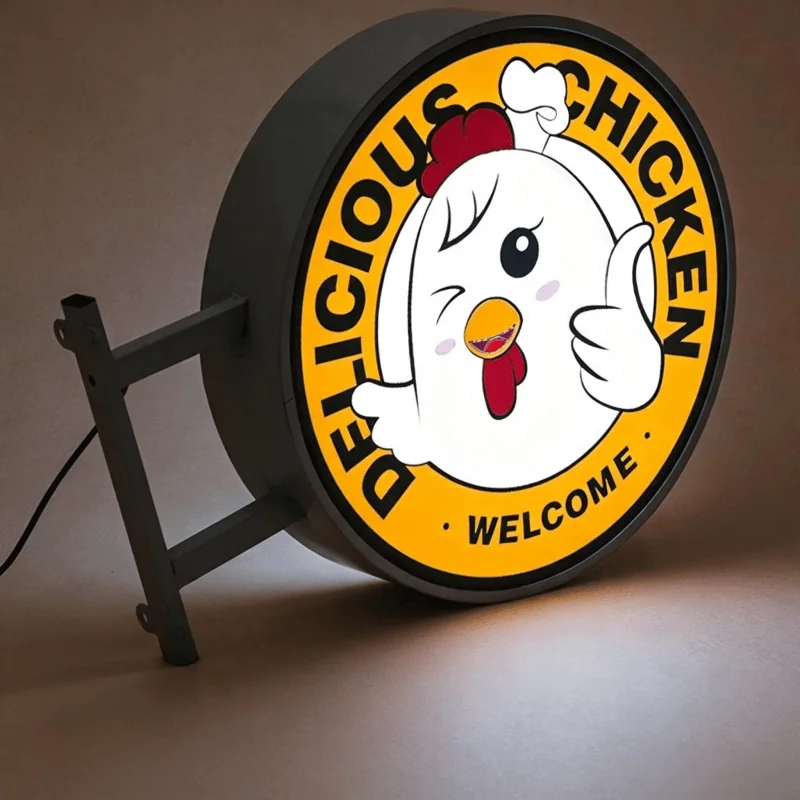
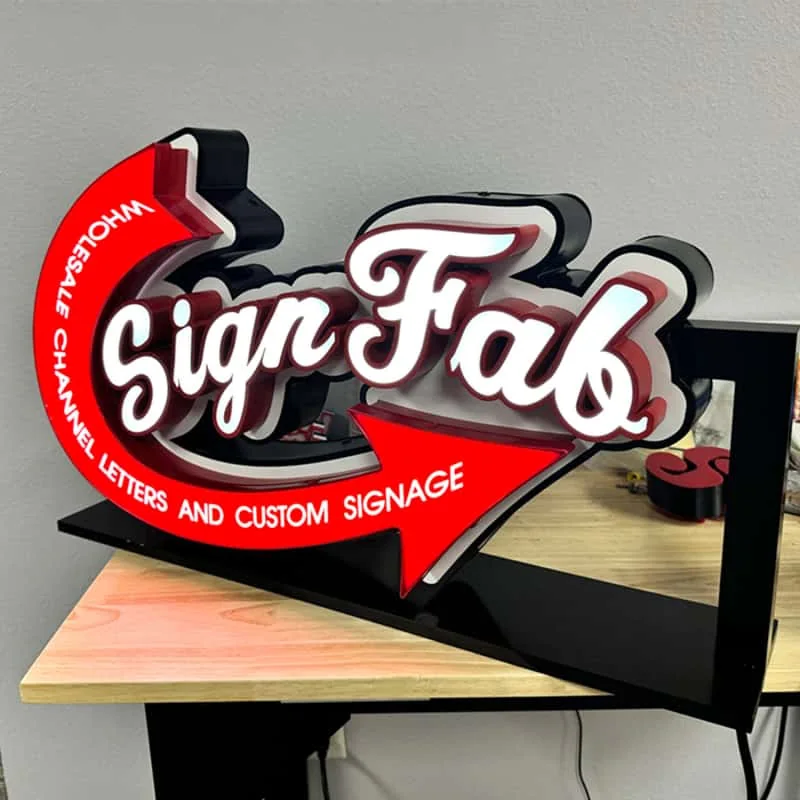

How to Choose the Right Signage for Better Results
Most first-time buyers begin with the appearance they want rather than the conditions the sign must survive. That is where budgets slip and installations stall. A design that photographs beautifully indoors may fade, corrode, or leak outdoors, while a sign that looks clear from three metres may be unreadable from across a car park.
A manufacturer evaluates the application, viewing distance, environment, mounting surface, lighting effect, and service requirements together. This selection guide follows the same process so you can choose the right signage before requesting a formal quote. If the full specification is not ready, send your logo, a rough size, and a photo of the installation wall for an initial recommendation.
1. Start With the Application Scenario
Decide the setting first because a storefront, building facade, reception wall, mall wayfinding system, and event display each point toward a different product. A shopfront usually benefits from channel letters for a clean branded appearance. A tall facade needs enough size and brightness to read from a distance. An indoor reception wall favors finish quality, while mall wayfinding often relies on evenly illuminated light boxes.
The application also determines viewing distance, brightness, durability, mounting access, and maintenance. Name the scenario before comparing products, then review the relevant options on the Hicen signage products page.
2. Compare the Main Signage Types
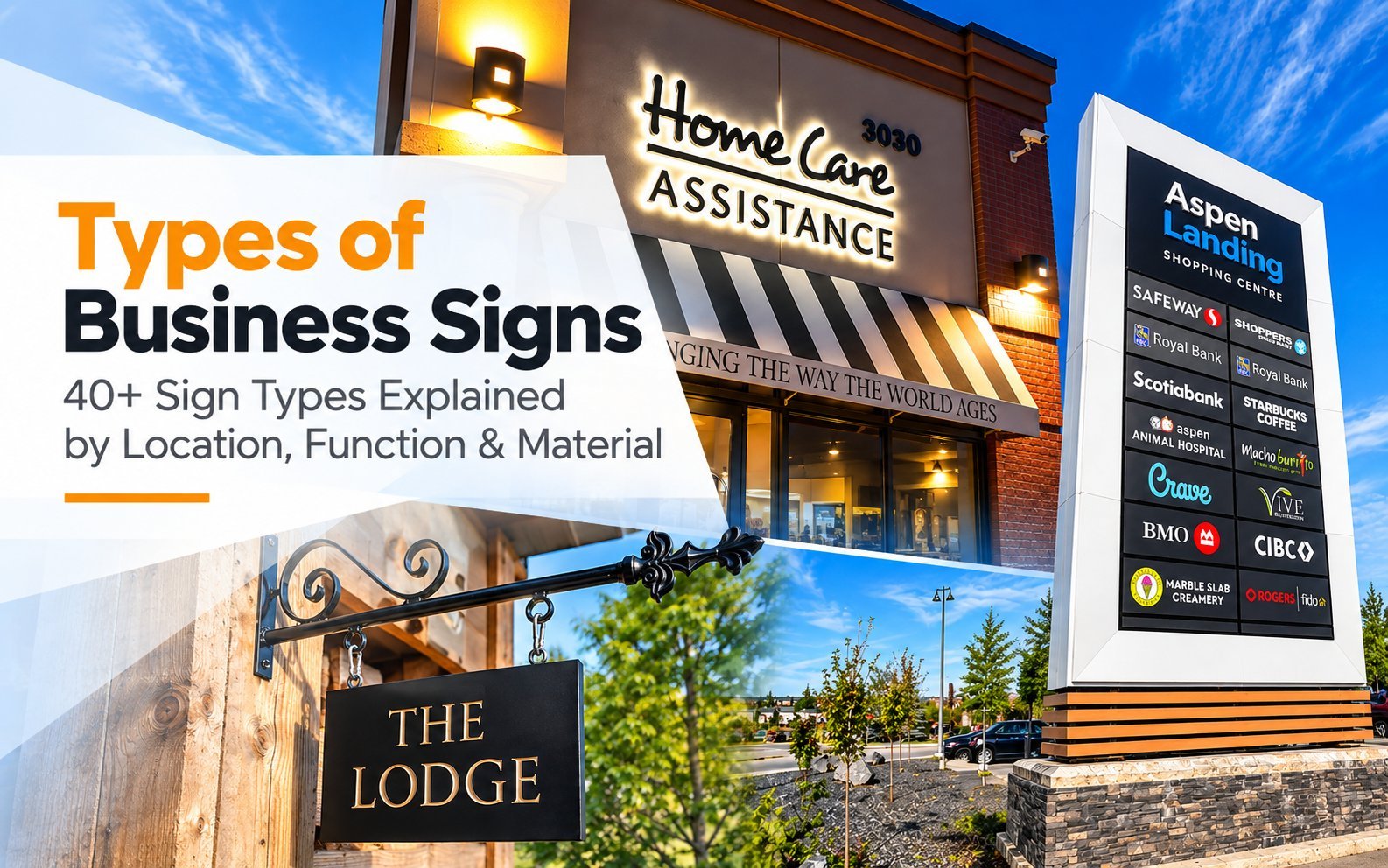
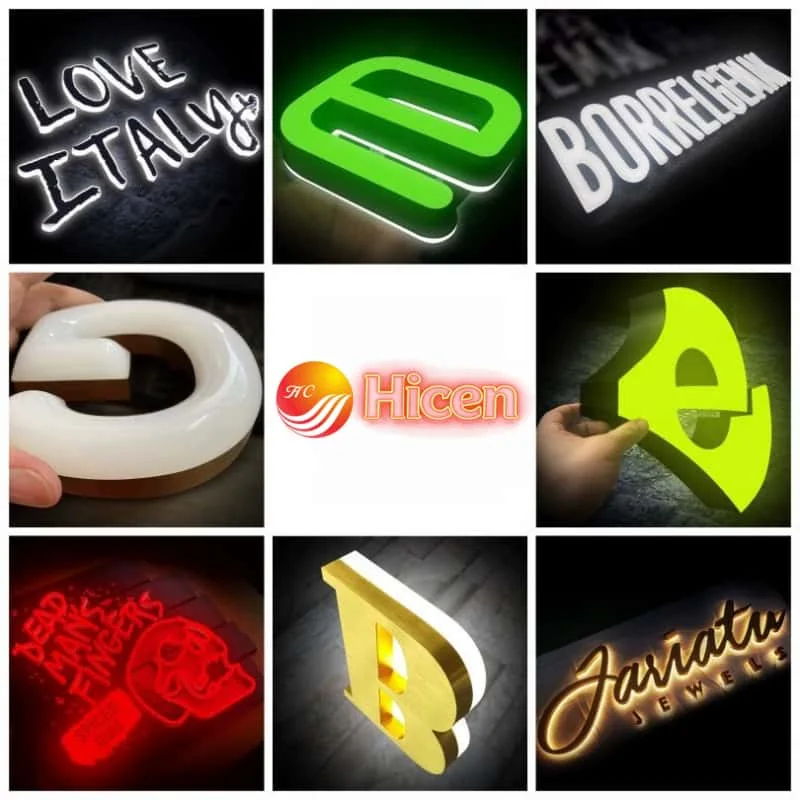
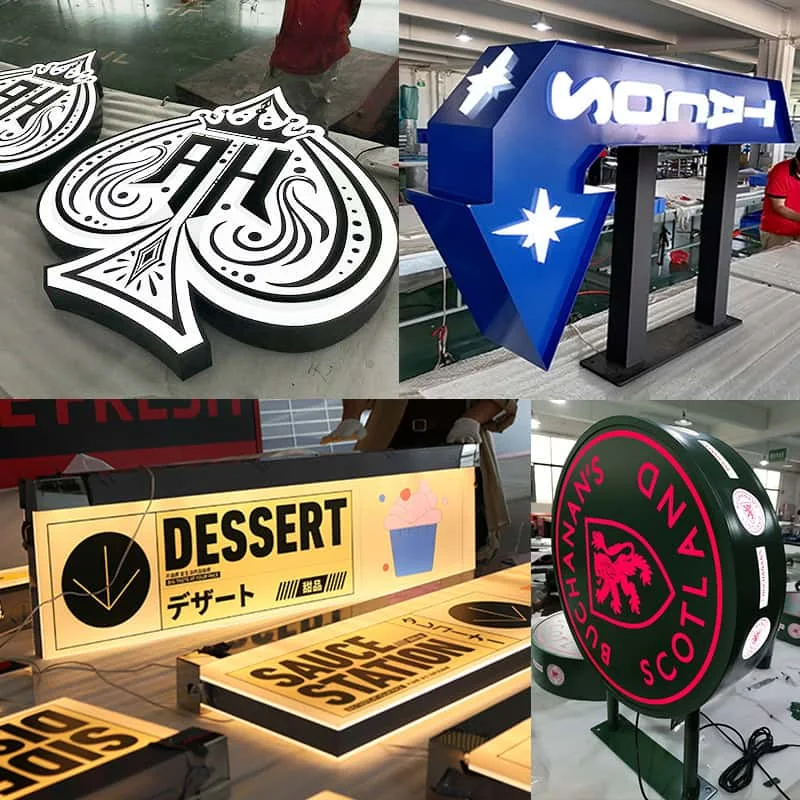
To choose the right signage, match the product to the visual effect and performance you need. Front-lit and halo-lit channel letters, LED light boxes, LED neon, metal letters, and acrylic letters each use different structures, materials, and lighting systems.
| Sign type | Best for | Visual effect | Buying note |
|---|---|---|---|
| Front-lit channel letters | Storefronts and brand logos | Bright, even face illumination | The retail workhorse |
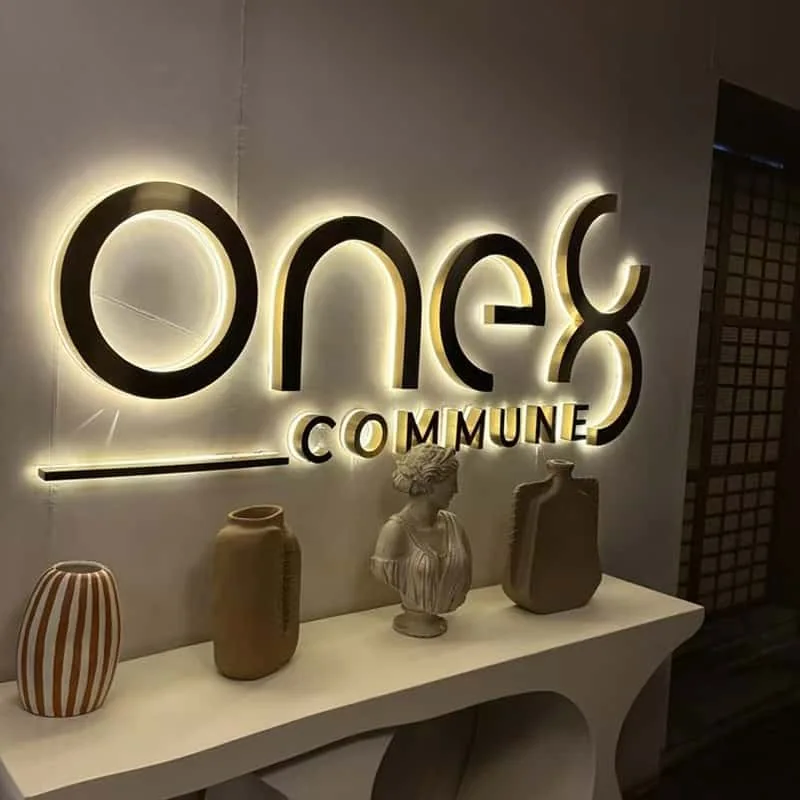
| Halo-lit channel letters | Premium storefronts and lobbies | Soft glow behind each letter | Subtle, upscale appearance |
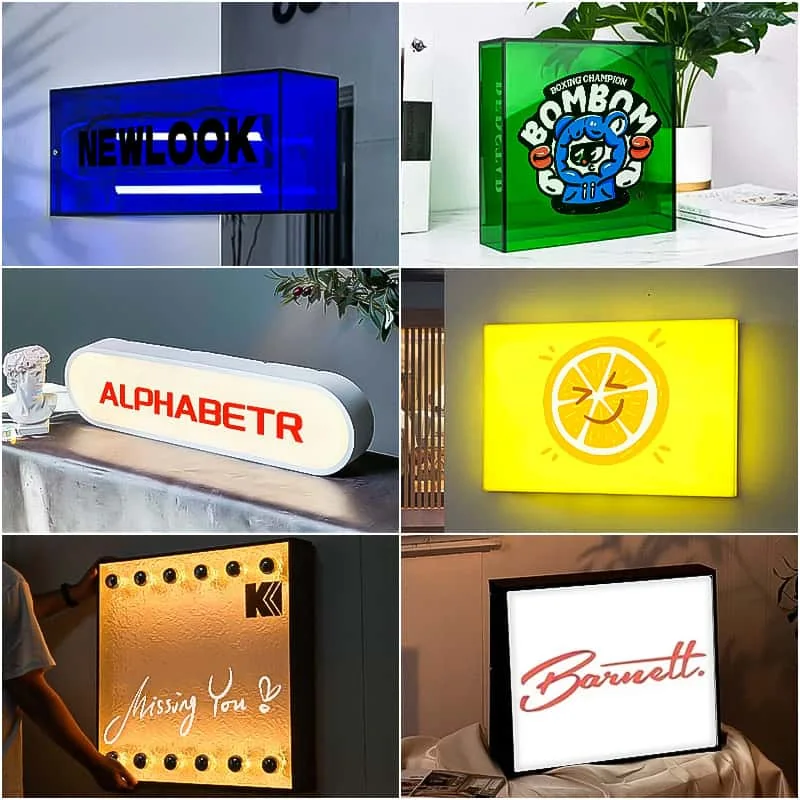
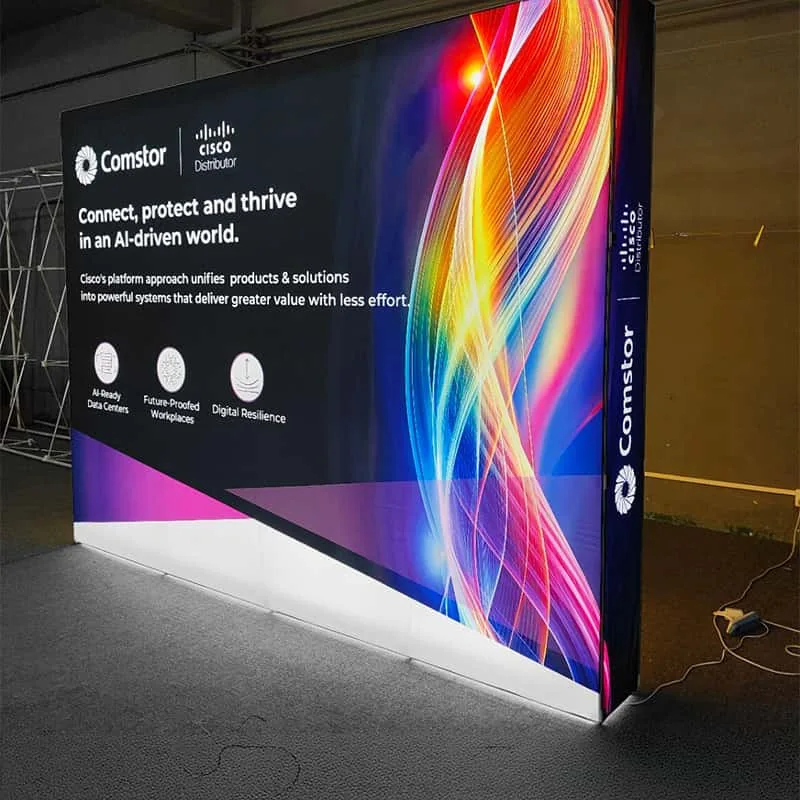
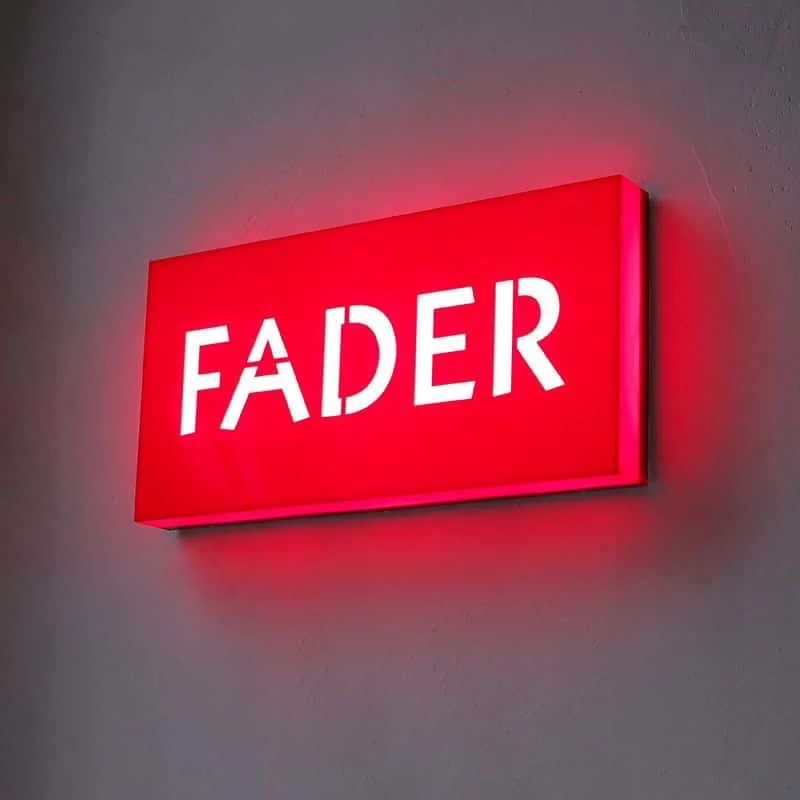
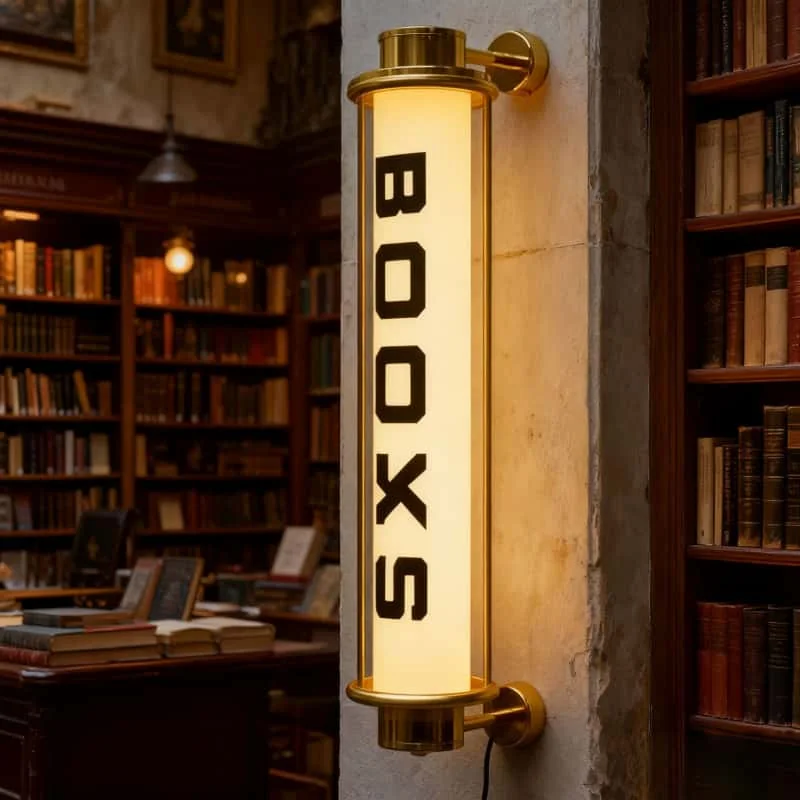
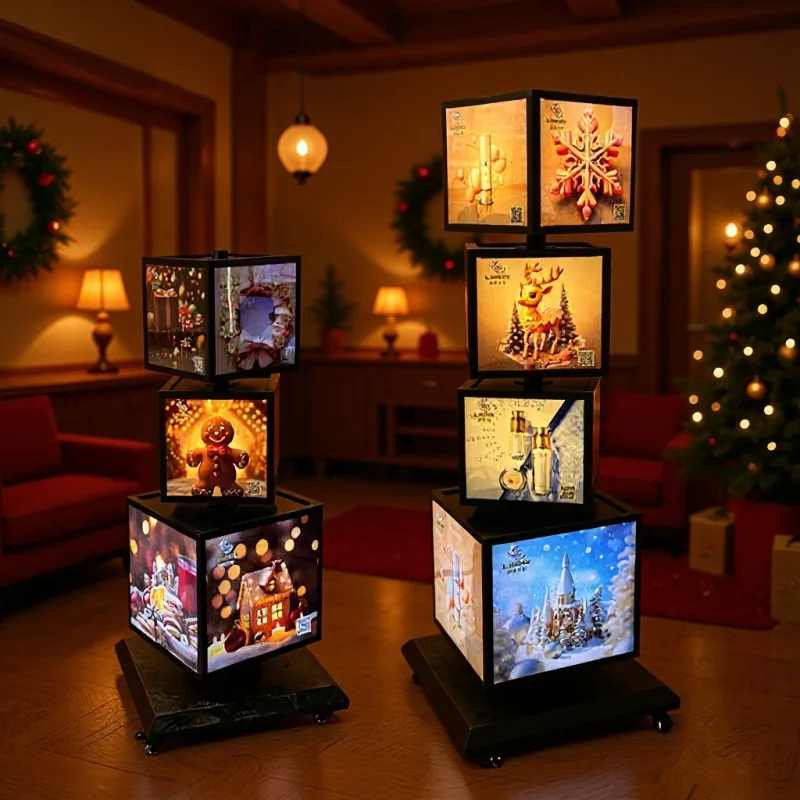
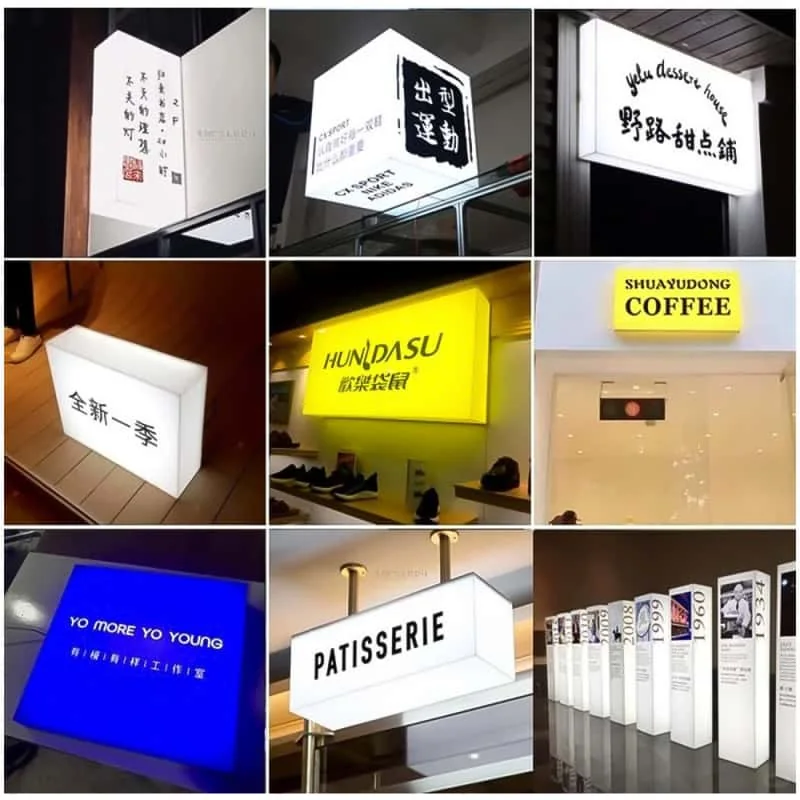
| LED light box | Malls, menus and wayfinding | Even full-panel brightness | Good for panels and graphics |
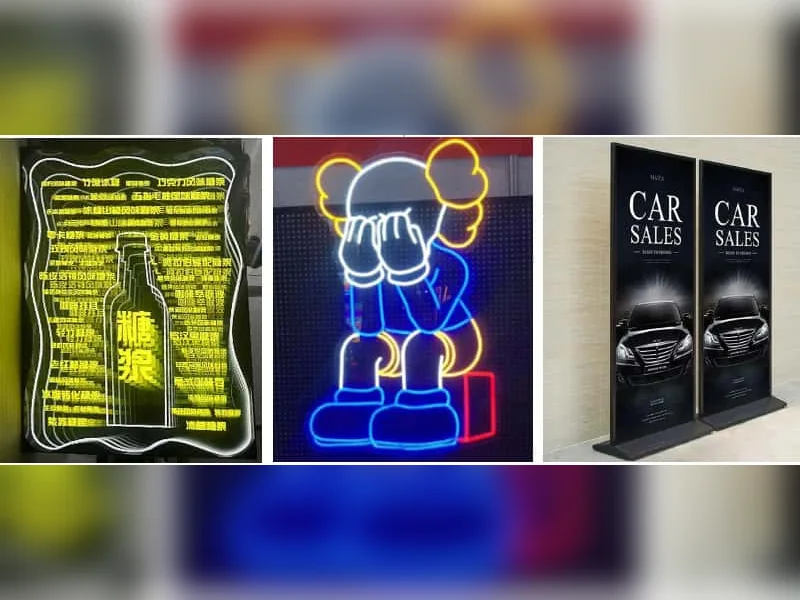
| LED neon | Hospitality and feature walls | Continuous colorful line | Safer than traditional glass neon |
| Metal letters | Corporate interiors and facades | Solid premium daytime finish | Available lit or non-lit |
| Acrylic letters | Interiors and budget builds | Clean, colorful and lightweight | Less rugged for exposed outdoor use |
Channel Letters for Storefront Visibility
Choose custom channel letter signs when the logo must remain readable by day and illuminated at night. Front-lit channel letters provide the strongest face brightness, while halo-lit letters create a softer premium effect.
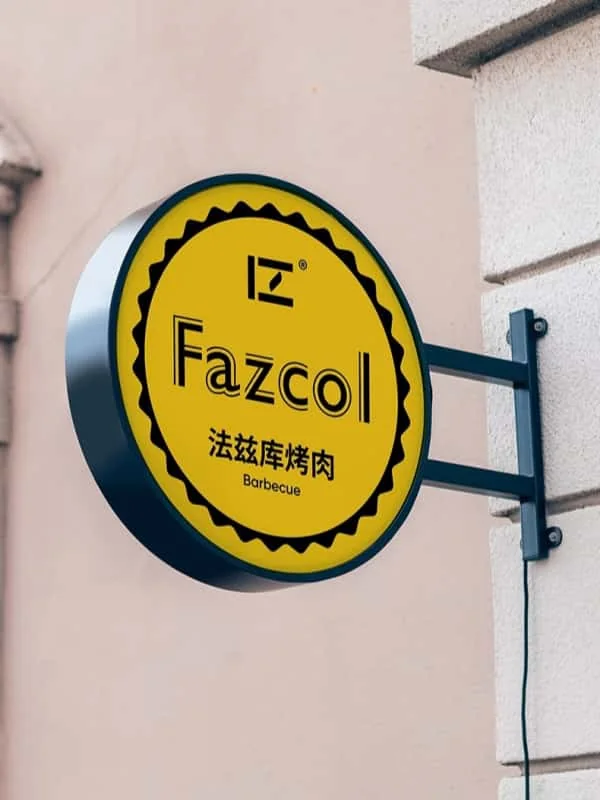
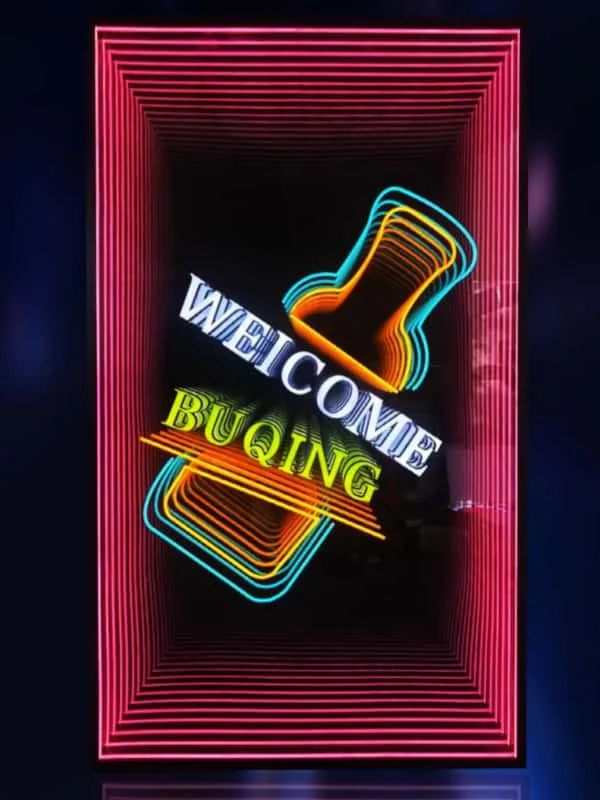
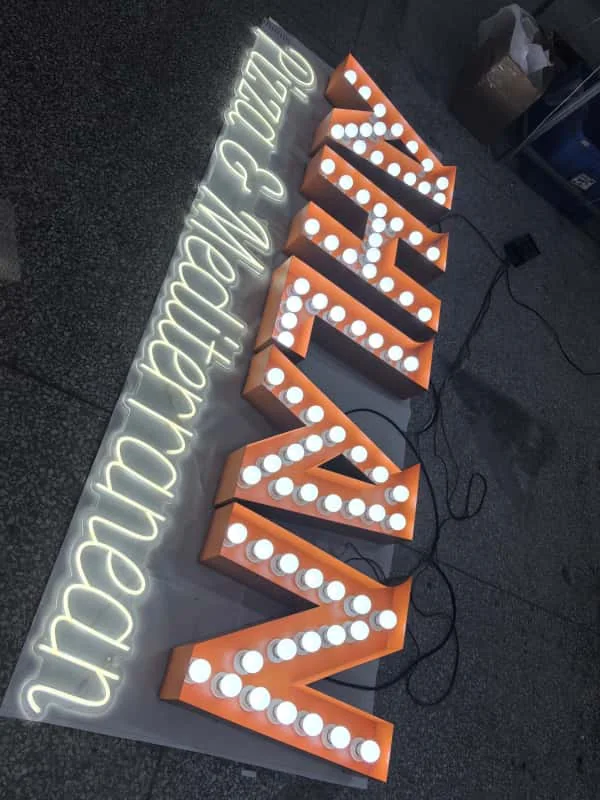
Light Boxes, Neon and Metal Letters
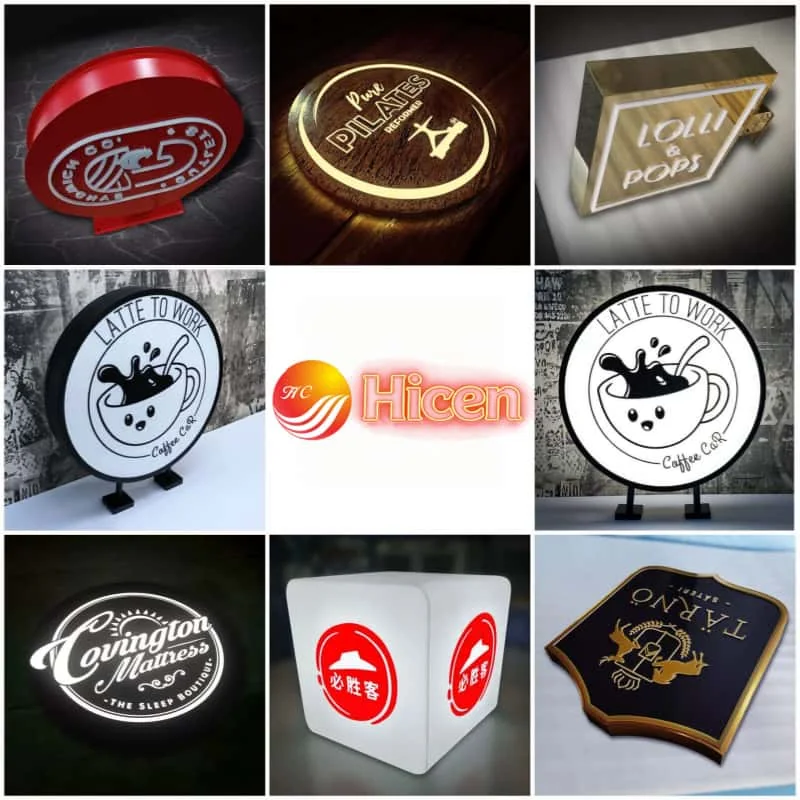
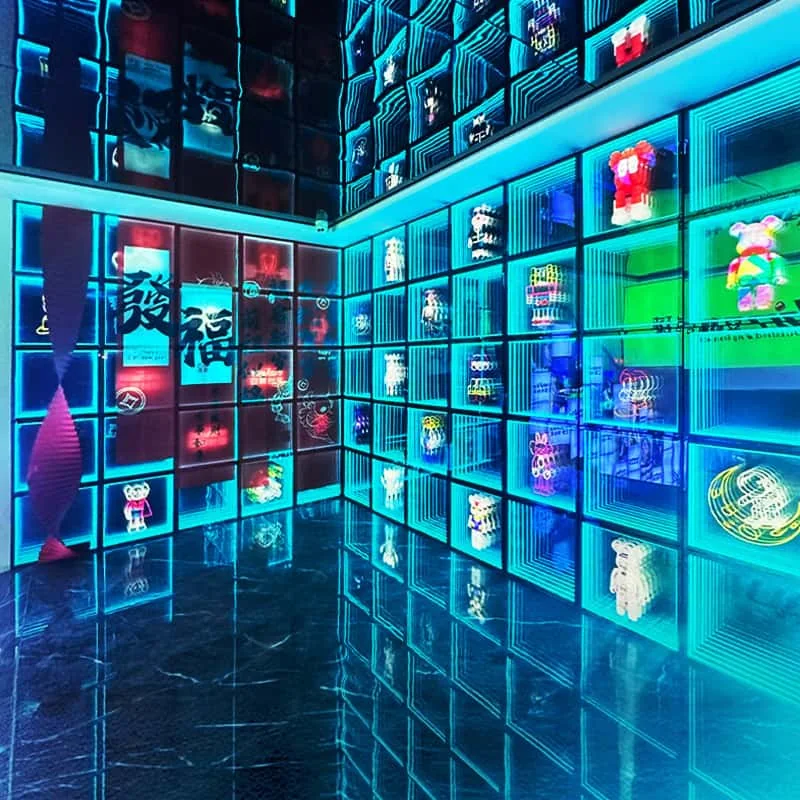
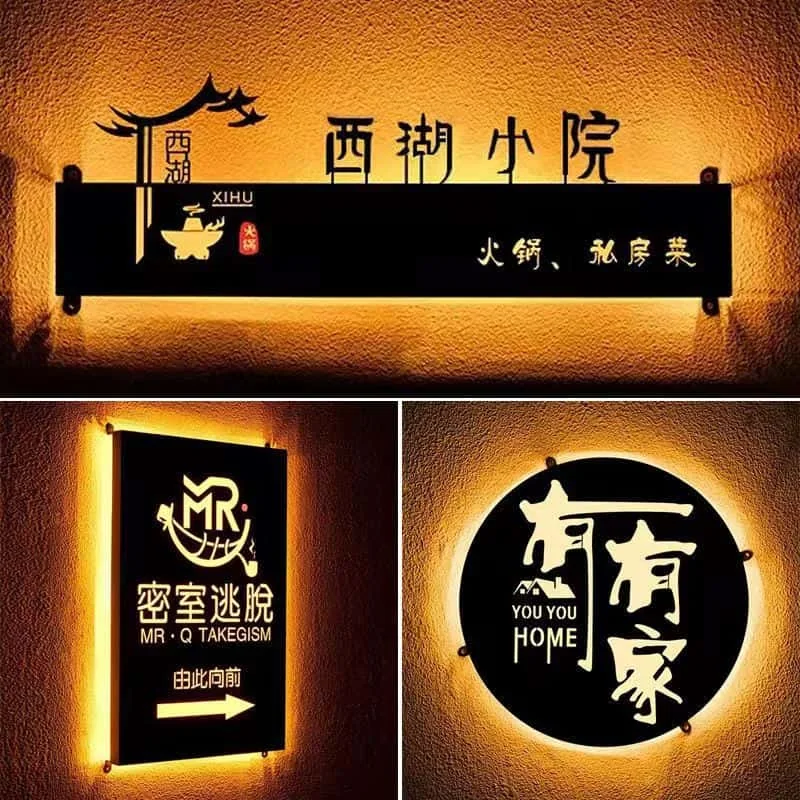
A custom LED light box suits menus, wayfinding, and full-panel graphics. Custom LED neon works well for decorative feature walls, while custom metal signs create a strong architectural finish.
3. Confirm Indoor or Outdoor Use
To choose the right signage for the environment, confirm indoor or outdoor use before approving materials, sealing, finishes, and electronics. Outdoor signage must tolerate rain, ultraviolet exposure, temperature changes, and wind. That normally means weather-sealed housings, UV-stable acrylic and paint, corrosion-resistant metal, drainage, and a suitable ingress-protection rating.
Local climate matters as well. Strong sunlight accelerates color fade, coastal air increases corrosion risk, and heavy rain tests every seam. Indoor signage can place more emphasis on fine details and premium finishes. For independent electrical-safety guidance, review the UL information on electric signs.
4. Match the Sign to Your Brand
After selecting the product and environment, choose the right signage details by refining the font, color, surface finish, and illumination. Very thin strokes may be difficult to build as small channel letters, so a manufacturer should flag them during design review. Provide exact color codes instead of general color names and specify whether the finish should be gloss, matte, brushed, plated, or painted.
Remember the daytime appearance. A sign may spend more hours switched off than illuminated, so the unlit face, returns, and mounting details matter. Ask for a visual showing both day and night before approving production. This makes it easier to choose the right signage without losing the character of the original logo.
5. Check the Installation Conditions
A reliable quote needs the mounting wall, available dimensions, power position, viewing distance, and any landlord or local authority rules. A wall photo helps the manufacturer confirm the surface, fixing method, cable route, and access. The available width and height determine the letter size and overall layout.
Missing installation information is one of the most common causes of delays. Confirm whether the wall is concrete, brick, cladding, glass, or an interior partition. Mark the power location and tell the supplier whether installers can access the back of the wall. Complete information lets the team choose the right signage structure before production rather than solving problems on site.
What to Send the Sign Manufacturer
To help the manufacturer choose the right signage and prepare an accurate recommendation, send these details in one message:
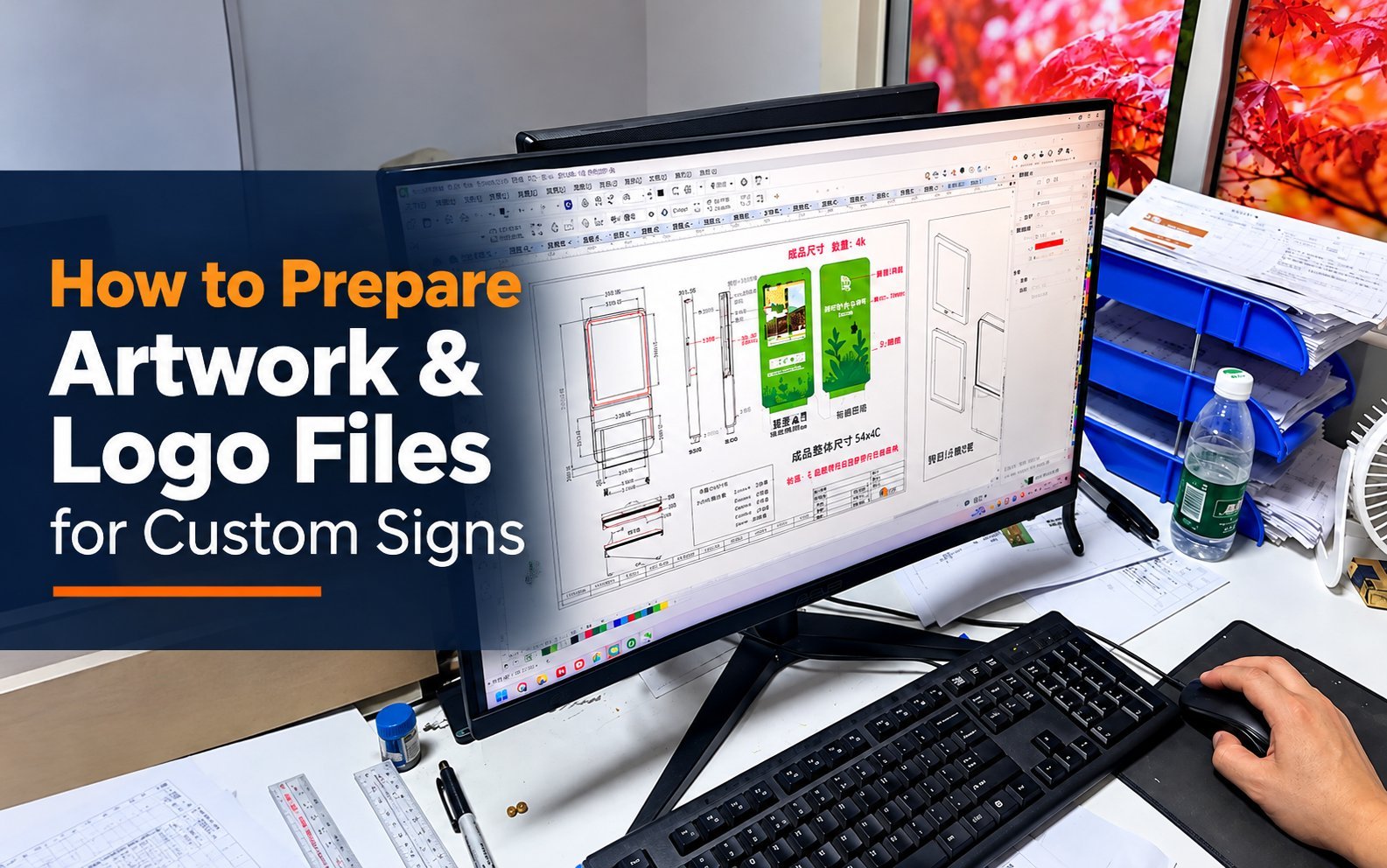
- Design file: a vector AI, EPS, PDF, or SVG logo with outlined fonts.
- Size: the target sign dimensions or the available wall area.
- Quantity: one sign, several locations, or a multi-site rollout.
- Environment: indoor or outdoor use, local climate, and hours of operation.
- Installation: wall photo, wall material, power location, and mounting access.
- Commercial details: budget, destination postcode, required date, and preferred trade term.
The more complete the brief, the fewer clarification rounds are needed. You can send the project information through the Hicen contact page.
How to Verify a Manufacturer
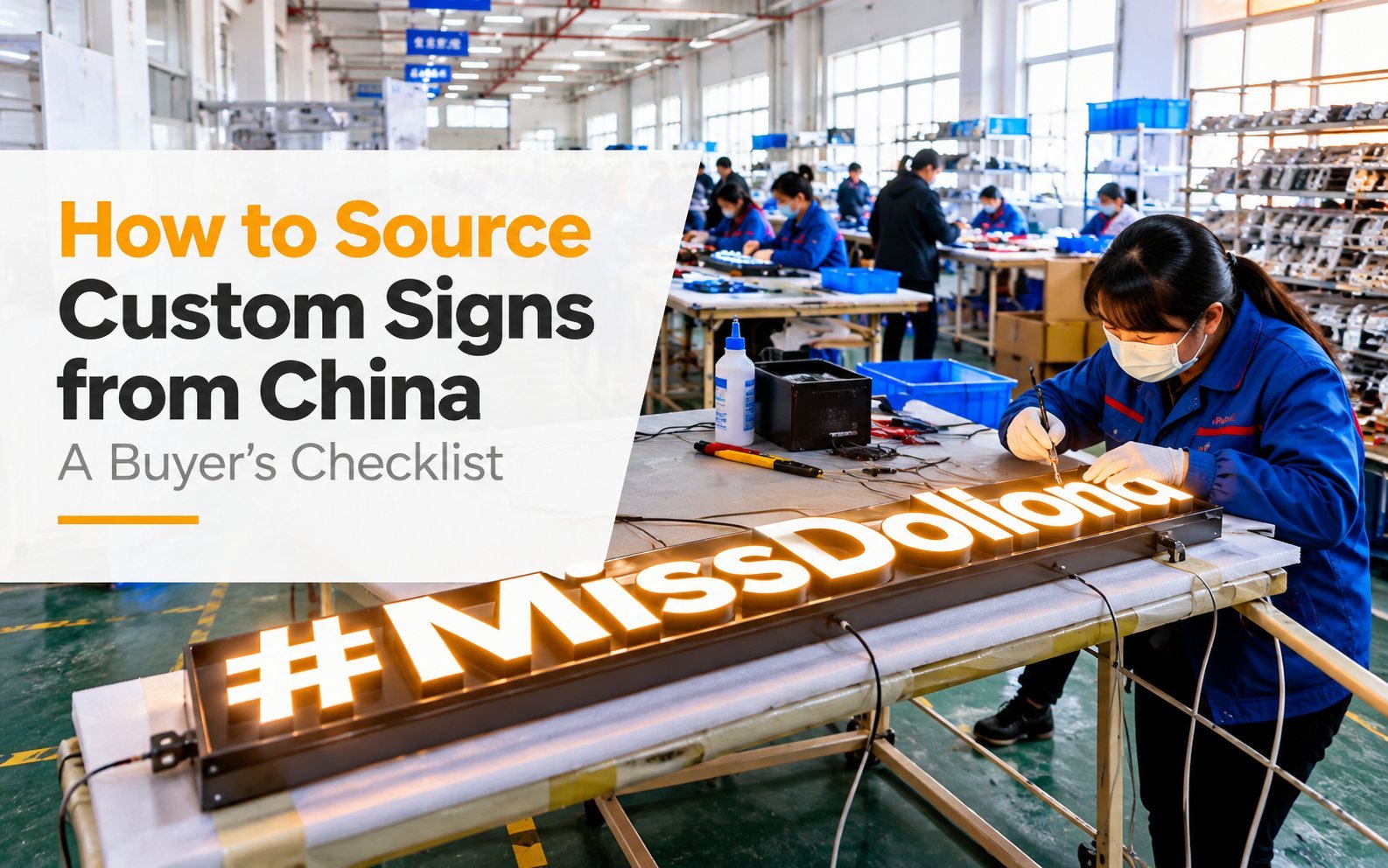
Judge a signage factory by the work it controls in house and the inspection records it can provide. Design, CNC cutting, bending, welding, grinding, painting, acrylic forming, LED assembly, burn-in tests, and packing under one roof improve consistency and reduce middleman risk. Review Hicen’s sign manufacturing process for the main production stages.
Ask the supplier to show incoming-material checks, dimensional inspection, surface-finish review, illumination testing, insulation, waterproofing, aging tests, and final packing records. Certificates should match the product and destination market, not simply appear as unrelated documents in a sales presentation.
Signage Buying Checklist
- Application: location, viewing distance, mounting height, climate, and operating hours.
- Design: vector logo, fonts, color codes, target size, finish, and illumination effect.
- Installation: wall material, access, power position, and local restrictions.
- Commercial: quantity, budget, delivery date, shipping destination, and warranty.
- Approval: visual proof, color or material sample, test requirements, and packaging plan.
Next Steps
To choose the right signage, complete three checks: match the product to the application and viewing distance, build it for the indoor or outdoor environment, and confirm installation conditions before production. When these are correct, the design, durability, and budget align.
Send your logo, target dimensions, wall photo, quantity, and destination to receive a product recommendation and itemized quotation. Hicen can also prepare a visual proof, advise on structure, and provide a sample when the project requires it.
FAQs: How to Choose the Right Signage
What should I confirm first when choosing a sign?
Confirm the application scenario, viewing distance, and whether the sign will be indoors or outdoors. Those facts determine the product type, materials, brightness, and mounting structure.
How does the sign type affect the quote?
Every sign type uses a different structure, material set, lighting system, and fabrication process. Final pricing also depends on size, quantity, finish, installation hardware, packaging, and delivery.
How do I know a sign will survive outdoors?
Specify the local climate and request weather-sealed construction, UV-stable faces and coatings, corrosion-resistant metal, suitable drainage, and an appropriate ingress-protection rating for the electrical parts.
What information reduces back-and-forth before a quote?
Send a vector logo, target size or wall dimensions, quantity, installation photo, power position, destination, deadline, and budget. With those details, the manufacturer can recommend a suitable product in one round.