LED chips and power supplies for signs determine far more than the name printed on a component. A brand identifies the seller, but it does not prove that the exact series, bin or production batch inside your sign will deliver the required brightness, colour consistency or service life.
Quality is better predicted by measured output, colour-temperature consistency, lumen maintenance, module and driver design, thermal performance and batch stability. Buyers should therefore approve exact model numbers, datasheets, test methods and pass criteria—not a brand name alone.
This guide is for sign companies and brand teams specifying illuminated signage. It provides a practical sequence for comparing LED modules and drivers, checking supplier evidence and turning performance claims into an approved bill of materials.
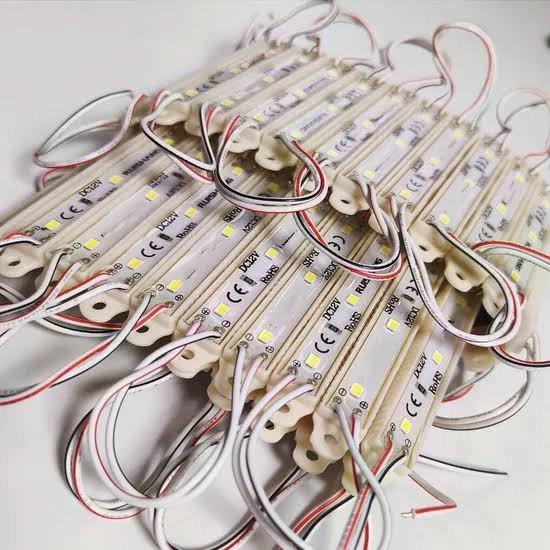
How to Specify LED Chips and Power Supplies for Signs
Component selection should follow a sequence: define the environment and duty cycle; set the photometric target; choose a module that can meet it; check heat and voltage drop across the wiring layout; size the power supply using the manufacturer’s derating data; approve a sample; and then release batch production. A quotation that jumps directly from a logo file to a price has skipped the engineering work.
For outdoor projects, component selection also has to sit inside the complete enclosure and installation design. Our outdoor signage waterproofing buyer’s guide explains why an IP-rated module or driver does not automatically give the installed sign the same rating.
LED Chip Specifications That Predict Performance
Ask for every parameter against the exact chip and module model. A 48-hour power-on burn-in can screen early failures and confirm initial brightness, but it does not establish rated lifespan or lumen maintenance. Those require the chip maker’s supporting data.
| Parameter | Why it matters | Evidence to request |
|---|---|---|
| Luminous flux and efficacy | Output per chip and per watt affects brightness and heat. | Datasheet values at the actual drive current. |
| Drive current and forward voltage | Driving chips harder changes output, heat and life. | Specified current plus the module design current. |
| CCT consistency and binning | Controls colour matching within a sign and across reorders. | Bin or SDCM tolerance, not only a Kelvin value. |
| CRI | Affects how accurately the light renders brand colours. | Stated CRI at the selected CCT. |
| Junction temperature | A major driver of real service life. | Maximum Tj and the module’s thermal path. |
| Lumen maintenance | LM-80 measures maintenance; TM-21 projects it. Neither is a finished-sign warranty. | Applicable LM-80 report and TM-21 projection. |
| Module temperature range | Confirms the assembly suits the site climate. | Rated module ambient range. |
| Batch stability | Shows whether the approved specification is repeatable. | Lot IDs and incoming-inspection records. |
Hicen offers pure white, warm white and RGB configurations. Request the chip specification for the approved configuration, including CCT tolerance and CRI. For the relationship between source choice, diffuser and visible output, see our guide to light sources for acrylic glowing signs.
Why LED Module Design Matters as Much as the Chip
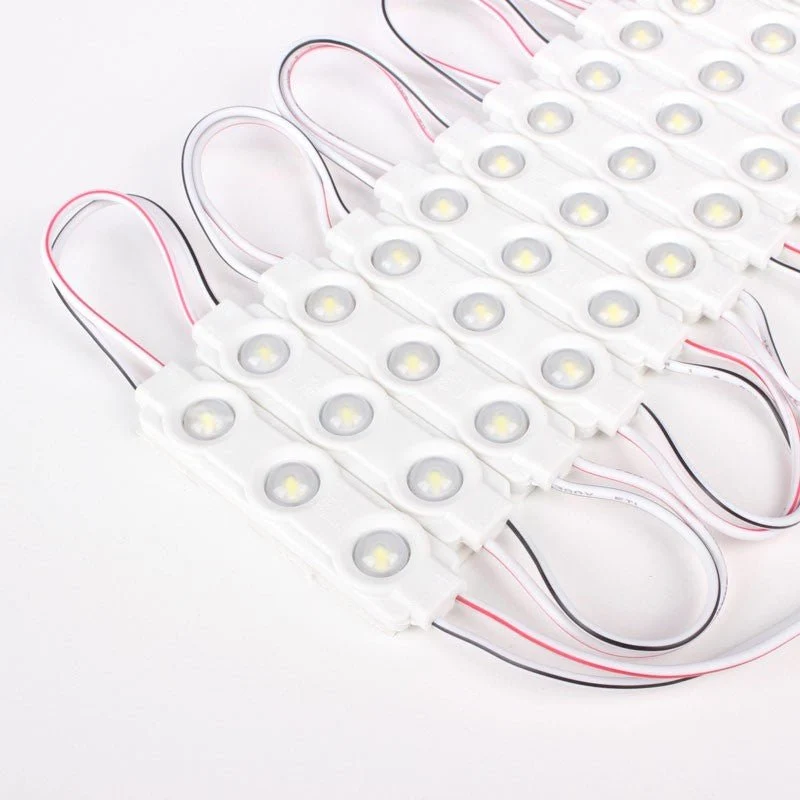
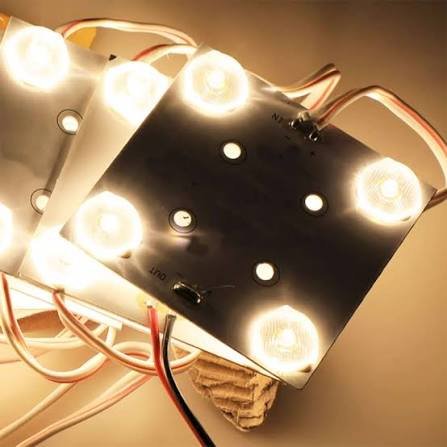
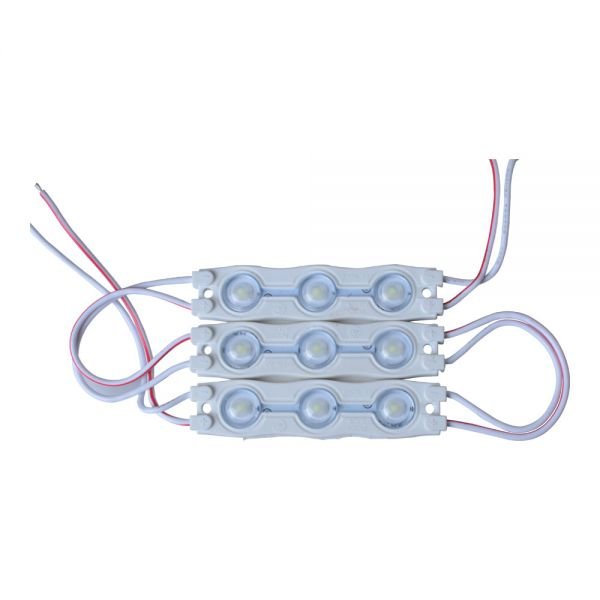
Optics: The lens controls light spread. The wrong angle for the letter depth creates hot spots. Thermal design: The PCB must move heat away from the chip. Sealing: Module-level protection limits ingress around chips and electronics. Wiring: Gauge and connector quality influence voltage drop. Spacing: LED density determines whether the face looks uniform.
Depending on the product line and design, Hicen configurations may use 12 V or 24 V LED modules; some custom light box signs also list 110 V and 220 V options. Confirm the module voltage and power-supply series in the approved bill of materials for the specific order.
Published face-luminance and uniformity figures should be read as design-dependent examples, not universal guarantees. Face brightness changes with sign depth, diffuser, LED spacing and the measurement method. Ask for the measurement grid, sample size, formula and acceptance threshold that apply to your design.
Power-Supply Specifications That Control Stability
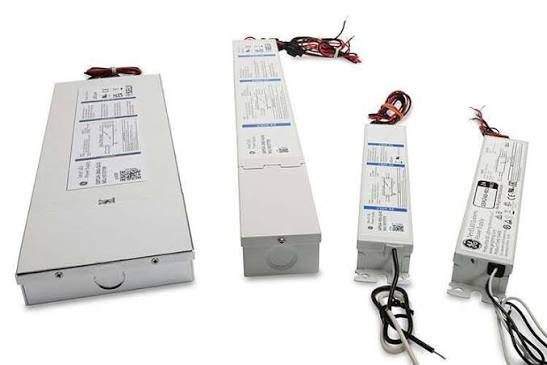
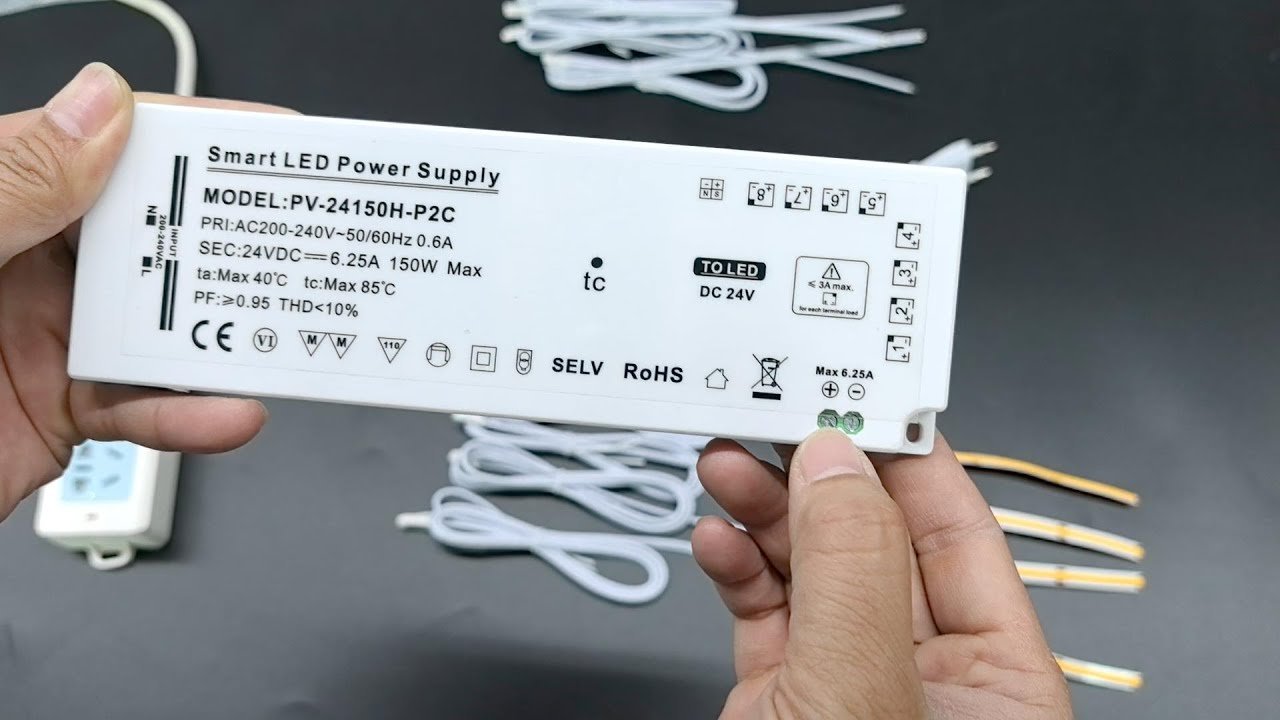
Headroom: Size the driver from its derating and lifetime curves at the real ambient and case temperature, not from one fixed margin. Efficiency: Lower losses reduce heat inside the housing. Protection: Confirm over-voltage, over-current, short-circuit and thermal protection rather than assuming they are included.
| Driver specification | What to verify |
|---|---|
| Ambient and case temperature | Rated range and the Tc measurement point. |
| Derating curve | Permitted output at the expected ambient temperature. |
| Rated lifetime | Hours at a stated Tc and load. |
| Ripple and flicker | Important where signs appear on camera. |
| Power factor and THD | Check destination-market utility or code requirements. |
| Surge capability | Rated surge level for the installation. |
| Location and IP rating | Suitability for the enclosure and site exposure. |
| Safety approvals | Applicable approval with file or report number. |
Hicen tests each power supply under full load for four consecutive hours while monitoring temperature rise and voltage stability. Buyers should still request the actual driver series and model in the quotation and bill of materials.
Match Components to the Installation Conditions
A reputable brand can still be wrong for the job. One manufacturer may sell indoor and outdoor series with different voltage, sealing and lifetime ratings. Match the exact component to the site and expected service life, then check that its evidence covers the approved configuration.
| Condition | Engineering check | Evidence |
|---|---|---|
| Outdoor façade | IP rating and UV-resistant materials | Scoped IP test report |
| Coastal site | Corrosion protection | Material grade, coating and salt-spray data |
| Rooftop | Direct sun and temperature swings | Thermal-cycle tolerance |
| Cold climate | Driver operating range | Stated ambient range |
| Long wiring run | Voltage drop | Layout-specific calculation |
| Dimming or RGB | Driver, module and controller compatibility | Written confirmation before order |
Substitutions, Traceability and Warranty
Require written approval before a component substitution and define how an alternative will be validated against the approved sample. Batch records should connect chip, module and driver lot IDs, incoming inspection and finished-unit testing to the purchase order.
Get warranty terms in writing. Confirm the covered product line, diagnosis process, required evidence, exclusions and responsibility for return shipping. A general reliability claim is not a warranty.
How Hicen Verifies Manufacturing and Quality Control
Hicen manufactures housings, back panels and acrylic faces in-house and assembles and tests LED modules on its own lines in Dongguan. Our channel letter manufacturing process shows how fabrication, LED installation, aging and final inspection fit together.
Quality control covers incoming material inspection, in-process patrol, semi-finished sampling, finished-product inspection and a final check before packing. Incoming checks include metal thickness, LED brightness uniformity, outdoor coatings and acrylic light transmission. Process tolerances vary, so request the value that governs the approved drawing.
Compliance documents are not interchangeable. ISO 9001 covers the management system rather than an individual sign. CE documentation must identify the relevant legislation, standards and configurations. UL Listed finished products differ from UL Recognized Components and their Conditions of Acceptability. RoHS evidence is tied to the bill of materials, while an SGS name is meaningful only with the report number, scope, standard and validity. Review Hicen’s available certification documentation and request the product-level evidence for your configuration.
Buyer Checklist: What to Send and What to Request
Send with your enquiry
- Application: indoor/outdoor use, viewing distance, mounting height, climate and expected service life
- Design files: vector logo, outlined fonts, colour codes, dimensions and reference images
- Installation conditions: wall material, space, power location and local restrictions
- Technical requirements: market, certifications, voltage, frequency, ambient range and controls
- Commercial terms: quantity, delivery date, Incoterm, destination, sample plan and warranty scope
Request from the supplier
- Exact LED chip, module and power-supply model numbers with full datasheets
- Test methods, sampling plans and pass thresholds behind every performance figure
- Certificate or report numbers, issuing bodies, covered models and validity dates
- Aging and load-test results tied to the production batch
- Written substitution, traceability and warranty procedures
Specify the Component, Not Just the Brand
Three things decide whether the lighting system performs: measured parameters and batch stability, module-level optical and thermal design, and a driver sized for the real load and environment.
FAQs
What should I confirm first about LED chip specifications?
Confirm the exact chip and module datasheet. Check luminous flux and efficacy at the actual drive current, CCT binning, CRI, junction temperature and lumen-maintenance evidence.
Does a 48-hour burn-in prove the rated LED lifespan?
No. Burn-in screens early failures and confirms initial operation. Rated life relies on applicable LM-80 data and TM-21 projections, and neither is a finished-sign warranty.
How can a manufacturer prove power-supply quality?
Ask for the exact series, datasheet, derating and lifetime curves, protection features and batch-linked load-test results. A brand endorsement or test duration alone is not enough.
What information should I send before requesting a quote?
Send the application, design files, installation conditions, technical requirements, quantity, delivery needs and acceptance terms. This allows the supplier to return a specification-matched quote rather than a price alone.