
A full-size metal raceway for channel letters houses the power supplies, wiring, and mounting hardware in one enclosed structure, cutting down on wall penetrations and making both installation and later service faster. Because it consolidates the sign’s electrical components, its size, depth, and finish color need to be shown clearly in property-approval drawings before installation — not decided in the field once the sign has already arrived on site.
It’s easy to treat a raceway as a minor mounting detail rather than a functional part of the sign, but for commercial tenants, installers, sign sales teams, and property engineers, it’s usually the single component that determines how clean the installation looks, how much of the facade gets drilled into, and how easy the sign is to service five years from now.
What Is a Full-Size Raceway, and How Is It Different From a Wireway or a Direct Mount?
There are three common ways to mount channel letters, and the differences matter more than they first appear.
A direct or flush mount attaches each letter straight to the wall individually, with wiring routed through a hole behind every letter. It gives the cleanest look — no visible mounting structure — but it also means the most wall penetrations, since each letter needs its own attachment and wiring path.
A wireway is a slim, shoebox-style metal cabinet that letters mount to. It organizes the cabling behind the letters and reduces the penetration count compared to a direct mount, but it typically doesn’t house the power supply itself — that usually stays remote, inside the building — and wiring access runs through a front cover, which is workable but less convenient for service than a full raceway.
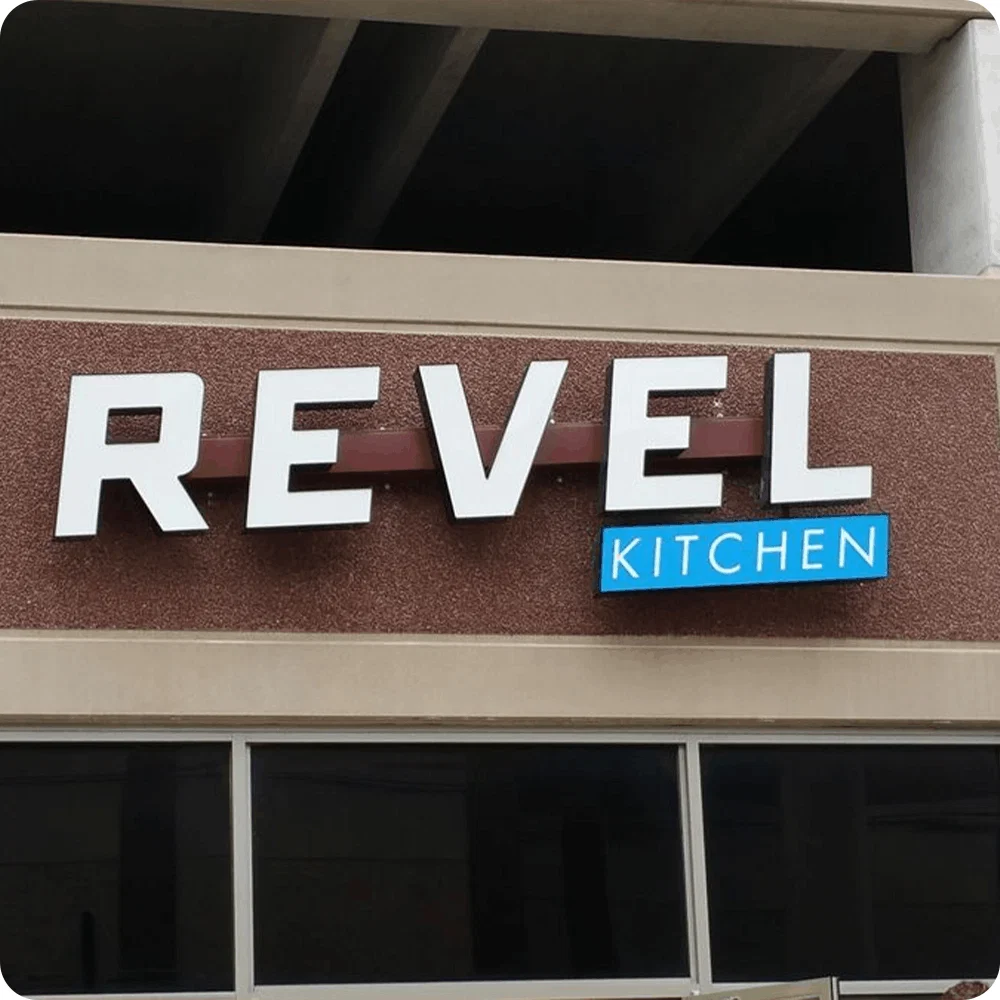
A full-size raceway, as used across Hicen’s channel letter signs, is a rectangular aluminum structure that runs behind the entire letter set, and it’s built to do more than a wireway: it houses the power supplies, wiring, and mounting hardware together in one enclosure, typically with a removable top panel for service access. For this project specifically, the raceway height needs to equal the tallest letter in the set. That’s not just a proportion preference — a raceway shorter than the tallest letter either leaves that letter’s base unsupported above the enclosure or makes the raceway read as visually undersized against the letters it’s meant to anchor. Matching the height keeps every letter’s baseline sitting cleanly on the raceway and lets the whole assembly read as one coherent base rather than a mismatched strip behind oversized letters.

How Does a Raceway Conceal and Protect Electrical Components?
Once power supplies, wiring, and terminal connections — the same components covered in Hicen’s guide to LED chips and power supplies — are inside the raceway rather than exposed behind or beside the letters, two problems go away at once: the safety risk of exposed wiring on an exterior wall, and the appearance problem of visible cable runs undermining an otherwise clean sign.
A full-size raceway is sized to organize these components with a defined service access point — usually the removable top panel mentioned above — so a technician can reach the power supply or a wiring connection without having to remove letters or open the enclosure from an awkward angle. That access point isn’t optional convenience; it’s the difference between a five-minute service call and a return visit that requires partially disassembling the sign.
Does a Full-Size Raceway Affect Electrical Code Compliance?
This is worth addressing directly, because it’s the part of “conceal electrical components” that has real regulatory weight behind it, not just tidiness.
Under the U.S. National Electrical Code (NEC 600.6), a sign’s electrical disconnect generally needs to be located at the point where the circuit enters the sign enclosure. There’s a notable exception, though: larger signs with an internal panelboard can omit a separate external disconnect if the conductors are enclosed in an approved raceway and a permanent, lockable warning label identifies where the internal disconnect is located. In other words, housing the wiring in a proper raceway isn’t just about appearance — for signs built this way, it can be part of what makes a specific electrical compliance path available at all.
Code adoption and amendments vary by state, city, and property, and this should always be confirmed with a local electrical inspector or the property’s engineering team rather than treated as a fixed national rule — but it’s a good reason to loop in that conversation early, at the drawing stage, rather than discovering a compliance gap after the sign is mounted.

How Does a Raceway Reduce Building-Wall Penetrations?
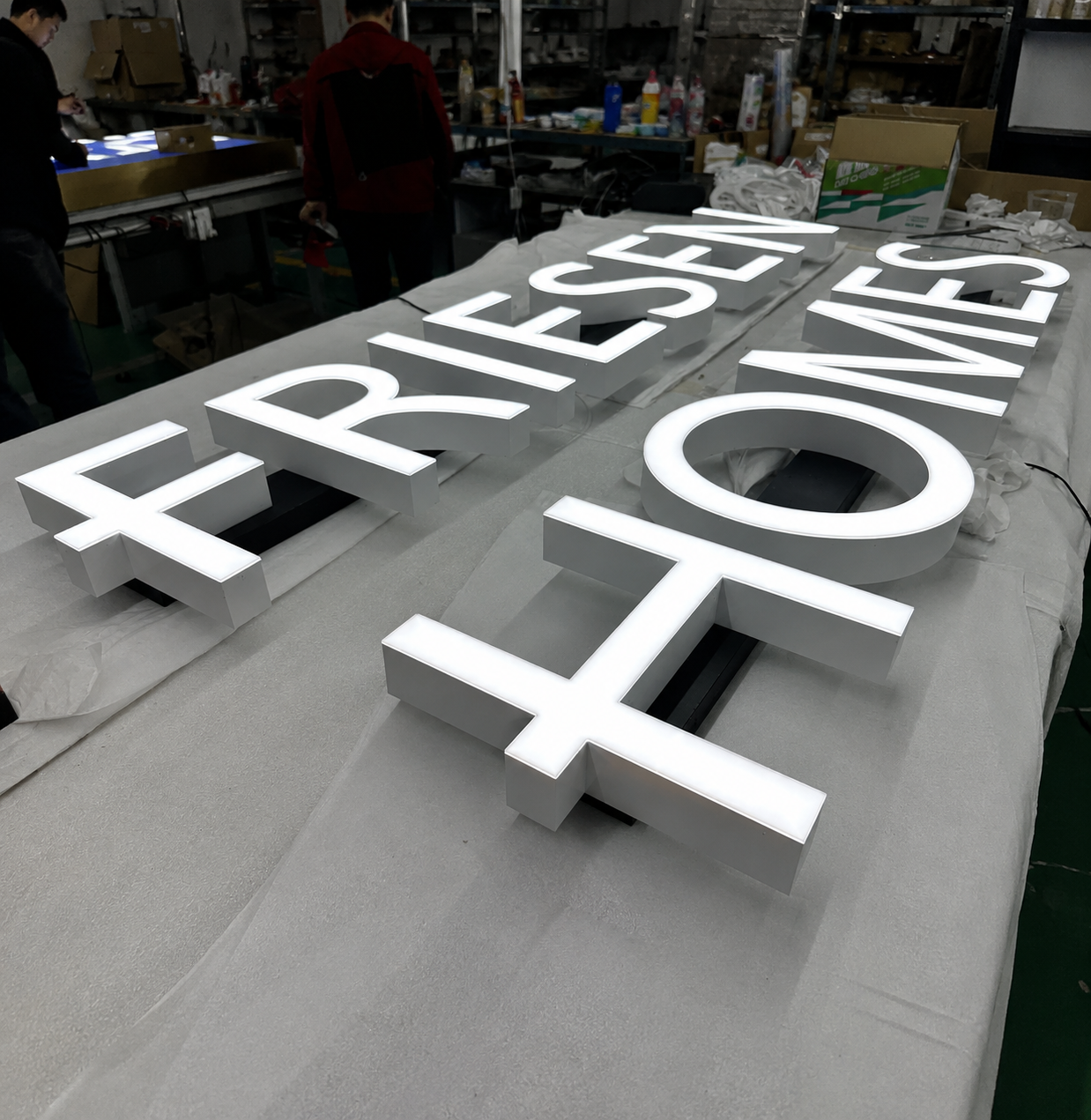
Every mounting point on a commercial facade is a small liability — a hole to seal, a potential water-intrusion path, and on some properties, a warranty concern the landlord has to weigh before approving the sign at all. A raceway consolidates what would otherwise be individual attachment points per letter into one mounting structure, meaningfully reducing the number of holes drilled into the building compared to a direct-mounted sign.
This matters most on properties that explicitly restrict extensive drilling into the facade — leased commercial space, historic buildings, and curtain-wall or panelized exteriors where each additional penetration is something the property manager has to justify, not just approve as a formality. On these properties, a raceway isn’t a design preference; it’s often the difference between an approvable installation and one that gets sent back for a different mounting approach.
How Does a Raceway Improve Installation and Maintenance?
Because the raceway is built as a self-contained unit, a fabricator can complete wiring and testing at the factory before the sign ever reaches the site — Hicen’s channel letter manufacturing process, for example, runs finished assemblies through a continuous power-on aging test as one of its production stages, verified through a five-step quality control system, so the electrical components inside the raceway have already been checked before installation day, not after. That translates directly into faster, more predictable field installation, since the crew is mounting a tested assembly rather than wiring components on-site for the first time.
The same structure pays off later, too. When something eventually needs service — a power supply replacement, a wiring fault, an LED module swap — a full-size raceway with proper access means a technician can reach the components directly, rather than removing individual letters to get at wiring buried behind them. On a large channel letter set, that difference alone can turn a routine service call into a significantly longer, more expensive one.
How Do You Integrate a Raceway Into the Building Facade?
A raceway that’s functionally correct but visually obvious can still undercut the sign it’s supporting. Painting the raceway to closely match the wall color reduces its visual presence, letting the illuminated letters read as the focal point rather than competing with a visible metal strip behind them.
Color matching should follow the same discipline as any other finish decision on the project — see Hicen’s signage material comparison for how finish and material choices are evaluated across sign components — confirm against a physical sample or drawdown in the actual installation lighting, not a swatch viewed indoors, and specify the color by Pantone or RAL reference in the approval drawing rather than a general description. That drawing should also show raceway height, depth, and finish color explicitly — the same three specifications a property manager or permitting office will be checking the finished installation against, so leaving any of them ambiguous on paper is what creates disputes after the sign goes up, not before.
Common Mistakes When Specifying a Raceway-Mounted Sign
A handful of avoidable issues come up often enough with raceway-mounted signs that they’re worth flagging on their own.
- Sizing the raceway to the layout instead of the tallest letter. A raceway that doesn’t match the height of the tallest letter in the set undermines the exact visual coherence a raceway is supposed to provide.
- Choosing raceway depth after the electrical components are already finalized. Depth needs to be sized to fit the actual power supplies and wiring going inside it — commonly in the range of about 3 to 6 inches for typical driver and transformer housing, though larger multi-letter installations can require more. Squeezing that decision in after the components are chosen risks a raceway that’s too shallow for what it needs to hold.
- Matching color from an indoor swatch. A raceway color approved under interior lighting can look noticeably different once it’s mounted outdoors in direct sun, undermining the exact blending effect it was chosen for.
- Leaving raceway dimensions off the approval drawing. If height, depth, and color aren’t explicitly shown on the drawing a property manager signs off on, there’s no documented basis to resolve a disagreement if the finished installation looks different from what was expected.
- Not confirming disconnect and access requirements with an electrical inspector early. Discovering a code gap after the raceway is fabricated and mounted is a far more expensive fix than confirming the disconnect location and access requirements at the drawing stage.
Frequently Asked Questions
What is the difference between a raceway and a wireway?
A wireway is a slimmer cabinet that organizes wiring behind the letters but typically keeps the power supply remote inside the building, with wiring access through a front cover. A full-size raceway houses the power supplies, wiring, and mounting hardware together in one larger enclosure, usually with a removable top panel that makes service access more direct. Wireways offer a slightly lower visual profile; raceways offer more complete component housing and easier maintenance access.
Why must the raceway equal the height of the tallest letter?
Matching the raceway height to the tallest letter keeps every letter’s base sitting cleanly on the enclosure rather than extending above it unsupported, and it lets the raceway read as a single coherent base for the whole letter set instead of a mismatched strip that looks undersized against the letters it’s meant to anchor.
How should a raceway color be selected?
Match it to the building’s wall color using a physical sample or drawdown checked in actual outdoor lighting, not a swatch viewed indoors, and specify the final color by Pantone or RAL reference in the approval drawing. The goal is minimizing the raceway’s visual presence so the illuminated letters remain the focal point.
Does a raceway affect electrical permitting or code compliance?
It can. Under the U.S. National Electrical Code, larger signs with an internal panelboard may be able to omit a separate external disconnect if the wiring is enclosed in an approved raceway with a permanent, lockable warning label identifying the internal disconnect location. Local code adoption varies, so this should be confirmed with an electrical inspector or the property’s engineering team rather than assumed.
How deep does a raceway need to be?
It depends on what’s being housed inside it — commonly somewhere in the range of about 3 to 6 inches for standard power supply and transformer housing, with larger or multi-letter installations sometimes requiring more depth. Confirm the exact depth with your fabricator once the power supplies and wiring plan for the specific letter set are finalized, rather than assuming a fixed number.